 By HUBERT VAZ
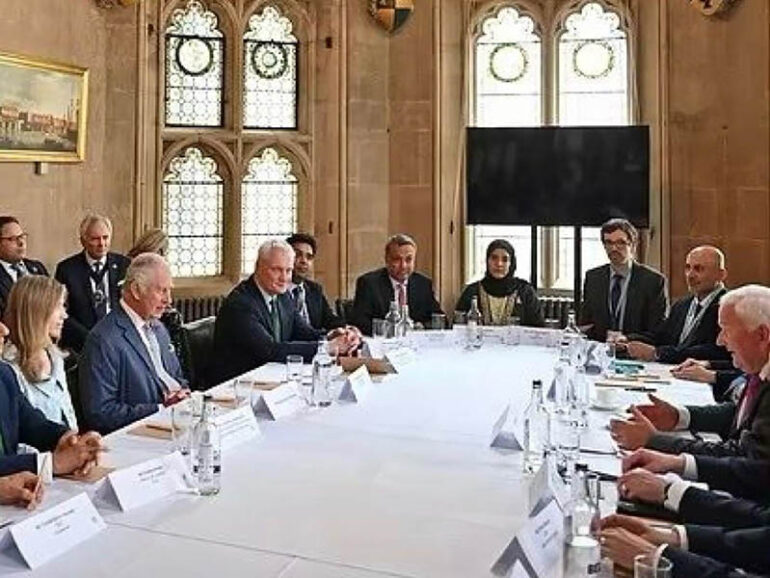
Muscat – Dr Lamya al Haj, Associate Professor at Sultan Qaboos University, recently had the privilege of attending a meeting with King Charles III on ‘Green transition innovation’, as part of the London Climate Action Week.
The invitation for the Climate Innovation Forum, a flagship event of London Climate Action Week on June 28, was received by Lamya, an award-winning scientist in renewable energy, with great pride. The fact that King Charles would be attending the forum at Guildhall, to hear about what more can be done to transition to a sustainable future, was a big motivating factor for her participation.
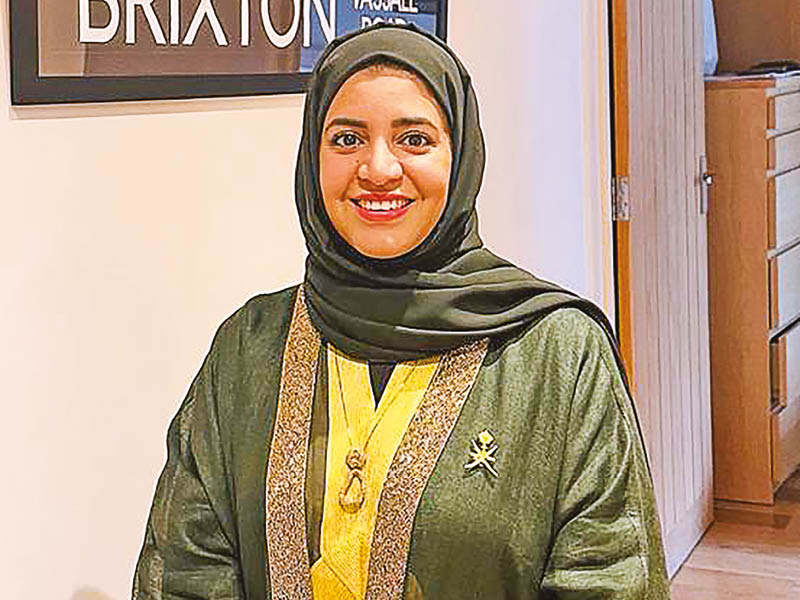
“I was thrilled, honoured and humbled to receive an ‘in-person’ invitation from Buckingham Palace to meet King Charles. The invitation requested that I join His Majesty at a private roundtable discussion which is part of London Climate Action Week, a key marker on the road to COP28,” Dr Lamya said. The 28th Conference of the Parties of the UN Framework Convention on Climate Change will be hosted by the UAE in November.
The fact that Lamya is a young global leader, an advisor at the World Economic Forum and an advocate for science and youth empowerment from the Middle East went in her favour for being chosen to attend the prestigious annual roundtable with King Charles – a keen torchbearer for global action towards climate change. She was among 20 key invitees, all climate change stalwarts from around the world, who met on the sidelines of the forum.
The forum brought together 700 policy makers, investors, climate-tech solution providers, business leaders and innovators to catalyse the fulfillment of the UK’s climate commitments, and drive radical collaboration, finance and innovation needed to deliver on climate goals.
The action-orientated event was called to build upon the conclusions of the Net Zero Review and shine a light on the pro-growth opportunities that net zero presents within the UK and on a global stage. During the private interaction, King Charles heard discussions on financing, replicating and scaling innovation at speed, as well as proposed technological solutions which will help move towards a more sustainable future globally.
Invited participants included Sadiq Khan, Mayor of London, Graham Stuart, Minister of State for Energy Security and Net Zero, vice-chancellors of the Universities of Oxford and Cambridge, and CEOs of HSBC, AstraZeneca, OVO Energy, and GRIDSERVE. Sultan al Jaber, president of the upcoming COP28 Summit and UAE’s Special Envoy for Climate Change, also attended.
Lamya, who has a PhD in Structural & Molecular Biology from University College London, responded to a few key queries about her participation in the forum:
Did you put forth any suggestions at the forum?
Yes, I was privileged to be able to share multiple suggestions that, in my humble opinion, may accelerate the speed and size of projects related to renewable energy globally.
What, according to you, is the need of the hour for tackling global climate change?
What is needed to accelerate the speed and scale of such projects globally are more clear policies regarding renewables, more collaborative planning and bigger investments. Multilateral engagements and collaboration, such as those exemplified by the UK, which strives to bring together scientists, business leaders and policy makers, will increase innovation and shorten the value chain of renewable energy projects.
Are there any specific concerns about climate change and the human response in the Arab world?
I believe the Arab world, especially the Gulf region, is working seriously towards shifting to a more cleaner and sustainable energy. Yet, I believe, we need more policies in place to speed up the process and attract more international investments in order to meet our ambitious goals and hit our targets.
What efforts has Oman taken regarding conservation of the environment, sustainability, etc?
Prior to Cop27, Oman has committed to achieve net zero by 2050 making the sultanate the third country to sign this pledge in the Middle East. Oman’s vision is to have 20% renewable energy by 2030, and it is on track to achieve this commitment with the current development of multiple renewable energy projects across the country.
What are Oman’s strengths in this regard?
According to the International Energy Agency, Oman is expected to be the sixth largest producer of renewable hydrogen globally by 2050 due to the natural strengths it is blessed with, namely high quality solar PV and onshore winds; geographical location between exporting countries (Europe and Japan) and political stability; current infrastructure that supports renewable hydrogen projects; and vast amounts of arid flat lands for large-scale renewable energy projects – the land Oman has dedicated for RE projects is equivalent to the size of Slovakia.
Hence, I reiterate, what is needed to accelerate the speed and scale of such projects globally are more clear policies regarding renewables, more collaborative planning and bigger investments.
© 2021 Apex Press and Publishing. All Rights Reserved. Powered by Mesdac