 By OUR CORRESPONDENT
Muscat – India is accelerating plans to secure uninterrupted gas supplies from the Gulf through a direct deep-sea gas pipeline from Oman, as the Strait of Hormuz crisis prompts New Delhi to prioritise energy security.
If approved, the estimated US$4.8bn pipeline project is expected to take five to seven years to complete, according to an Indian petroleum ministry official quoted by The Economic Times.
India’s petroleum ministry is expected to direct state-run companies GAIL, Engineers India and Indian Oil Corporation to prepare a detailed feasibility report, senior officials told the newspaper. The officialssaid the government is working on the basis of a pre-feasibility study submitted by The South Asia Gas Enterprise (SAGE), a New Delhi-based private sector consortium.
According to the newspaper, a positive outcome from the detailed feasibility study would pave the way for formal government-level negotiations with Oman on gas supplies, financing and project execution.
“India needs to move beyond dependence on LNG spot markets,” one of the officials said. “A dedicated pipeline from West Asia gives us stable, cost-competitive gas without depending on any transit country or maritime chokepoint.”
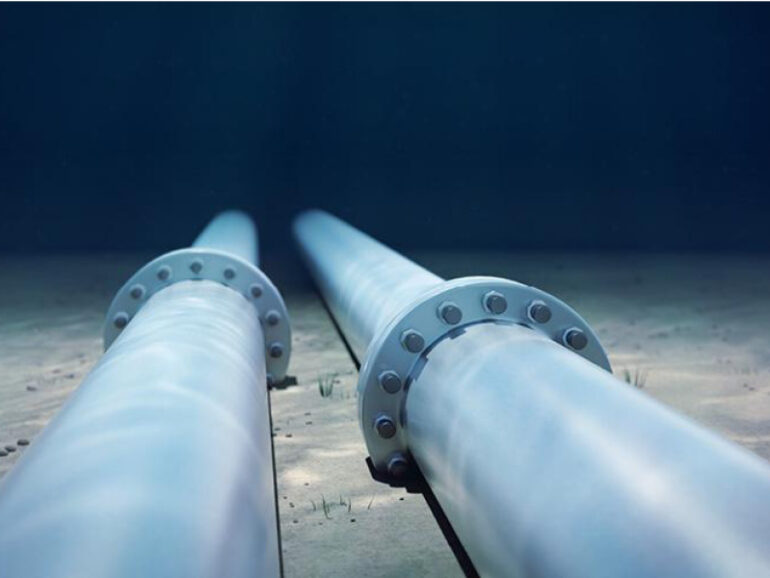
The proposed Middle East-India Deep-water Pipeline (MEIDP) would stretch around 2,000km beneath the Arabian Sea, directly linking Oman with India’s Gujarat coast, the report noted.
According to the report, the route would pass through the Arabian Sea via Oman and the UAE, avoiding geopolitically sensitive regions. The project would enable India to access gas supplies from Oman, the UAE, Saudi Arabia, Iran, Turkmenistan and Qatar.
The pipeline could run at depths of up to 3,450m, making it one of the deepest subsea pipelines ever attempted globally.
Nearly two-thirds of India’s LNG imports passed through the Strait of Hormuz in 2025. Following the onset of the Strait of Hormuz crisis in late February, global LNG supplies fell by more than 20%, triggering a sharp rise in prices.
The disruption highlighted India’s vulnerability to both physical supply shocks and price volatility.
“Dependence on a single maritime chokepoint is no longer viable,” the official said. “This is now a national security imperative.”
© 2021 Apex Press and Publishing. All Rights Reserved. Powered by Mesdac