 By OUR CORRESPONDENT
Muscat – As Oman grapples with water scarcity, soil salinity and harsh plant growing conditions, researchers are testing an unconventional source of irrigation — the air itself.
A study led by Sultan Qaboos University researchers has examined whether water extracted from the atmosphere can be combined with solar power and hydroponic farming to grow crops in areas where conventional agriculture is difficult.
The project, titled Feasibility Study to Extract Water from Air and Utilise it in Salt-Affected Lands, was funded by the Strategic Research Programme of the Research and Innovation Authority in collaboration with the Ministry of Agriculture, Fisheries and Water Resources.
Led by Dr Ahmed Al Busaidi of SQU’s College of Agricultural and Marine Sciences, the research assessed the feasibility of combining atmospheric water harvesting (AWH) with solar energy and hydroponics.
The team assessed locations across Oman and identified favourable conditions in parts of southern Oman near the borders with Yemen and Saudi Arabia, along the northern coast and in some central areas.
Potential applications varied by location. Coastal urban areas could potentially use harvested water for drinking and industrial purposes, while southern areas may be more suitable for agriculture. Central and remote areas could support a combination of uses.
Tests of different atmospheric water harvesting machines produced between 40 and 100 litres of water a day, depending on weather conditions and machine capacity.
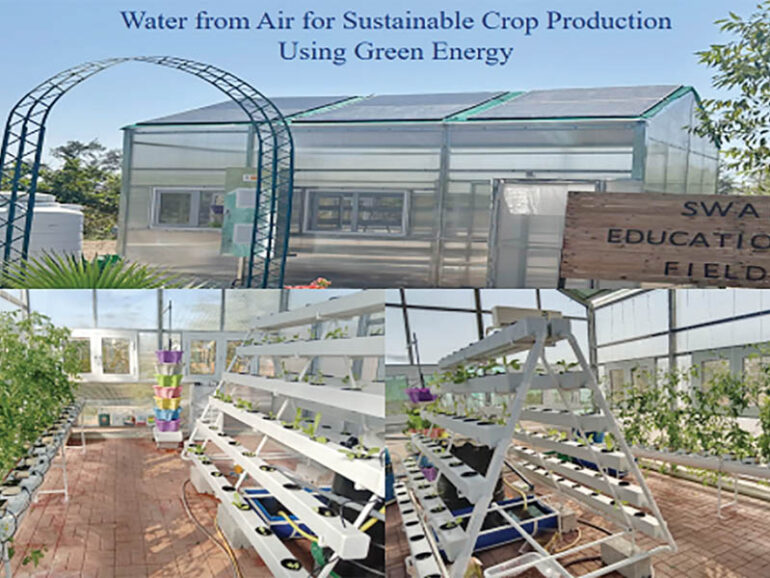
The researchers then integrated atmospheric water generators with solar panels and a hydroponic system in a greenhouse to test crop production.
The results pointed to significant benefits from controlled growing conditions. Tomato plants grown in the greenhouse had an average chlorophyll content of 25.5 and reached 186cm, compared with 8.23 and 76.5cm respectively for plants grown outdoors.
Lettuce grown in the greenhouse also recorded higher chlorophyll levels and larger leaves.
The researchers said an integrated system could help address water scarcity, salinity, limited arable land and extreme climatic conditions while supporting year-round cultivation.
Solar power could reduce conventional energy use and operating costs, with surplus electricity potentially supplied to the grid. The system could also allow farmers to focus on high-value crops and provide more consistent production and income.
However, the study identified challenges, particularly managing nutrient levels and pH fluctuations in hydroponic systems.
Al Busaidi recommended greater use of automation and artificial intelligence to monitor water, nutrients and growing conditions in real time. “AI-enabled sensors could help adjust inputs to crop requirements, reducing waste and improving efficiency.”
He also called for trials involving medicinal plants and exotic fruits, stronger integration of renewable energy, and greater adoption through technical training, awareness programmes and incentives.
The researchers said the technology could also have applications in education, research and eco-tourism, potentially creating new uses for sustainable greenhouse systems in Oman.
The research team included Dr Adil Al Mahdouri, Dr Hamed Al Dhuli, Zahir Salmani, Seif Al Tubi, Dawod Al Qasmi, Badriya Al Hosni and Dr Buthaina Al Wahaibi.
© 2021 Apex Press and Publishing. All Rights Reserved. Powered by Mesdac