
 By OUR CORRESPONDENT
Muscat – A recent scientific study published in the Oman Medical Journal demonstrates that laparoscopic sleeve gastrectomy is highly effective in achieving substantial weight loss and improving associated health conditions among severely obese patients in Oman.
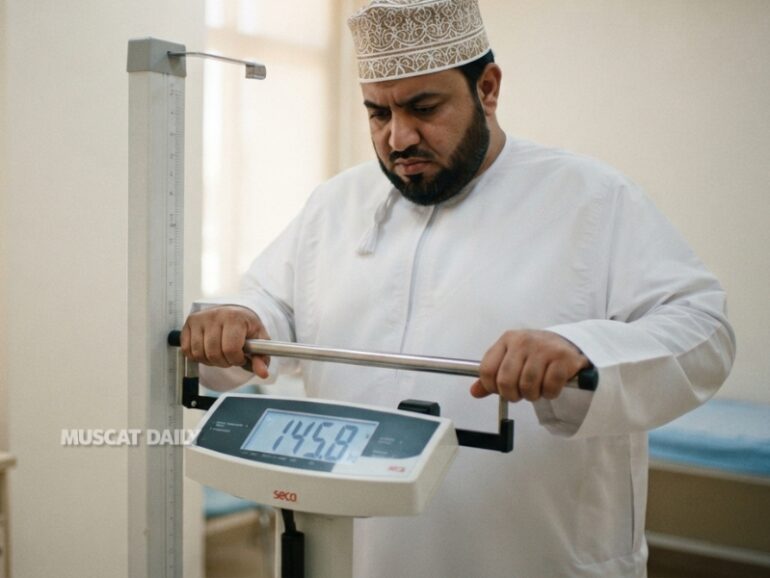
The research addresses obesity as a major global public health concern, noting that Ministry of Health indicators show approximately 70% of adults in Oman suffer from overweight or obesity. Conducted as a short-term retrospective study, the research evaluated all patients who underwent laparoscopic sleeve gastrectomy at Sultan Qaboos University Hospital between 2017 and 2018, encompassing a total of 168 severely obese participants.
The findings reveal that the majority of participants were female, accounting for 60.1%, with a mean age of 36.1 years and a mean body mass index of 50.8 kg per sq m. Among the associated comorbidities, 28.6% of patients suffered from type two diabetes, 28.6% had hypertension, 20.8% experienced dyslipidaemia, and over 60% of adults in Oman generally suffer from excess weight or obesity, with women showing higher rates than men.
The study highlights that laparoscopic sleeve gastrectomy helps achieve significant weight reduction and ameliorates chronic conditions by altering stomach size and satiety hormones. Among diabetic patients, significant clinical improvements were observed, while blood pressure and cholesterol levels also showed positive recovery.
Furthermore, 29.2% of patients suffered from obstructive sleep apnoea, which showed marked improvement post-surgery. However, the study notes that the percentage of weight lost was not directly correlated with the degree of metabolic recovery during the initial twelve months following surgery. The research was led by Dr. Hala Al Hadhrami, Dr. Nawal Al Nabhani, Dr. Badr Al Hadhrami, Dr. Hanaa Al Samri, and Dr. Sanaa Al Samri, who recommend further long-term evaluations on metabolic outcomes.
© 2021 Apex Press and Publishing. All Rights Reserved. Powered by Mesdac