Homeowners in Oman have started using artificial intelligence to enhance interiors, compare styles and cut costs of hiring professionals. The human touch, however, still remains indispensable
Do you find it difficult to visualise how to get rid of the clutter in your home and make it more organised, spacious and livable? Does the prospect of paying big bucks to hire an interior designer make you put off your plans consistently? What if your next interior designer wasn’t a person, but an algorithm?
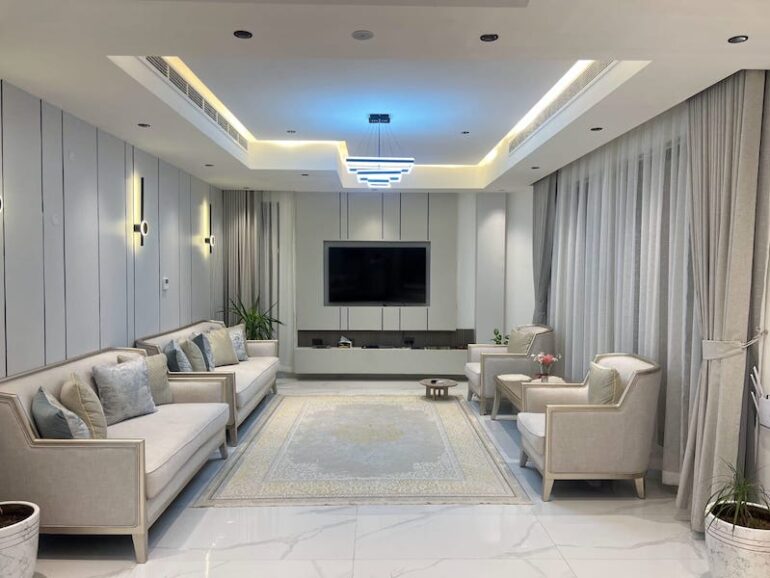
Across Oman, a growing number of homeowners are turning to artificial intelligence (AI) to help design their living spaces, using it to generate realistic interiors, test colour palettes, rearrange furniture and even redesign gardens – all before spending a single rial.
The technology is changing the way people approach one of life’s biggest investments. Instead of relying solely on architects or interior designers during the early planning stages, homeowners are using AI as a creative sounding board to explore ideas, refine their tastes and avoid costly design mistakes. They then know how to approach professionals and what practical changes to ask for.
While AI is helping reduce consultation costs and speed up decision-making, users are quick to point out that technology has its limits. When it comes to structural integrity, safety and execution, professional expertise remains irreplaceable.
Designing smarter, spending wiser
For engineer Yasser Al Gharibi, AI offered an opportunity to break free from what he describes as ‘decision paralysis’ while avoiding the expense of repeated consultations.
“The main drivers were efficiency, cost, and overcoming ‘decision paralysis.’ Hiring a premium interior designer for endless mood boards and revisions can get incredibly expensive and time-consuming. I wanted to experiment with different design styles – like minimalist, industrial, and modern Scandinavian – without waiting weeks for 3D renderings,” he said.
By entering the exact dimensions of his rooms and describing his preferred aesthetic, Al Gharibi generated dozens of photorealistic design concepts within seconds.
“AI allowed me to input my exact room dimensions, specify my preferences, and generate dozens of photorealistic concepts in seconds. It gave me a highly visual starting point and the confidence to see what worked before spending a single rial on physical changes,” he said.
The technology became central to planning his living room and master bedroom, while also suggesting finishes, cabinet colours and lighting for the kitchen. He even uploaded photographs of his garden, allowing AI to propose pathways, landscaping ideas and low-maintenance plants.
Among its most creative recommendations was a built-in floating L-shaped bench with concealed storage and ambient backlighting for an unused corner of his living room. Although the concept impressed him, turning it into reality still required skilled professionals.
“I took the AI-generated renders and basic dimensions to a local interior contractor and carpenter. AI designs look beautiful, but they don’t know where your plumbing lines, load-bearing walls, or electrical conduits are,” he pointed out, adding that human inputs are indispensable in some tasks.
AI also helped him shortlist furniture and finishes, but the final selections involved comparing products through Google Lens and inspecting paint samples and materials available in local showrooms.
The finished result, he said, exceeded expectations. “I am incredibly satisfied with the results. The house feels deeply personal because I guided the AI to match my exact taste.”
Even so, he cautions against viewing AI as a replacement for professionals. “I highly recommend AI as a supercharged brainstorming and visualisation tool. However, AI is not a substitute for structural engineering or professional craftsmanship.”
Creative assistant, not a replacement
Social media influencer and commercial stores supervisor Almouther Ahmed Al Shakili had a similar experience, turning to AI before renovating his home.
“I decided to use AI because it gave me a quick and easy way to visualise different design ideas before spending money. I could experiment with different styles, colours, furniture arrangements, and decorations until I found something I liked.”
Using AI, he redesigned his living room, bedrooms, kitchen, guest room and sections of the outdoor space, exploring different layouts, lighting options, colour combinations and decorative features.
“AI suggested colour combinations, furniture layouts, lighting ideas, wall decorations, and ways to make better use of the available space.”
However, like Al Gharibi, he relied on professionals once construction began.
“I used the ideas given by AI as a reference and shared some of the designs with professionals and workers so they could understand what I wanted. For more technical or structural work, it is still important to consult an architect or interior designer.”
Although AI recommended furniture, materials and accessories, he preferred to compare prices, quality and availability himself before making purchasing decisions.
“AI can also suggest places to shop, but I preferred to compare prices, quality, and availability myself before buying.” The technology, he said, transformed what can often be a stressful process into a more enjoyable one.
“AI made the design process easier, faster, and more creative. It helped me see different possibilities before making final decisions,” he said, adding, that he would readily recommend AI to others, provided they understand its limited role.
“I would definitely recommend using AI to friends and relatives as a useful tool for getting ideas and visualising a home design, while still consulting professionals when necessary.”
Future of home design
The experiences of Al Gharibi and Al Shakili reflect a broader trend that is reshaping home design in Oman. AI is making interior planning more accessible by allowing homeowners to experiment freely before committing to expensive renovations or furniture purchases.
Instead of replacing architects and interior designers, AI is increasingly serving as a bridge between imagination and execution. It enables homeowners to communicate their vision more clearly, helping professionals better understand the style and functionality clients are seeking.
As AI continues to evolve, its influence on the home design industry is expected to grow. Faster visualisation, personalised recommendations and reduced planning costs are likely to encourage more homeowners to embrace the technology.
For now, however, one message is clear – while AI may be able to generate beautiful interiors in seconds, creating a safe, functional and enduring home still depends on the experience, judgement and craftsmanship of human professionals.
(Contributed by Yusuf Al Gharibi)
© 2021 Apex Press and Publishing. All Rights Reserved. Powered by Mesdac