 By OUR CORRESPONDENT
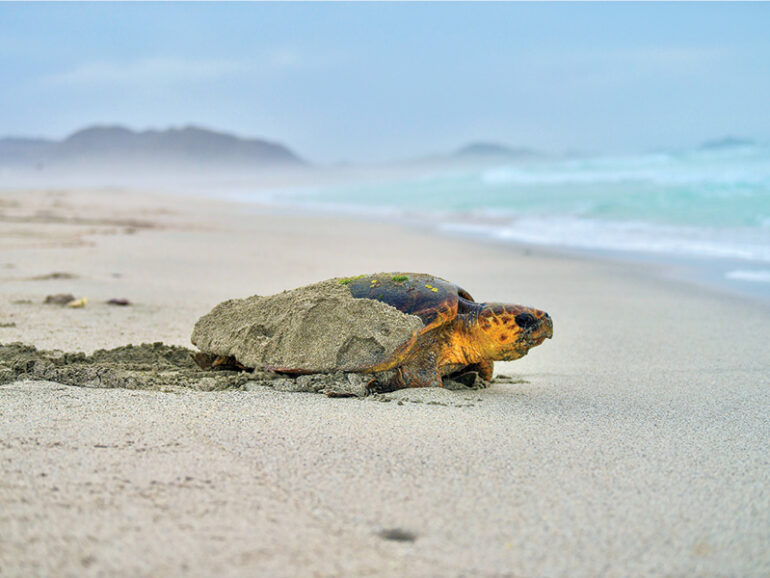
Muscat – The Environment Authority (EA) will implement a project next year to protect sea turtle nesting sites on Masirah Island through the construction of 2km of natural-material barriers to regulate vehicle movement and visitor access along sensitive coastal areas.
Eng Aida bint Khalaf Al Jabriya, Marine Environment Specialist at the Environment Authority, said design work and site studies are under way, with Al Bayadh beach identified as the main location for the protection works. A second barrier will be installed in the Al Aijah area to prevent turtles from reaching the nearby main road.
She said the authority is also developing a wider marine threat mitigation plan for Masirah Island covering nesting sites, harmful fishing practices, beach cleanliness and other risks affecting marine ecosystems. The initiative will also include awareness campaigns and signage to guide visitors.
Monitoring teams have recorded environmental changes in recent years that may affect nesting habitats, including coastal erosion, rising sea levels and human activity along the shoreline. These factors are being studied through long-term field monitoring programmes.
Aida said turtle nesting seasons in Oman vary by species and location. On Masirah Island, loggerhead turtles nest between May and September, while hawksbill and olive ridley turtles nest from February to May. At Ras Al Jinz, green turtles nest from June to October, while hawksbill turtles nest in the Daymaniyat Islands from January to April.
Specialised teams conduct night patrols, tagging, nest protection and hatch-rate monitoring during nesting periods. The EA said these programmes form part of wider conservation work to safeguard marine biodiversity.
Masirah Island is considered one of the world’s most important nesting grounds for loggerhead turtles. Continuous monitoring is carried out from February to November to track nesting patterns of four turtle species and assess environmental pressures.
Recent studies indicate that nesting numbers fluctuate seasonally due to climatic and environmental conditions. Authorities have maintained protection measures including regulated beach access, tagging programmes and public awareness campaigns.
Aida said hawksbill and olive ridley turtle populations on Masirah Island have shown signs of stability and growth in recent years. Each turtle lays between 80 and 120 eggs per season, with multiple nesting visits to beaches.
She added that loggerhead turtles have gradually shifted nesting activity towards southern beaches due to noise from fishing activity and light pollution linked to coastal development in northern areas.
During the first nesting season this year for hawksbill and olive ridley turtles, 77 turtles were tagged. The current season, which began this month, is focused on loggerhead turtles, with peak nesting expected between June and mid-August.
© 2021 Apex Press and Publishing. All Rights Reserved. Powered by Mesdac