

If there’s one thing that can instantly make you feel at home in Oman, it’s the warm, aromatic embrace of ‘karak chai’. Available at many a street corner, in varied flavours but with a common beckoning aroma, this style of spiced tea boiled with milk, has woven itself into the very fabric of Omani culture over the past couple of decades
With its roots in Southern Asia, ‘karak chai’ has now become a beloved beverage in the sultanate, enjoyed by locals and expatriates alike. Whether you’re a tea aficionado or just someone who loves a good cup of comfort, karak chai in Oman is a must-try experience.
Origins of karak in Oman
The origins of karak chai in Oman are closely tied to the country’s historical trade connections and cultural exchanges with the Indian subcontinent. Oman’s strategic location on the Arabian Peninsula has long made it a hub for maritime trade, with its ports like Muscat and Salalah serving as vital stops on trade routes connecting the Middle East, Africa, and Asia. Through these routes, a significant amount of cultural and culinary exchange took place.
The Indian subcontinent, known for its rich tradition of spiced teas, has had a profound influence on Oman. Many Indians and Pakistanis migrated to Oman for work, bringing with them their culinary traditions, including the beloved masala chai (spiced tea). Over time, this spiced tea was adapted to local tastes and became known as karak chai.
Karak chai in Oman is a result of blending traditional Indian chai with local preferences. The name ‘karak’ comes from the Hindi word ‘kadak’, meaning strong, reflecting the tea’s robust flavor, while ‘chai’ simply means tea. Unlike the original Indian masala chai, which can include a variety of spices, Omani karak chai typically emphasises the use of cardamom, sometimes cloves, along with a generous amount of sugar and condensed milk.
As Oman embraced ‘karak chai’, it became more than just a drink; it turned into a social ritual. Roadside tea stalls and small cafes, known as ‘karak shops’, started popping up everywhere, from bustling cities to quiet villages. These spots became popular gathering places where people of all backgrounds could enjoy a cup of tea and socialise.
A symphony of flavours

Karak chai is no ordinary tea. It’s a symphony of flavours, carefully crafted to delight the senses. The base of strong black tea is infused with a medley of spices – cardamom, cloves, cinnamon, sometimes even a hint of saffron, and ginger. Sweetened with sugar and enriched with milk, every sip of this brew indicates the skill of the ‘tea barista’ who conjures up a perfect balance of water, milk/cream, tea leaves and spices…every single time!
The preparation is an art in itself. Gone are the days when mothers would add a dash of their strong flavoured concoction of tea into the milk that they served the kids in India on a daily basis. Today, karak chai is made according to one’s palate. While most prefer the commonly consumed karak, prepared and stored in flasks or boilers for easy dispensation, some prefer to have it made on the spot, often demanding bespoke flavours, like ginger or lemon grass in their teas.
With the ease of ordering your cuppa straight from the car window, the two-finger gesture of holding an invisible cup is often enough to state one’s need at the shop. Many transactions occur without a spoken word as paper cups of tea and 100bz bills exchange hands in seconds.
Karak, not kahwa

In Oman, karak chai is more than just a drink; it’s a daily ritual. You’ll find people sipping this delightful tea at all times of the day—early in the morning to kickstart their day, mid-afternoon as a pick-me-up, or in the evening as they unwind with friends and family. It’s a social glue, bringing people together over shared stories and laughter, just like the kahwa (Omani coffee) tradition.
Omani taxi driver Talal al Batashi is a tea gourmand. He starts his day with two cups of his beloved ‘karak’ at his favourite joint – a ritual of downing one cup in a jiffy and taking along one for the road.
Suprisingly, Batashi admits, “I never liked coffee. I am the only one in my inner circle who’d rather have karak instead of kahwa. It augurs well for me, each day.”
At home
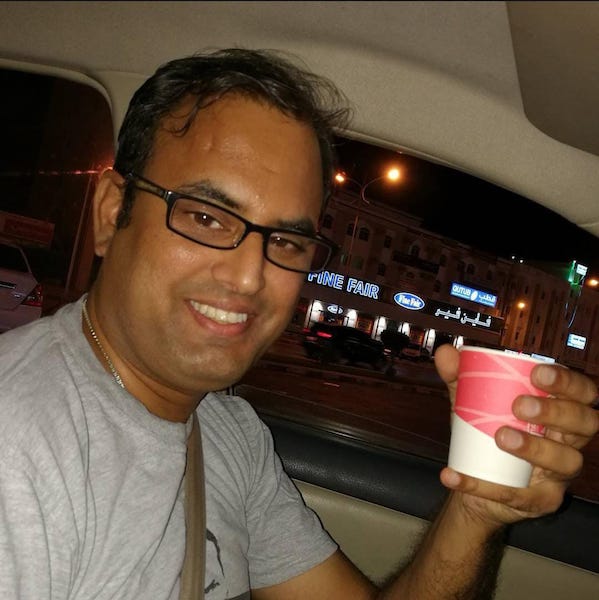
For many expatriates from the Indian subcontinent, ‘karak chai’ is a comforting reminder of home. Its popularity in Oman is a testament to the cultural melting pot that the country has become.
“For me, nothing can replace a cup of karak tea, I can relish it during any part of the day – it’s a rejuvenator,” says Avdhesh, an Indian expatriate, who been enjoying karak in Oman for the past 16 years. He recalls how, on the day of his arrival itself, the cabbie had made an unannounced halt for a karak and offered him a cup of warmth to make him feel at home.
Nithesh Thomas, the branch manager at Jenan Tea at Muttrah, says many visitors come and ask for a whole variety of flavours. But those who are regular, prefer the standard karak. Weekends are most busy when hundreds of cups are sold within hours, along with a whole range of fast-food. He recalls how he’d once received an express bulk order close to midnight, delivered within 20 minutes to a batch of bikers who had driven a long distance for their favourite brew.
With a big number of tea shops and brands now across Oman, one can be forgiven in confusing between ‘Tea Time’, ‘Tea Point’, ‘Tea World’ or even ‘Tea Corner’. Multiple branches, multiple locations and a steady fan following, tea houses are now here to stay (sorry, coffee lounges, you now have formidable competition). In fact, some popular coffee chains have, indeed, introduced their own versions of chai, to no avail.
Today, karak chai is a symbol of cultural fusion in Oman, representing the country’s openness to culinary influences – it’s actually like a warm, aromatic hug between two cultures!
(Contributed by Nisha Joshi)

© 2021 Apex Press and Publishing. All Rights Reserved. Powered by Mesdac