Captain Khalil Al Hooti, Chairman – Oman Maritime Association
Earlier, I reasoned that the sea is far more present in our daily lives than most of us realise. This time, let us take that thought one step further. What happens when the ships we depend upon cannot move freely?
For most people, maritime security sounds like a specialist subject – something discussed by navies, governments, port authorities and shipping companies. Yet its consequences can reach much further. A security incident hundreds or even thousands of miles away can affect a vessel’s route, its insurance costs, the time a cargo takes to arrive and, eventually, businesses and consumers.
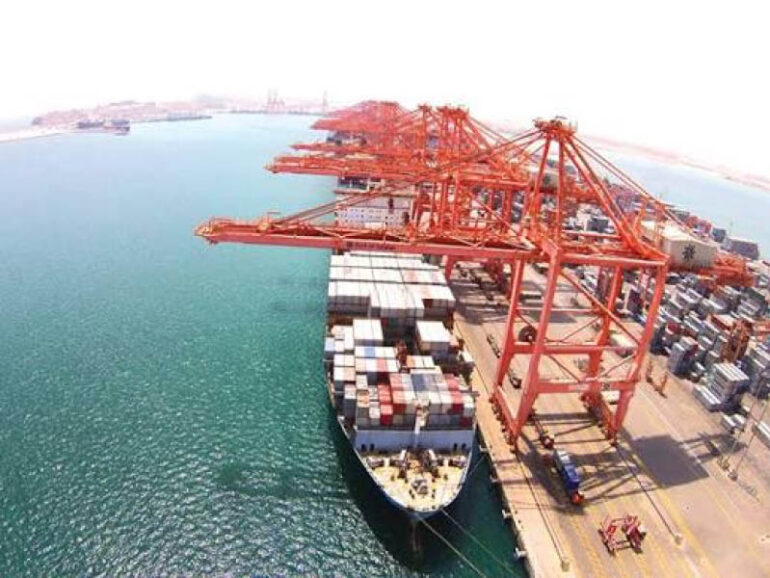
This matters because international trade depends heavily on the sea. The global economy has therefore developed around an assumption that is rarely discussed outside maritime circles: ships must be able to move safely and predictably between ports.
Recent years have demonstrated how fragile that assumption can become. When security deteriorates along an important maritime route, a shipowner faces difficult choices. Should a vessel continue its planned voyage? Should it wait? Should it divert around a longer route? What additional precautions are required? And, most importantly, can the voyage be undertaken without exposing the crew to unacceptable danger?
These are not theoretical questions. Geopolitical tensions have already forced vessels in some trades to sail considerably longer distances to avoid high-risk areas. UN Trade and Development (UNCTAD) has highlighted how rerouting around maritime chokepoints increases distances, costs and pressure on supply chains.
For Oman, this discussion has particular significance. Our geography places us beside the Strait of Hormuz and close to the shipping routes connecting the Gulf, Arabian Sea, Indian Ocean and, further west, the Red Sea through Bab Al Mandab. The Strait of Hormuz alone carried an average 20.9mn barrels per day of oil during the first half of 2025 – equivalent to around 20% of global petroleum liquids consumption, according to the US Energy Information Administration.
Numbers of that scale explain why maritime security in this region is never simply a regional maritime issue. But there is another dimension that deserves greater attention.
When we look at a maritime security incident on a map showing an Automatic Identification System (AIS) picture, we often see ships represented as dots or symbols. It is easy to forget that every one of those symbols represents people.
There is a master on the bridge making difficult decisions. There are officers monitoring navigation and communications. There are engineers keeping machinery running and crew members performing their duties, sometimes knowing that the waters ahead may carry risks completely beyond their control.
The human consequences have become painfully clear. The International Maritime Organization (IMO) reported in August that thousands of seafarers had faced prolonged uncertainty in the Strait of Hormuz during the current Middle East crisis. IMO has repeatedly stressed a principle that should be obvious but sometimes becomes lost amid geopolitical calculations: seafarers are civilians doing essential work, and their safety must come first.
This is perhaps where maritime security needs to be understood differently. It is not only about protecting a ship from attack. It is about preserving the conditions that allow international commerce to function: freedom of navigation, safe sea lanes, reliable ports, effective communication, cooperation between states, professional risk assessment and, above all, protection of the people who operate the ships.
For a maritime nation such as Oman, this understanding is especially important. Our location gives us enormous maritime opportunity, but geography also gives us responsibility. Building ports and logistics infrastructure is part of becoming a stronger maritime nation. Developing maritime professionals, security awareness, regional cooperation and resilience is equally important.
The sea does not have to stop completely for us to feel the consequences. Sometimes a delay, a diversion or a single unsafe passage is enough to remind us how interconnected the maritime system really is.
The best time to understand that system is not when a crisis closes a route or threatens a ship. It is well before it happens.

© 2021 Apex Press and Publishing. All Rights Reserved. Powered by Mesdac