Abdulwahab Al Balushi
Muscat – None of us chooses where the journey of life begins.
We do not choose our parents, the country into which we are born, our mother tongue, our early social environment or the cultural traditions surrounding us. We do not choose whether our childhood home is wealthy or poor, highly educated or less educated, conservative or liberal, encouraging or restrictive.
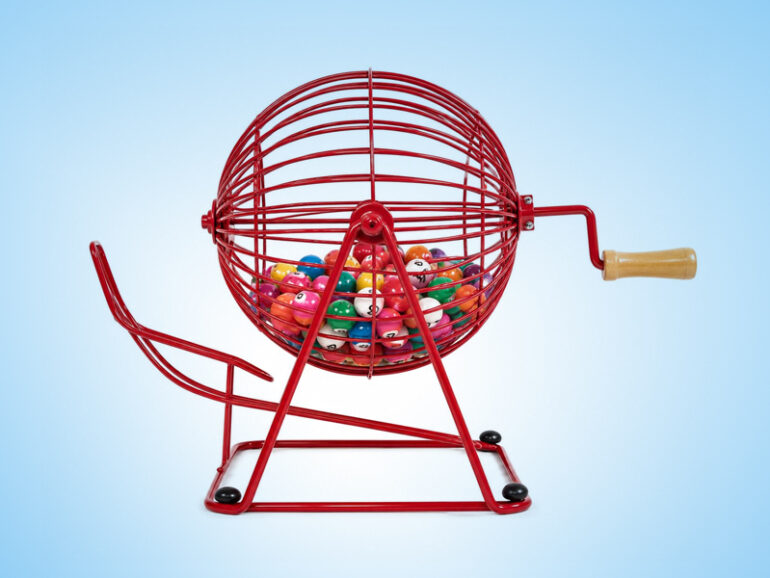
In that sense, each of us enters what might be called the “Lottery of Life.”
We are handed a ticket without choosing it.
The important question, however, is not simply what ticket we received. The more important question is: What do we do with it once we become capable of thinking and choosing for ourselves?
Our first mental software
From the moment we are born, our minds begin absorbing information.
Parents, family, teachers, friends, culture, religion, media, traditions, successes, failures, rewards and punishments all contribute to shaping the way we understand ourselves and the world around us.
We might think of this as our original mental software.
A child does not normally stop and ask: Is what I am being taught correct?
Why does my family believe this?
Could there be another way of looking at the issue?
Children largely absorb the world presented to them. Long before they develop critical thinking, many assumptions have already become deeply embedded in their minds.
Some of this programming is enormously valuable. It gives us language, identity, values, discipline, belonging and the accumulated wisdom of previous generations.
But not everything we inherit is necessarily correct forever.
Some ideas may have been suitable for another generation but not for ours. Some may be incomplete. Others may be based on fear, prejudice, misunderstanding or simply limited knowledge.
The danger begins when we mistake what we learnt for absolute truth.
We see the world through our software
Human beings do not simply observe events. We interpret them.
And our interpretation is heavily influenced by our previous experiences and beliefs.
Imagine two people experiencing exactly the same professional failure.
One thinks:
“I failed. Therefore, I am not capable.”
The other thinks:
“I failed. What can this experience teach me?”
The event is identical.
The interpretation is completely different.
Why?
Because the mental software processing the experience is different.
One person may have grown up believing mistakes are shameful. Another may have learnt that mistakes are an essential part of experimentation and growth.
This raises an uncomfortable but extremely important question:
How much of what I believe today did I consciously choose, and how much did I simply inherit?
Why do I think the way I think?
Perhaps one of the greatest signs of intellectual maturity is the ability to question our own thinking.
We frequently question other people’s opinions, decisions and assumptions. But how often do we turn that same intellectual microscope towards ourselves?
Why do I think the way I think?
Where did this belief come from?
Did I reach this conclusion through evidence and reflection, or did I inherit it from my environment?
Is this belief still valid?
Is it helping me understand reality – or preventing me from seeing it differently?
And perhaps the most difficult question:
What evidence would persuade me that I might be wrong?
This is not an invitation to reject our upbringing, culture, traditions or previous education. Quite the opposite.
Critical thinking does not mean automatically rejecting inherited knowledge. It means having the intellectual courage to examine it before deciding whether to keep it, modify it or replace it.
Understanding ourselves
This process also helps us distinguish between two statements that may sound similar but are profoundly different:
“This is who I am,”
and
“This is what I learnt to believe.”
Perhaps someone avoids disagreement because they grew up believing disagreement means disrespect.
Perhaps another person fears taking risks because mistakes were severely criticised during childhood.
Someone else may automatically assume that seniority means wisdom, qualifications mean competence or authority means correctness.
Once we begin asking where these assumptions came from, something important happens.
We begin to understand ourselves.
This is closely related to metacognition – the ability to think about our own thinking.
We stop being merely passengers inside our minds and begin observing how our minds operate.
Learning is no longer enough
For generations, education has emphasised learning: acquiring more information, more knowledge and more skills.
But in a rapidly changing world, learning alone is no longer sufficient.
We must develop three interconnected capabilities:
Learning. Unlearning. Relearning.
Learning is acquiring new knowledge, skills, experiences and perspectives.
Unlearning is examining what we already know and letting go of assumptions, habits, practices or beliefs that are no longer accurate or useful.
Relearning is rebuilding our understanding using better knowledge, new evidence and fresh perspectives.
And perhaps unlearning is the most difficult of the three.
Learning often adds something to the mind.
Unlearning asks us to remove something from it.
Human beings naturally become attached to familiar ideas – particularly ideas that have become connected to identity, status, experience or authority.
It is much easier to say, “I need to learn something new,” than to admit, “Something I have believed for 30 years may no longer be correct.”
The danger of running Version 1.0
Technology provides a useful analogy.
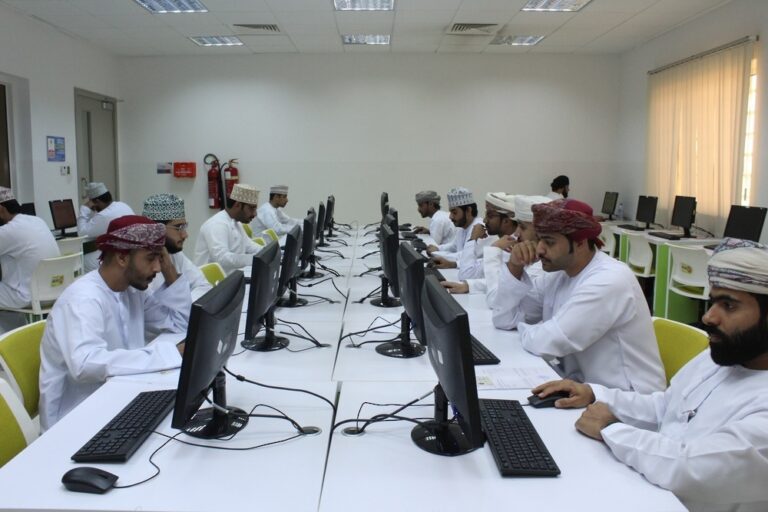
Imagine buying a computer and refusing every software update for 20 years.
Eventually the machine may still operate, but increasingly it will struggle to function effectively in a world that has changed around it.
Yet human beings sometimes do exactly this with their thinking.
The world changes.
Knowledge changes.
Technology changes.
Organisations change.
Professions change.
Societies change.
But some people continue operating with assumptions installed decades earlier.
Experience is valuable, but experience without reflection can simply become repetition.
Therefore, wisdom is not merely accumulating years of experience. It is continually examining what those years have taught us.
From Inheritance to Choice
The Lottery of Life determines many of our starting conditions, but it does not have to determine our final destination.
Our early environment gives us our first mental software. Education and experience add new programs. Reflection allows us to examine them. Critical thinking helps us identify their weaknesses. Unlearning allows us to remove what no longer serves us. Relearning allows us to replace it with something better.
The journey can therefore be described simply:
Lottery of Life → Original Programming → Experience → Self-Awareness → Questioning → Learning → Unlearning → Relearning → Growth
There is something deeply hopeful in this idea.
We may not be responsible for every belief that was installed in us when we were young. But as mature adults, we increasingly become responsible for whether we continue carrying those beliefs without examination.
The goal is not to become suspicious of everything we know.
The goal is to remain intellectually alive.
To remain curious.
To occasionally ask ourselves:
Why do I believe what I believe?
When was the last time I changed my mind about something important?
What am I still doing simply because “this is how we have always done it”?
What do I need to learn?
What do I need to unlearn?
And what do I need to relearn?
We cannot choose the ticket we receive in the Lottery of Life.
But we can choose what we do with it.
Our first mental software may have been installed largely by others.
But we do not have to spend the rest of our lives running version 1.0.
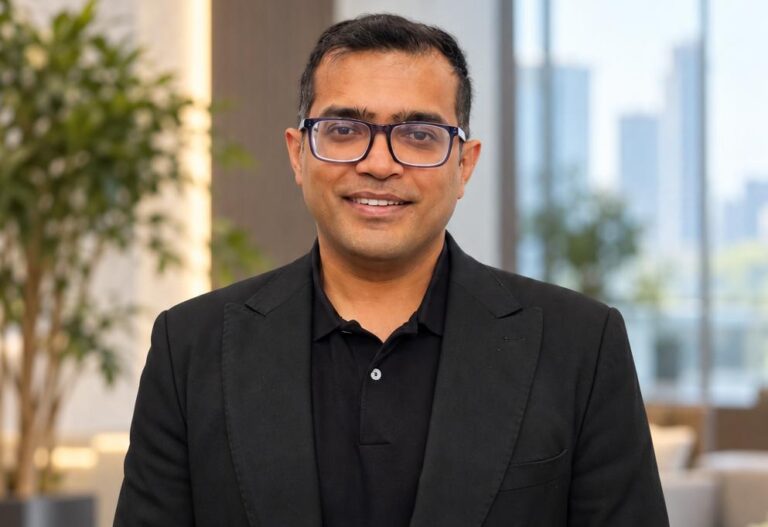
(The writer is an Omani leadership and human development professional whose career has spanned more than four decades across policing, aviation, education, training, consulting and institutional governance. Beyond titles and positions, his enduring passion is people, their capacity to learn, rethink, grow and contribute meaningfully to society.)
(The views and opinions expressed in this column are solely those of the author and do not necessarily represent those of Muscat Daily or Apex Media)
© 2021 Apex Press and Publishing. All Rights Reserved. Powered by Mesdac