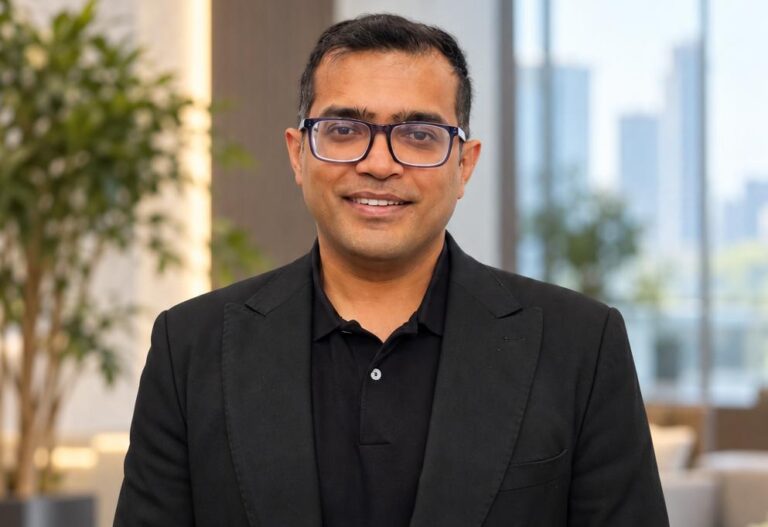
Captain Khalil Al Hooti, Chairman, Oman Maritime Association
Before most of us finish breakfast, we have probably already depended on the sea several times without realising it.
The coffee we drink, the car we drive, the phone in our hand, the fuel that moves our economy, the food on supermarket shelves and many of the medicines we depend upon are connected, somewhere along their journey, to ships and ports.
Yet shipping remains largely invisible to the public. We notice it when a vessel blocks an important waterway, when conflict disrupts shipping routes, or when freight costs begin affecting prices. Otherwise, ships quietly arrive, discharge, load and sail again.
That invisibility is perhaps the greatest indication of how efficiently the maritime system normally works.
More than 80% of global trade by volume is transported by sea, according to the International Maritime Organization. The modern global economy simply could not function at its present scale without shipping.
For Oman, however, the relationship with the sea goes much deeper than global trade.
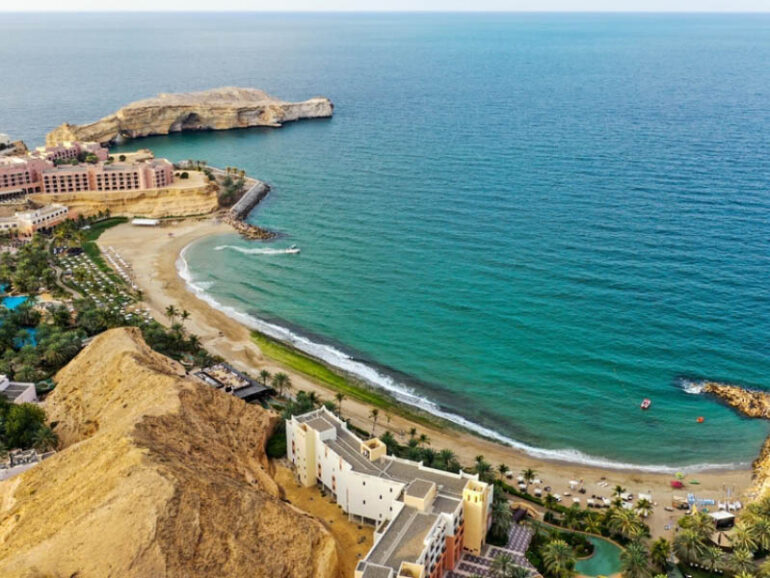
Our coastline stretches approximately 3,165km, from Musandam overlooking the Strait of Hormuz, along the Sea of Oman and Arabian Sea to Dhofar. For generations, Omanis looked towards the sea not as a boundary, but as a highway connecting them with India, East Africa and markets far beyond.
Today, that geography remains one of Oman’s greatest strategic advantages.
Ports such as Suhar, Duqm and Salalah connect Oman with international markets and support ambitions extending well beyond the movement of cargo. In 2024, maritime ports accounted for around RO16.5bn, or 77%, of Oman’s total import and export trade. The government’s logistics strategy consequently seeks to use Oman’s location and infrastructure to strengthen the country’s position as a regional and global logistics hub.
But here is the question I believe deserves greater discussion: Does having an advantageous coastline and successful ports automatically make us a maritime nation?
I would argue that it does not.
A truly maritime nation is not defined only by how many ships call at its ports or how many containers cross its quays. It is also reflected in its people, maritime skills, seafarers, regulatory capability, ship ownership and management, marine industries, technology, environmental stewardship, security awareness, research, education and, importantly, how society itself understands the sea.
That distinction will become increasingly important.
Shipping is entering one of the most significant periods of change in its modern history. Decarbonisation is changing ships and fuels. Digitalisation and artificial intelligence are changing operations. Geopolitical tensions are changing trading routes and security calculations. New regulations are changing how vessels are designed, operated and managed. Meanwhile, competition between maritime centres is increasingly about knowledge, talent, technology and regulatory capability – not simply infrastructure.
Oman therefore has an opportunity, but geography alone will not capture it.
We must ask whether enough young Omanis understand the careers available in maritime. Are we developing the capabilities required for tomorrow’s shipping industry? Are we thinking sufficiently about maritime security and the responsibilities that accompany our strategic location? Can we convert port activity into wider economic value, expertise and employment? And are we positioning ourselves merely as a place through which maritime trade passes – or as a country that actively shapes maritime activity?
These are not questions for maritime professionals alone.
They concern policymakers, businesses, educators, universities, young people and ultimately every citizen who benefits from the trade, connectivity and security that the sea provides.
This is why I am starting Maritime Talks.
Each week, I hope to take one part of this enormous maritime world – sometimes familiar, sometimes technical, sometimes controversial – and bring it into a wider conversation.
Because perhaps the question is no longer simply why Oman should care about the sea.
The more important question is: are we making enough of what the sea has given us?
Captain Khalil Al Hooti
© 2021 Apex Press and Publishing. All Rights Reserved. Powered by Mesdac