
By Philip G. Wynne
Diplomacy is rarely the art of shouting the loudest. It is the discipline of being trusted when others are not.
For nearly half a century, the late Sultan Qaboos bin Said governed Oman with a style of leadership that is increasingly rare in international politics: quiet authority. In a region frequently shaped by ideological rivalry and power competition, Sultan Qaboos built his country’s foreign policy around neutrality, mediation, and respect for the sovereignty of states. Rather than seeking influence through confrontation, he pursued it through credibility.
This philosophy produced tangible results. Oman became one of the most trusted diplomatic intermediaries in the Middle East, a country capable of maintaining dialogue with governments that refused to speak to one another. The Sultan understood that trust is the rarest currency in geopolitics—and once earned, it can open doors closed to others.
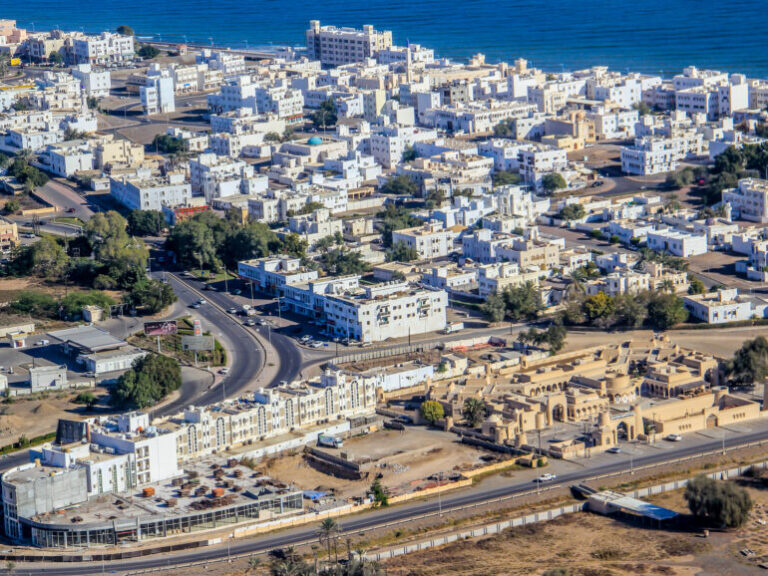
Oman’s strategic importance to the United States begins with geography. Sitting at the mouth of the Strait of Hormuz, through which roughly one‑fifth of the world’s oil supply passes, the Sultanate occupies one of the most critical maritime chokepoints on the planet. Since the early 1980s, Oman has granted the United States access to key military facilities under bilateral agreements that allow American forces to operate from Omani air bases and ports. These arrangements have quietly supported US operations across the Gulf region for decades.
American naval forces have long relied on Omani ports and logistical cooperation to maintain maritime security across the Gulf and the Arabian Sea. The sultanate has supported international efforts to ensure freedom of navigation through the Strait of Hormuz—one of the most vital arteries of global commerce.
Unlike many alliances forged in moments of crisis, the US–Oman relationship evolved gradually through mutual trust. Sultan Qaboos recognised that stability in the Gulf required cooperation with Washington, but he also understood that Oman’s credibility as a mediator depended on maintaining dialogue with all sides—including those with whom the United States had strained relations.
That diplomatic balance proved invaluable. Oman famously facilitated the secret back‑channel negotiations between the United States and Iran that ultimately helped pave the way for the 2015 nuclear agreement. Long before the talks became public, Omani officials hosted discreet meetings in Muscat between American and Iranian representatives. Those discussions reopened channels of communication that had been dormant for more than three decades.
The success of those early meetings demonstrated what Omani diplomacy had long emphasised: neutrality can create opportunities where alignment cannot.
Sultan Qaboos applied the same philosophy to other regional conflicts. Oman repeatedly served as an intermediary in discussions surrounding Yemen, maintaining communication channels between competing factions and international actors during a conflict that has often resisted formal diplomacy.
Even after Sultan Qaboos’s passing in 2020, the country has continued to play this mediating role under the leadership of His Majesty Sultan Haitham bin Tarik. Muscat remains one of the few capitals trusted by opposing regional powers to host dialogue.
Such credibility does not emerge overnight. It is the product of decades of consistency, restraint, and diplomatic discipline.
Against this historical backdrop, the tone of modern political rhetoric can appear strikingly coarse. The contemporary political environment increasingly rewards spectacle, confrontation, and public theatrics. Yet diplomacy has traditionally relied on precisely the opposite virtues: patience, respect, and restraint.
Recent years have illustrated this contrast vividly. Donald Trump’s political style – direct, confrontational, and often dismissive of diplomatic convention – has reshaped the tone of American political discourse. While such rhetoric may resonate domestically, its effect in international diplomacy can be far more complicated.
Diplomatic relationships are rarely sustained through public displays of dominance. They depend instead on long‑term credibility, mutual respect, and the quiet maintenance of trust. When rhetoric shifts toward insult or intimidation, the subtle architecture of alliances can weaken.
The contrast with Sultan Qaboos’s approach could hardly be clearer. Where modern politics often prizes visibility, he understood the power of discretion. Where others sought advantage through pressure, he cultivated influence through reliability.
His method reflected a deeper understanding of diplomacy: the most consequential negotiations often occur far from cameras and headlines. The ability to speak to every side—without appearing captive to any—allowed Oman to serve as a bridge between rival powers.
In a region frequently defined by polarization, that role remains invaluable.
The broader lesson extends beyond Oman. In a fragmented global order, nations that preserve diplomatic credibility may wield influence disproportionate to their size. Military strength and economic scale remain critical elements of power, but trust is increasingly scarce.
For decades, Oman has offered the United States something few countries can: a reliable partner capable of maintaining dialogue where others cannot. That quiet partnership has helped defuse crises, open channels
of communication, and preserve regional stability.
History tends to remember the leaders who understood that diplomacy is not merely the projection of power, but the careful management of relationships.
Sultan Qaboos belonged to that tradition.
In a louder and more confrontational age, his legacy serves as a reminder that the most effective diplomacy is often conducted quietly – by those who understand that respect, patience, and credibility ultimately speak louder than rhetoric.
(Wynne is the founder of Felipe Gregorio Cigars. He brings a global perspective shaped by earlier experience in intelligence and diplomatic environments during the Cold War, including work connected to senior figures within US covert affairs)
© 2021 Apex Press and Publishing. All Rights Reserved. Powered by Mesdac