
 By OUR CORRESPONDENT
Muscat – Passenger traffic through Oman’s airports fell 9.3% in the first five months of 2026 as the aviation sector continued to feel the effects of the Iran-US war, although the pace of decline across the Middle East has begun to ease.
According to the latest data from the National Centre for Statistics and Information, airports in the sultanate handled 5.25mn passengers in 2026 till the end of May, down from 5.79mn during the same period in 2025.
The decline comes against the backdrop of a wider regional slowdown. The International Air Transport Association (IATA) said passenger demand among Middle Eastern carriers fell 28.8% year on year in May, following a steeper 48.1% drop in April as the conflict disrupted air travel across the region. Capacity declined 24.3% in May, while average load factors fell to 76.1%. IATA noted that traffic performance improved from April, indicating that the impact of the conflict is gradually easing.
“Global air passenger demand was down 2.2% year-on-year in May on the impact of war in the Middle East,” Willie Walsh, Director General of IATA, said. He noted that the sharp decline in regional traffic had improved significantly from April, reflecting the resilience of Middle Eastern airlines despite continued uncertainty surrounding the Strait of Hormuz and jet fuel prices.
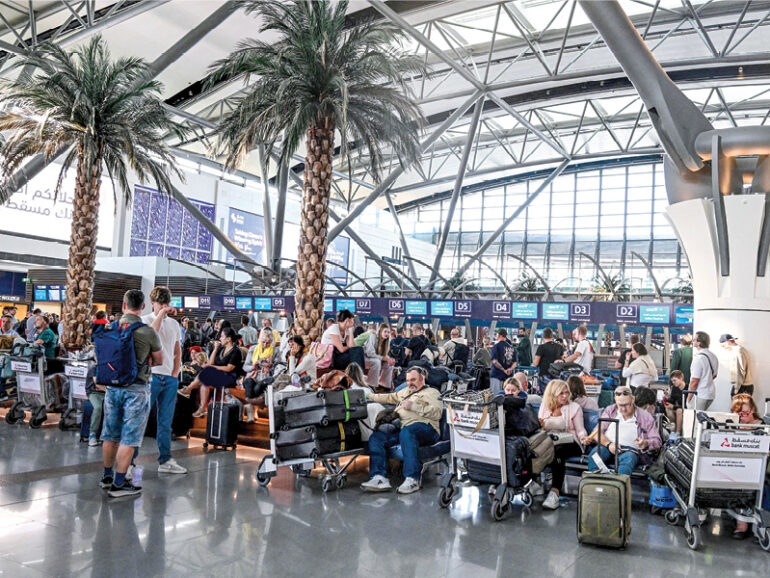
Muscat International Airport accounted for the bulk of Oman’s passenger traffic, handling 4.76mn passengers till the end of May, an 8.5% decline from 5.21mn a year earlier. Flight movement at the airport, including domestic and international services, fell 8.2% to 34,242.
Salalah Airport recorded a steeper decline, with passenger numbers dropping 15.9% to 468,797, while flight movements fell 13% to 3,234.
Suhar Airport handled just 173 passengers during the five-month period, down 48.5% from a year earlier, as flight movements declined 39% to 50.
At Duqm Airport, domestic passenger traffic fell 19.3% to 20,476, while the number of domestic flights dropped 13.3% to 222.
Despite the overall decline, India remained Muscat International Airport’s largest passenger market during May. Indian nationals accounted for 175,022 arriving and departing passengers, including 76,515 arrivals and 98,507 departures.
Omani nationals ranked second with 80,732 passengers, followed by Pakistani nationals with 45,956, underlining the continued importance of South Asian markets to Oman’s aviation sector.
© 2021 Apex Press and Publishing. All Rights Reserved. Powered by Mesdac