By Haifa Al Khaifi and Jesal Asher-Rajda
When uncertainty grips the Gulf, the world’s attention turns almost instinctively to one number: the price of oil. During the regional conflict of early 2026, Brent crude climbed above US$120 a barrel, retreated on ceasefire announcements, rose again as tensions returned, and settled as hopes of stability re-emerged. To most observers, the recovery in oil prices became the proxy for the recovery of the wider economy.
We found ourselves asking a different question. What if the oil price was only telling part of the story?
That question led us somewhere far less glamorous but far more revealing: a routine commercial invoice accompanying a shipment into Oman.
Where the cost actually went
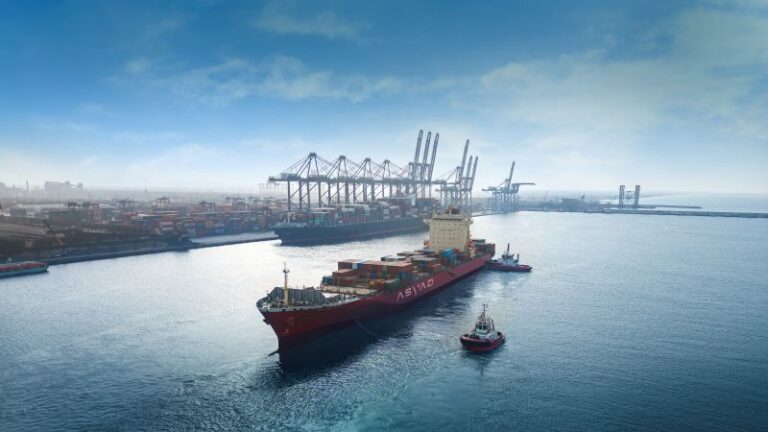
The invoice was, at first glance, unremarkable, ocean freight, documentation, handling charges, the familiar small print of international trade. Then there were two entries that had not existed only months earlier: a War Risk Surcharge of RO962, and Emergency Conflict Charges of RO561. Together, more than RO1,500 on a single shipment into a port that sits outside the Strait of Hormuz. The vessel never came near the conflict to reach it. The cargo had routed around the danger. The cost had not.
What struck us was the timing. By the time that invoice arrived, oil prices had already begun stabilising. Yet the invoice told a different story, one the price of crude could not see.
The explanation lies in the mechanics of marine war-risk insurance. When a shipping zone is designated dangerous, underwriters impose a surcharge on every vessel operating within it, regardless of whether that particular ship ever went near contested water. That cost is set by the underwriter, not by the market. It rises fast and comes down slowly, tied not to ceasefire announcements but to quarterly committee reviews, accumulated incident-free passage data, and loss ratios that in this crisis ran well past 100%.
The oil price had round-tripped. Base freight rates had begun easing. But the war-risk line held firm. The cost of the crisis had not vanished, it had migrated.
This is not new. Nearly 40 years ago, during the Tanker War of the 1980s, the supertanker Bridgeton struck a mine while leading the first US Navy convoy through the Gulf. Global oil supply continued uninterrupted. The costs simply moved elsewhere, into insurance premiums, crew danger pay, accumulated delays. Four decades later, the pattern repeats: markets price expectations, businesses pay invoices. Only one of those was telling the truth.
The practical implication for Oman is important. If the headline price is the wrong place to look for the cost of regional instability, it is also the wrong place to look for the opportunity that instability creates. The real signal sits in the same overlooked layer, in what shippers, insurers and traders are actually doing differently while the danger is fresh, and in which jurisdictions are positioning themselves to benefit once that behaviour becomes habit rather than reaction.
What the crisis did not hand Oman
The story told most often about Oman during the disruption was one of a windfall. Sitting at the mouth of the strait, outside the chokepoint, the sultanate would absorb the rerouted Gulf traffic, and a decade of deep-water investment at Sohar, Salalah and Duqm would finally pay out. Geography, at last, would be rewarded.
The evidence suggests a more precise, and ultimately more useful, frame. The cargo that diverted in the immediate weeks moved fastest to wherever the surrounding land-side machinery, trucking, customs, inland connectivity, was already most built out. Capturing diverted flow at short notice depends on that infrastructure as much as on geography. Trans-shipment routing is an efficiency calculation, not a loyalty one: when the cheapest route reopened, the cargo began returning to it.
That is not a damaging verdict on Oman. It is a precise map of exactly what to build next.
The more important insight is that a disruption like this does not hand out permanent cargo. It creates a window. For as long as the danger is fresh, every shipper, trader and underwriter who has just watched Hormuz become impassable is actively re-pricing their dependence on it, and is open to alternatives they would not have considered a year earlier. That window does not stay open indefinitely; it closes as the strait normalises and the memory fades. The durable winners from any chokepoint crisis are those who institutionalise inside the window, converting a newly cautious counterparty into a committed one before the caution wears off.
The question worth asking is not whether Oman benefited from one disruption. It is whether Oman is using the window well. On the evidence, it is.
The work already under way
The clearest evidence of strategic intent is structural. Oman’s comprehensive economic agreement with India, in force since June 1, is precisely the instrument a moment like this rewards: duty-free access across almost the entire tariff schedule, giving buyers a standing, cost-based reason to keep sourcing through Oman long after the crisis logic has faded. A permanent change to the economics of trade, formalised while counterparties are most motivated to diversify, is exactly what converts a temporary window into lasting advantage.
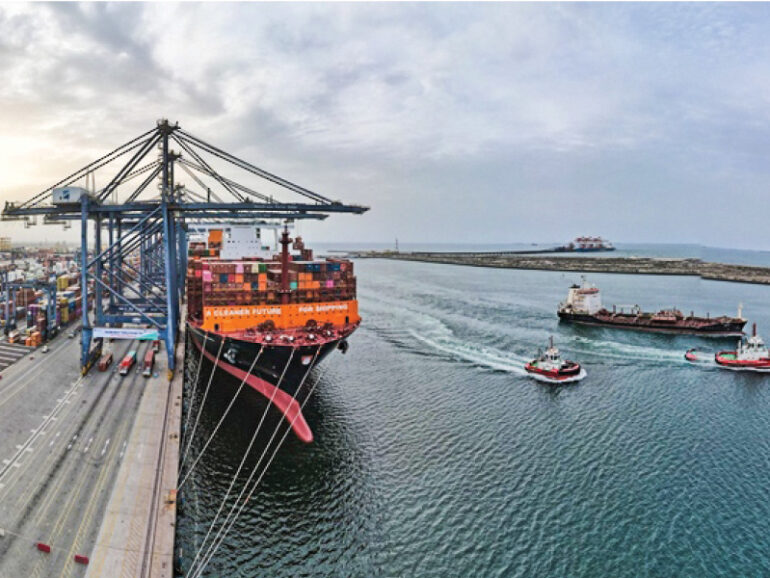
On the operational side, the country is not standing still. The work is real, and largely consists of the unglamorous digital infrastructure that decides whether geography becomes throughput in practice. The Ministry of Transport’s Naql platform has already processed more than 429,000 electronic land-transport transactions. A port community system piloted at Sohar has cut a ship’s turnaround from 48 hours to 24, and goods clearance from more than five hours to two, the kind of operational gain that, scaled, is the difference between catching a diverted vessel and watching it call elsewhere. A blockchain-based transport-document pilot has run across nearly 110,000 trucks. The Sohar-to-Buraimi road is receiving five new bridges by year end. A freight-rail agreement with Hafeet Rail is structured around seven container trains a week and close to 200,000 TEU of annual capacity once the network is complete.

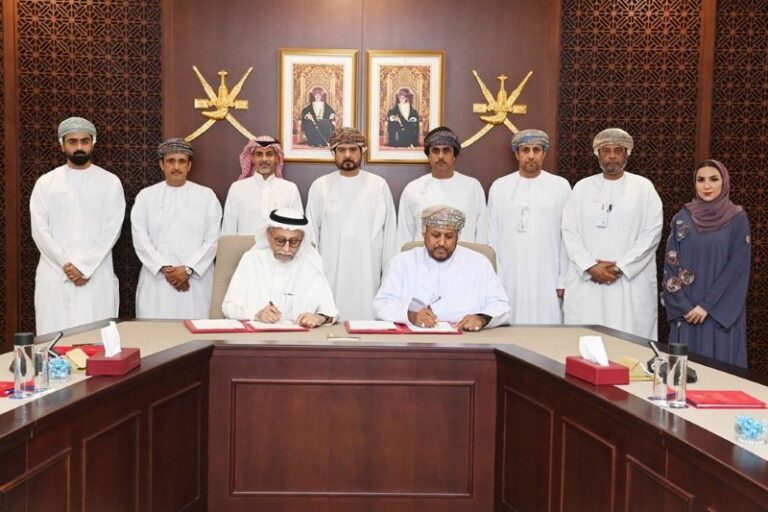
As recently as late June, Asyad and CMA CGM signed a framework agreement for a new $400mn logistics terminal at Sohar, with CMA CGM’s leadership citing reliable inland access and greater supply-chain resilience as the rationale. That agreement was signed after the ceasefire announcement. Nobody commits $400mn to a bypass terminal if they believe the strait has reopened for good.
Duqm and the route around the chokepoint
The forward asset, the one that routes around the chokepoint entirely, is the energy-transition cluster at Duqm, and precision matters here. One project has firmly crossed into the committed column: ACME’s green-ammonia development, with land agreements inside the national hydrogen framework, a first phase already under way with offtake support from Yara, and a commitment on the order of $4bn across its later phases. That is a real, funded project.
Alongside it sits HYPORT Duqm, a serious consortium with BP as operator, advancing towards a final investment decision within the 2026-to-2027 window that Oman’s own energy ministry has set. Beyond those two lies a deeper pipeline, BP, Shell, a Posco-Engie consortium, rightly read, for now, as intent rather than commitment.
Taken together, Duqm is no longer an abstraction. It is a cluster moving from plan to construction, anchored by at least one concrete, financed project and a national framework designed to convert intent into investment. The commodity it will eventually sell, green hydrogen and its derivatives, is one no chokepoint can touch. That is the point.
The lasting winners from a crisis like this are not the ports that briefly caught the diverted boxes. They are the builders of what comes after: the inland links, the terminals, the energy-transition capacity, the infrastructure of a Gulf that has decided it can no longer depend on a single strait. On the evidence of what it is already putting in the ground, Oman is positioning itself among those builders.
Execution is the remaining task
There is one capability this crisis measured with unusual precision: execution speed, the ability to convert strategy and institutional design into coordinated operational response at the pace a disruption demands. Across the region, the ports and customs authorities that captured the most diverted flow were those that moved as a single coordinated machine: digital pre-clearance, fast-track green corridors, synchronised inland routing, operationalised within days.
Oman has the institutional architecture for this: a ministerial committee for logistics and border crossings, an executive committee beneath it, the Oman Logistics Center as implementation arm, and a growing body of operational platforms and agreements. The strategic direction is set and the infrastructure investment is real. What remains is to sharpen the speed at which that architecture converts a signal into a synchronised operational response, a well-defined objective, built through exactly the digital investment Oman is already making, and one that compounds with each exercise.
A position worth building on
The invoice that began this inquiry recorded something the oil price could not: that the cost of a Gulf crisis does not disappear when commodity markets recover. It migrates into less visible layers of the economy, insurance premiums, administrative surcharges, compressed margins, absorbed by businesses large enough to carry it, shed by those that are not.
That mechanism is the context in which Oman’s opportunity sits. Global supply chains are no longer asking only which route is cheapest. They are asking which route will still work when conditions become uncertain. The answers, resilience, connectivity, institutional reliability, are exactly what the investments already under way at Sohar, Duqm, along the Hafeet corridor, and through the India trade agreement are designed to supply.
The window opened by the crisis is real, and still open. The work to institutionalise inside it is already under way. The position is genuine, the playbook is clear, and the investments are increasingly concrete.
Whether this position yields result is now, principally, a question of execution tempo. And on the evidence of what is already on the ground, that is the most closable gap of all.
Haifa Al Khaifi has worked in the energy sector globally at C-suite level for more than three decades. She now works in the private sector and sits on several international boards as an independent director and strategic adviser. She is also a private investor backing female founders with equity.
Jesal Asher-Rajda is the Executive Director of Al Ansari Group, where she leads governance, transformation and strategic growth. Her career spans international consulting, family business leadership and board service, with a passion for developing leaders, mentoring the next generation, and giving back to the community.
This piece was written in conjunction with The Strategist (TSCS)
© 2021 Apex Press and Publishing. All Rights Reserved. Powered by Mesdac