 By HUBERT VAZ
Anselm Perera, a Sri Lankan expatriate who has been living and working in Oman for the past five decades, believes that Omanis and Sri Lankans both stand out as warm, generous, and deeply respectful people. “What began as a job, grew into a lifelong journey,” the banker par excellence tells Hubert Vaz about his ‘perpetual bond’ with Oman
Having an outstanding privilege of serving in Oman’s banking sector for over 39 years, drawing on international experience, and a deep understanding of both the Middle Eastern and Sri Lankan markets, Anselm Perera, a banker from Sri Lanka, who began a fruitful career in Oman five decades ago, looks back with a deep sense of fulfillment.
“My career began in 1971 with National and Grindlays Bank in Sri Lanka, and in 1975, I joined The British Bank of the Middle East (now HSBC Oman),” says the man who held a range of leadership roles, including “handling the Private Ledger of Late His Majesty Sultan Qaboos’ Royal Palace Accounts — a role of highest confidentiality and trust.”
Being one of only three bankers in Oman to hold the Fellowship of the Institute of Financial Studies (Chartered Institute of Bankers, UK), over the years, Perera was fortunate to build enduring relationships with government entities, regulators, corporates, and professionals, while upholding the values of integrity, excellence, and service that define Oman’s progress, over the past five decades.
Beyond business, Anselm served the Sri Lankan and expatriate community in various leadership roles — notably as President of the Sri Lankan Community Social Club, Chairman of the Board of Management of the Sri Lankan School Muscat and Co-founder and Chairman of the Dhofar Cricket Association.
“Oman has been central to my family’s life. My wife, Frances, and I are proud that our three children were born in Sultan Qaboos Hospital, Salalah — our eldest being the first expatriate child born there. I still hold my Omani driving licence, first issued in 1975 and valid today, symbolising five decades of belonging to this beautiful nation,” he says with great pride. Excerpts from a free-wheeling tete-a-tete:
When you came to Oman in 1975 what were your credentials?
I was 28 years old when I arrived in Oman. Before that, I was employed as a clerk at National and Grindlays Bank in Colombo, Sri Lanka. At the time, I was pursuing the final part of my studies with the Chartered Institute of Bankers, London, having completed Part I and with two subjects remaining in Part II. My role at Grindlays involved ledger keeping and general banking operations.
Why did you choose to come to what was then an underdeveloped Gulf country?
After 1970, Sri Lanka came under a socialist government, during which time the country faced significant economic hardship. Movement of basic commodities such as rice, chillies, and sugar between provinces was restricted – even a loaf of bread was divided into quarters, with each person entitled to just one piece. Restaurants, too, were not permitted to serve rice and curry on two days of the week.
Furthermore, anyone wishing to leave Sri Lanka had to obtain an exit permit and justify their reason for travel. My reason was an overseas employment offer. Against this backdrop, I saw an opportunity in Oman — a young nation then on the threshold of transformation — and decided to take that leap of faith.
Where were you initially employed and what was your salary like? During that time, Muscat was the focal point for most commercial activities. There were no direct flights from Colombo to Muscat, so I flew via Mumbai, with a two-night stopover.
Fortunately, my prospective employer, The British Bank of the Middle East (later rebranded as HSBC), covered both my airfare and hotel accommodation. In hindsight, the decision to come to Oman proved to be one of the best in my life — both professionally and personally.
How comfortable were you in Oman?
I settled in quite comfortably. I was provided with accommodation close to the BBME Head Office in Muscat. At the time, most British companies and the British Embassy were located in the same vicinity.
There were five Sri Lankans, including myself, working at BBME — the first group of Sri Lankans employed in the banking sector in Oman. We bonded quickly, cooking together, socialising in the evenings, and forming a small but close-knit community.
Within a week, two of us were informed that we would be transferred to the Salalah branch. Friends from other British companies warned us that Dhofar was then considered a conflict zone and that most expatriates posted there received a risk allowance. However, I was assured by a staffer that all will be well…and it has till date.
Sri Lankans are known for their hospitality. Do you see any similarities with the Omani people?
Absolutely. Omanis, like Sri Lankans, are warm, generous, and deeply respectful. They value relationships and treat others with kindness. I experienced this hospitality both in Salalah and Muscat, and it left a lasting impression on me.
Did you form close ties with Omani families?
Yes, I had the privilege of forming close friendships with many Omanis and their families. Over the years, I was invited to attend weddings, family gatherings, and even funerals — which speaks to the depth of those relationships. Those bonds remain among my most cherished memories.
How comfortable were your family members in Oman?
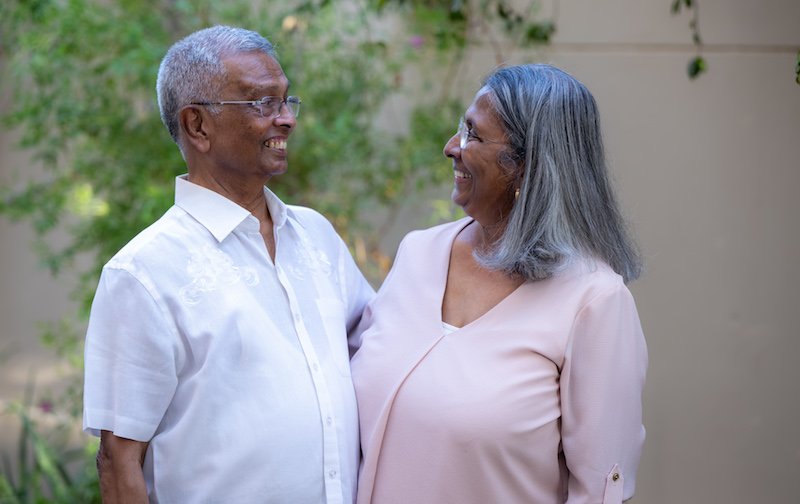
My wife adapted remarkably well to Omani culture and society. All our children were born in Salalah and grew up surrounded by the warmth and values of the Omani community. Oman, therefore, has always felt like home to us.
Professionally, how fast did you climb the career ladder?
Within my first five years, I advanced from a clerical position to Supervisor, then Staff Officer, and subsequently Management Officer. I attended several management training programmes in Dubai, Hong Kong, and London. Between 1980 and 2008, I had the opportunity to head all major functions of the bank — with the exception of the CEO role.
Looking back, did you ever imagine you would complete 50 years in Oman?
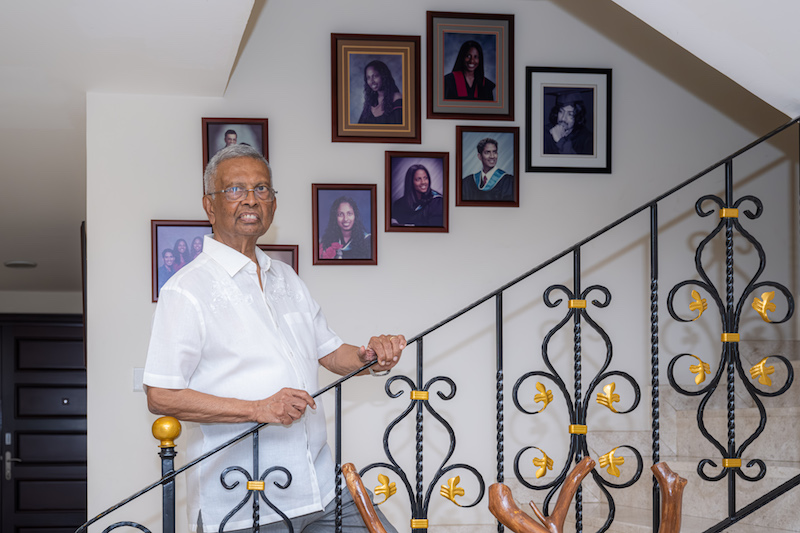
Never. What began as a job grew into a lifelong journey? One of my fondest memories is returning to Sri Lanka after two years in Salalah to marry my fiancée – Frances. Together we built our life here and were blessed with three children — two daughters now living in Toronto, Canada, and a son who serves as an executive director in our company.
The most difficult moments were missing important family events in Sri Lanka. In addition, we faced significant professional challenges. Yet, the enduring friendships, love, and support we found in Oman made these hardships easier to bear and strengthened our connection to this remarkable country.
Having witnessed Oman’s transformation, what is your candid view of the country’s progress and its future direction?
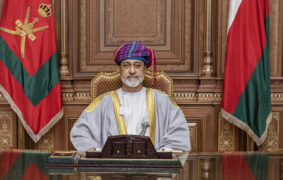
I arrived in Oman when the Late His Majesty Sultan Qaboos bin Said was in the fifth year of his visionary reign. I was privileged to witness His Majesty’s extraordinary leadership in transforming Oman from a largely undeveloped state into a modern, thriving nation. His Majesty Sultan Haitham bin Tarik has continued that legacy with dedication and foresight, steering Oman toward sustainable growth.
How would you describe your years in Oman to fellow Sri Lankans
I would tell my fellow Sri Lankans that living and working in Oman was an immensely enriching and rewarding experience — both professionally and spiritually. The religious freedom, mutual respect, and safety we enjoy here are exceptional. It will, of course, be a deeply emotional moment if and when I leave Oman, but for now, I prefer not to dwell on that thought.
Which was your first car, and how many have you owned over the years?
My first car was a yellow Nissan Sunny with the registration number J27772. Since then, I have owned six vehicles over the years — each representing a chapter of my journey here.
Would your return to Sri Lanka someday to reconnect with your roots?
That is indeed a difficult decision. My wife and I hold dual nationality — Sri Lankan and Canadian. Our two daughters are well-settled in Canada, while our son lives and works with us here in Oman. Eventually, our decision will be guided by family considerations.
How do you see Oman in the near future?
Oman has achieved remarkable progress under wise leadership, and I trust, that the nation’s continued development will address all areas of improvement in due course.
Did you have the privilege of meeting the Late His Majesty Sultan Qaboos?
Yes. I had the distinct honour of meeting His Majesty Sultan Qaboos on two occasions during my tenure in Salalah. The first was at a tea party to celebrate Renaissance Day hosted at the Palace, graciously attended by His Majesty. The second was during National Day celebrations, where I had the privilege of representing The British Bank of the Middle East and personally conveying our greetings and congratulations to His Majesty.
© 2021 Apex Press and Publishing. All Rights Reserved. Powered by Mesdac