 By
By
Muscat – The Omani economy has recovered from the COVID-19 pandemic with notable improvement in non-oil sectors.
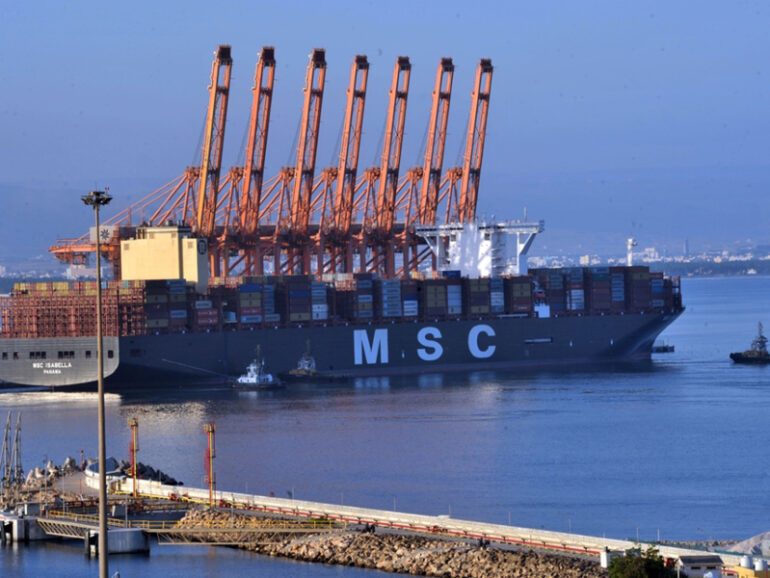
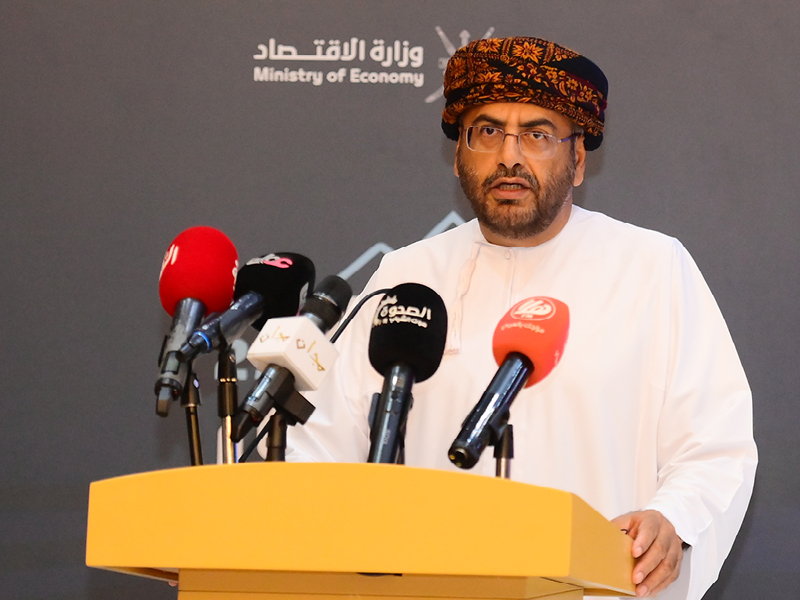
H E Dr Said Mohammed al Saqri, Minister of Economy, announced a 2.1% growth in Oman’s economy in the first half of 2023, predominantly driven by transport, storage, and agricultural and fisheries activities, highlighting the successful efforts under the 10th Five-Year Plan for economic diversification.
The announcement was made at the Ministry of Economy’s media briefing on Monday, which reviewed the prospects and trends of the global economy and the performance of the Omani economy.
H E Saqri noted that the integration of policies and accelerated programmes to achieve Oman Vision 2040 and the 10th Five-Year Plan have been beneficial. Non-oil sectors contributed to approximately 69.4% of the GDP in the first half of 2023.
The minister highlighted ongoing projects, including the support for economic projects enhanced by artificial intelligence, with a RO10mn allocation for implementing AI in ministries and government agencies for the first time.
In alignment with Oman Vision 2040, the government prioritises offering gainful employment opportunities to citizens. As a result, employment opportunities surged by 16.2% in 2022, demonstrating the continued recovery and openness of the Omani economy.
The government has also initiated various measures to mitigate inflation effects, including fixing fuel prices and expanding the list of goods exempt from VAT to 513.
The Ministry of Economy is focusing on governorate development with a RO20mn allocation each for implementing 606 projects. Since the start of the 10th Five-Year-Plan, 1,915 development projects have been approved at a cost of RO8bn with the infrastructure sector accounting for the highest percentage – 53%.
The economy is expected to grow at a rate of 2.3%, outpacing International Monetary Fund’s expectation of 1.7%. This discrepancy is attributed to the IMF’s reliance on old statistics and not considering the growth in non-oil activities, the minister clarified.
Further, reflecting economic recovery, the GDP at constant prices showed growth of 2.1% during the first half of 2023, reaching RO17.05bn, compared to RO16.7bn during the first half of 2022.
Public debt decreased to around 37% of GDP, enhancing the nation’s credit ratings. Initiatives like expanding the time frame for redirecting electricity subsidies to ten years and supporting farmers have been introduced to counter inflation effects. H E Saqri added.
The positive economic indicators, decrease in public debt and substantial allocations for development projects and AI implementation mark a significant upturn in Oman’s economic landscape, reinforcing a promising outlook for further growth and stability.
Fitch upgrades Oman rating
Global credit rating agency Fitch upgraded Oman’s long-term foreign-currency issuer default rating (IDR) to ‘BB+’ from ‘BB’ on Monday. The rating agency’s outlook on Oman is stable.
‘The upgrade reflects the use of high oil revenues to pay down debt and spread its maturity, spending restraint reducing external risks, and an increase in Fitch’s oil price forecast,’ the ratings agency said in a statement.
Fitch projects Oman’s general government debt to fall to 36% of GDP in 2023 and stabilise at around 35% in 2024 and 2025. Earlier, Fitch had forecast it to fall to 45% of GDP in 2023 when it last upgraded Oman’s rating in August 2022.
‘The upgrade also incorporates our view that the government will not backtrack on recent fiscal consolidation measures,’ Fitch said.
Oman continues to prepay some of its debt, using the budget surplus from high oil prices.
The ratings agency projects Oman’s GDP growth of 2.1% in 2023, slowing from 4.3% in 2022.
© 2021 Apex Press and Publishing. All Rights Reserved. Powered by Mesdac