 By OUR CORRESPONDENT
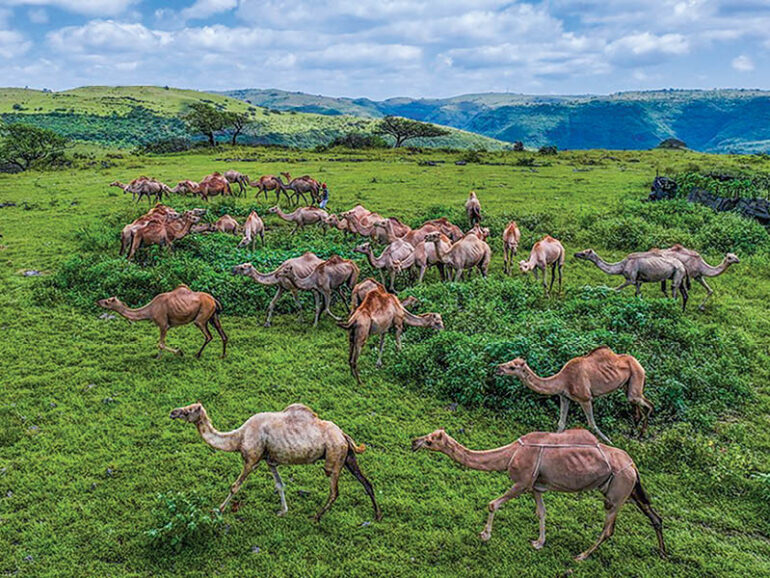
Salalah – As the khareef rains recede and mist gradually lifts from the mountains of Dhofar, camel herds are beginning their annual return to the highlands, marking the arrival of the sarb season.
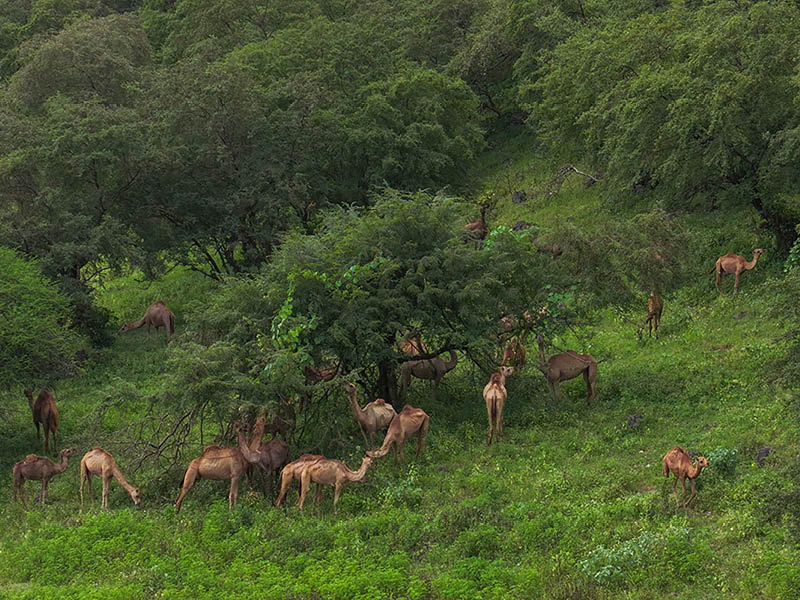
Known locally as Khatlat Al Ibl, the seasonal movement takes camels from the plains and other areas where they spent the khareef towards mountain pastures renewed by the rains. Following valleys and traditional routes, the herds return to grazing grounds rich in natural vegetation.
For generations, the journey has formed part of Dhofar’s seasonal rhythm. More than a movement between grazing areas, it is a social occasion that brings together camel owners and herders and preserves customs and knowledge associated with pastoral life.
During khareef, camel owners traditionally keep their herds in areas less affected by heavy rainfall, including the plains and rain-shadow areas behind the mountain ranges known locally as Qutn areas. This protects the animals from hazards such as slipping on waterlogged soil and allows mountain pastures to recover during the rainy season.
As the khareef ends, owners gradually move towards the mountains, waiting for the ground to dry and the valleys to become suitable. The mountain pastures provide natural fodder, including local trees and plants such as Al Saghoot. The herds may remain there for about a month, depending on weather and pasture conditions.
Abdullah bin Salim Al Maashani said that preparations for Khatlat Al Ibl begin well in advance, with elders and experienced camel owners agreeing on the appropriate date according to weather, ground conditions and the readiness of grazing areas.
Herders also prepare mubarak, where camels rest, and work on routes affected by the rains to ensure safe passage.
Said bin Said Al Awaid said overnight stays in the valleys are among the distinctive features of the tradition. Herders gather around fires known as mujall, while milk-producing camels rest nearby so their owners can milk them.
The evenings become informal gatherings where elders exchange stories and memories of grazing and earlier generations, accompanied by the sounds of camels and the quiet atmosphere of sarb nights.
The tradition also strengthens social ties. Suhail Hassan Jaaboub said camel owners receive visitors from across Dhofar and sometimes from outside the governorate, providing an opportunity to reconnect after the khareef and discuss camels and grazing conditions.
Ghanim bin Bakheet Al Hilali said camels are not taken into valleys and mountain areas until the rains have stopped and the ground has dried, helping protect vegetation and giving pastures time to recover.
Salim bin Ahmed Al Kathiri said the practice reflects generations of environmental knowledge and a balanced relationship between people and grazing land.
Traditional arts also accompany the journey. Mohammed bin Said Al Shihri said songs and chants associated with camel herding remain part of the occasion, including Nana, Dabrart and Masha’eer.
© 2021 Apex Press and Publishing. All Rights Reserved. Powered by Mesdac