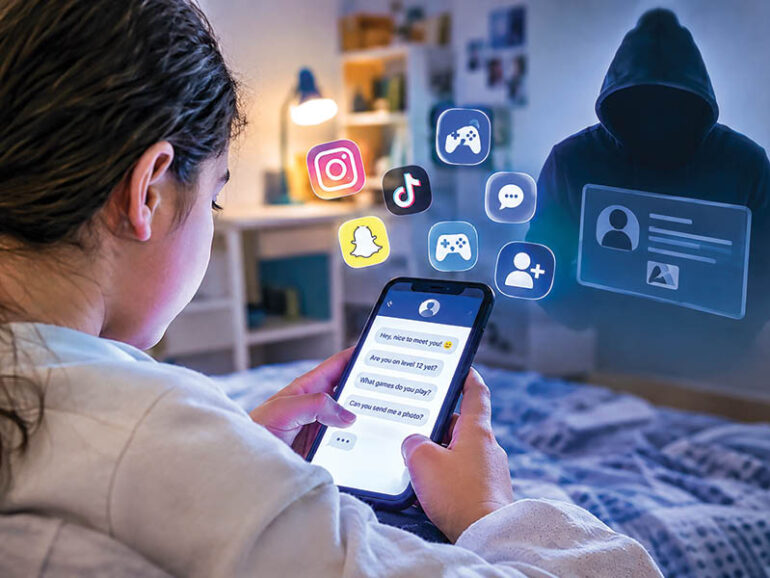
Muscat – Children face growing risks from online grooming as predators exploit social media, messaging platforms and online games to gain their trust and gradually manipulate them, experts warn.
What may begin as an innocent friend request, casual conversation or interaction during an online game can develop into a serious threat. Predators may use fake identities, pose as friendly peers and build relationships before seeking personal information, private photographs or other forms of access.
Isra Badar Al Zakwani, a computer engineering graduate specialising in cyber security, said online predators often use games and social media to gain children’s trust.
“Children should not accept requests from strangers or share personal information. They should also avoid using the same password across accounts and keeping their profiles public,” she said.
Isra recommends making accounts private, using content filters, limiting camera and location access and enabling two-factor authentication. But she stressed that technology alone cannot fully protect children.
“Children must learn to recognise suspicious behaviour and avoid strangers,” she said. “If they feel unsafe, they should stop communicating, take screenshots of messages and profiles, block and report the account, and tell a parent or trusted adult.”
Teacher Taqwa Al Hashmi said grooming can be reflected in sudden behavioural and academic changes.
“A drop in grades, difficulty concentrating, emotional distress or tiredness from staying up late online may indicate that something is wrong,” she said. “Talking about an unidentified older person they have been communicating with can also be a warning sign.”
Taqwa stressed the need for a private and secure environment where students can discuss concerns “without fear of criticism, punishment or negative consequences”.
Suaad Abdullah Al Ghailani, a specialist in child and adolescent mental health, said online grooming can have serious psychological and behavioural consequences.

“Children may experience shame, guilt, anxiety, depression, sleep disorders and difficulties trusting others,” she said. In severe cases, they may develop self-harming behaviour or symptoms similar to post-traumatic stress disorder.
Warning signs include hiding the phone screen, deleting conversations, becoming upset when asked about the device, social withdrawal, unexplained mood swings, declining academic performance and losing interest in activities they once enjoyed.
Suaad recommends building open relationships rather than relying on coercive monitoring, and seeking professional support early when concerning symptoms emerge.
Fatima Saeed Al Dhukri, a psychologist at Zulfa Centre for Psychological and Family Counseling, said the centre receives cases involving children who have been groomed or exploited online.
“Symptoms may include anxiety, panic attacks, social phobia, loneliness, sleep and eating disorders, poor concentration, aggression and low self-esteem,” she said.
Children aged nine to 15 can be particularly vulnerable as they seek greater independence, acceptance and confidence, she said. Many hesitate to tell their families because they fear punishment, blame or losing their electronic devices.
“Parents should remain calm, listen carefully and reassure children that they are supported and protected,” Fatima said.
She also advised families to contact specialists in online grooming and electronic blackmail through 1100, while preserving accounts, links, phone numbers and other evidence before removing anything.
“Early intervention can help reduce the long-term psychological effects of grooming and support children in rebuilding confidence and healthy relationships,” she said.
(Contributed by Asrar Badar Al Zakwani)
© 2021 Apex Press and Publishing. All Rights Reserved. Powered by Mesdac