 By OUR CORRESPONDENT
Salalah – Dhofar is moving towards greater use of artificial intelligence, biological control and scientific monitoring in its fight against mosquitoes and other disease vectors, as environmental and climatic changes make traditional control methods increasingly insufficient.
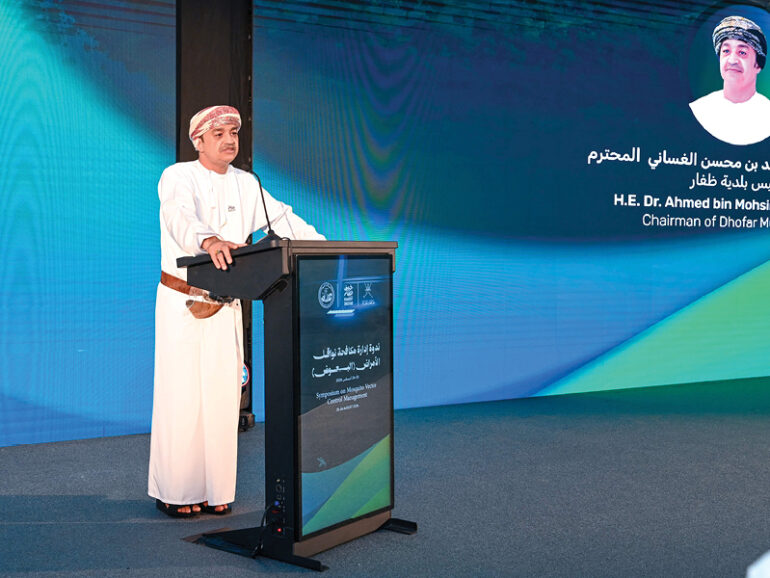
The shift was highlighted on Tuesday at the opening of a two-day symposium on mosquito management and control organised by Dhofar Municipality in Salalah.
Experts, academics and officials from Oman and abroad are discussing integrated vector management (IVM), modern technologies, community participation and regional experiences in controlling mosquitoes and other biting insects.
Dr Ahmed bin Mohsen Al Ghasani, Chairman of Dhofar Municipality, said vector control could no longer be viewed solely as a public health issue.
It now intersects with “environmental and climatic changes, urban expansion and population density”, requiring authorities to move from reacting to outbreaks towards anticipating risks through prevention, monitoring and innovation, he said.
Dhofar Municipality has been developing a more integrated approach combining environmental sanitation, continuous surveillance and targeted control, supported by data and modern technologies.
Al Ghasani said the municipality has also formed a steering committee to develop innovative solutions for seasonal mosquitoes and Aedes mosquitoes, bringing together government bodies and academic and research institutions.
Scientific work has included research into the seasonal biting insect locally known as ‘Al Arnot’, examining its characteristics, life cycle and breeding environments to improve monitoring and control measures.
The municipality now plans to introduce biological control methods as part of its wider mosquito-management system.
“The next phase will pave the way for implementing biological control within the integrated mosquito management system,” Al Ghasani said, adding that the approach is intended to diversify control tools and improve their efficiency and sustainability.
The symposium is also examining the effectiveness of modern interventions, international experiences in IVM, the role of municipalities and community partnerships in reducing vector risks.
Artificial intelligence and other technologies are expected to play a larger role in surveillance and decision-making, helping authorities identify breeding areas and direct interventions more precisely.
The meeting, held under the patronage of H E Dr Saeed bin Hareb Al Lamki, Undersecretary for Health Affairs in the Ministry of Health, also reviewed Dhofar Municipality’s existing mosquito-control efforts and research projects.
© 2021 Apex Press and Publishing. All Rights Reserved. Powered by Mesdac