 By OUR CORRESPONDENT
Muscat – More than 300 guests gathered at the Diplomatic Club on Tuesday as the embassy of Tanzania in Oman hosted the country’s first-ever celebration of World Kiswahili Language Day, marking a cultural milestone and highlighting the deep historical ties between Oman and Tanzania for centuries.
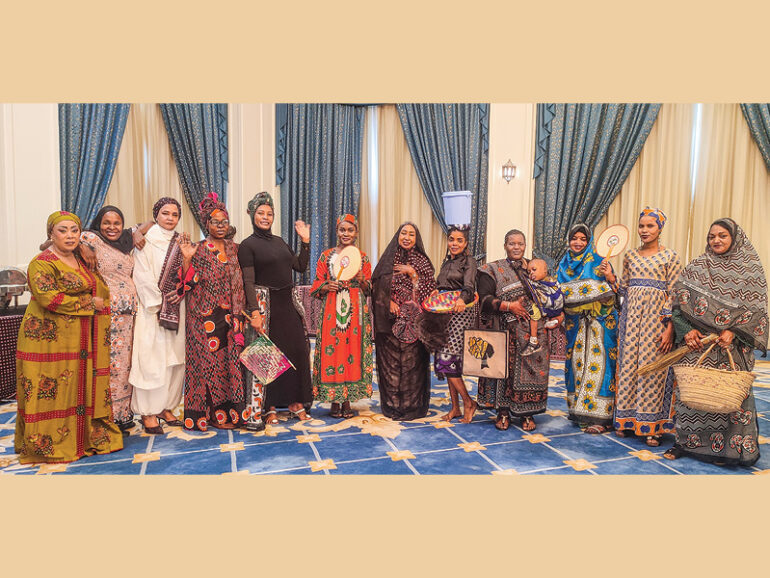
Observed globally on July 7, World Kiswahili Language Day recognises the importance of Swahili as a language of identity, heritage and cultural diplomacy. The celebration in Muscat brought together diplomats, academics, businessmen, members of the Tanzanian and Omani communities at the event that showcased the language’s influence through music, dance and traditional Kanga displays.
Speaking at the event, H E Maulidah Bwanakheir Hassan, ambassador of Tanzania to Oman said, “Oman played a significant role in that history. The longstanding maritime relationship between Oman and the East African coast, particularly Zanzibar, facilitated the exchange of people, ideas and commerce. As a result, Swahili absorbed many Arabic words while maintaining its Bantu grammatical structure, making it a unique language that reflects the rich interaction between African and Arab civilisations.”
The ambassador noted that the decision by Sultan Said bin Sultan to establish his court in Zanzibar strengthened these historic connections and helped Kiswahili flourish as the lingua franca of East Africa.
She added that the shared linguistic heritage continues to unite the two nations today. “Oman remains the only country outside Africa with a longstanding Swahili-speaking community, and many Omani families continue to share ancestral ties with Tanzania, particularly Zanzibar. Kiswahili is one of the strongest bridges connecting our two nations,” H E Maulida said.
Recognised by Unesco as the first African language to have its own international day, Kiswahili is now spoken by more than 200 million people across Africa and beyond. It serves as a language of education, business, diplomacy, regional integration and peacebuilding, reflecting its growing global relevance.
Riadh bin Abdalla Said Al Busaidi, author and cultural speaker in a group discussion, added, “For Tanzania, promoting Kiswahili is part of preserving the national identity while sharing one of Africa’s greatest cultural treasures with the world. It also creates opportunities for stronger educational exchanges, tourism, trade and cultural understanding among nations.
Al Busaidi also spoke about the history of the Kanga, the colourful printed cloth traditionally worn by women in Tanzania. He explained how the garment evolved from the Portuguese lasso and gradually transformed into the Kanga, initially worn by brides before becoming an enduring symbol of cultural identity across Tanzania and the wider region.
© 2021 Apex Press and Publishing. All Rights Reserved. Powered by Mesdac