 By ANIRBAN RAY
Trekking in Oman during summer is not about defying the elements but learning to move with them. It is about rising early, preparing wisely, and finding beauty in the most unexpected places outdoors
Summer in Muscat is not for the faint-hearted. As temperatures soar and the sun casts a relentless glare across rugged terrain, the idea of trekking might seem daunting to many.
Yet, for a growing community of adventurers, this season unveils a side of Oman that is raw, intimate, and deeply rewarding. Beyond the heat lies a landscape of dramatic cliffs, shaded valleys, and hidden pools – places like Wadi Shab that offer a refreshing contrast to the harsh climate.
Summer trekking here is less about conquering distance and more about understanding the land, respecting its extremes, and discovering its quieter rhythms. In many ways, summer trekking in Oman is a lesson in contrast. The same Sun that tests endurance also illuminates breathtaking landscapes. The same silence that feels isolating becomes a source of calm and reflection.
Rahees Nelekandy, an active trekker, points out that the biggest hurdles during this season are physical. The intense heat often leads to dehydration and sunburn, making preparation essential. He said, “Choosing the right terrain can make all the difference. Instead of exposed trails, I recommend wadi routes that provide natural cooling. Treks should be short – no more than two hours – and ideally completed before sunrise. Some of the popular shaded trails are Riyam to Muttrah Souq and the Sidab coastal track.”
For frequent trekking duo Freddy Hines and Erin Coyle, the challenge lies not just in the heat but in pushing personal limits. Having trekked in temperatures reaching 46°C, they view summer hiking as a test of both resilience and mindset. Erin added, “While we acknowledge the risks of extreme weather, we also see opportunity in Oman’s diverse terrain. We love and favour wadis such as Qurai, Tiwi, Hawar, and Huqain, where water bodies offer relief, as well as higher-altitude trails that stay comparatively cooler.”
Hines added that for them, trekking is as much about preparation as it is about attitude – carrying protein snacks, wearing proper footwear, and taking strategic breaks in shaded areas can turn a difficult hike into an enjoyable experience.
Adding a diplomatic perspective, Bishesh Kumar Sah, First Secretary at the Embassy of Nepal in Muscat, draws comparisons between trekking in Oman and Nepal. He notes that while Nepal’s summer treks are challenged by rain and slippery paths, Oman’s difficulty lies in extreme heat, rocky terrain, and limited natural shade.
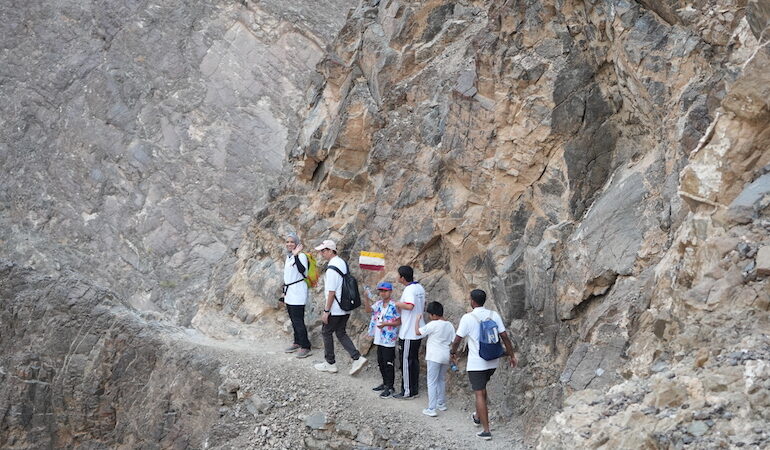
He said, “The importance of route selection is everything, north-facing trails like Riyam-Muttrah and higher-altitude paths are better.” Reflecting on a recent Nepal-Oman Friendship Hiking event, he recalls how an early morning start allowed participants to enjoy cool breezes and scenic views without the strain of midday heat. “Summer trekking is not just feasible but memorable when approached with planning and caution,” he added.
From a professional climber’s standpoint, Nadhira Al Harthy – recognised as the first Omani woman to summit Mount Everest – offers a grounded and practical outlook. She acknowledges that while locals may be more accustomed to high temperatures, the heat can still be taxing depending on age and fitness levels.
Nadhira advices, “Keep routes short, stay close to the city, and avoid peak Sun hours by trekking early in the morning or after sunset. I also stress the importance of essentials – at least two litres of water, a light backpack, proper shoes, and basic first aid.” Perhaps most importantly, she advises against trekking alone, reinforcing the idea that safety should always come first.
Despite differing perspectives, all trekkers agree on one thing: preparation is non-negotiable. Hydration, sun protection, and route awareness form the backbone of a safe summer trek. Equally important is listening to one’s body and knowing when to stop.
TREKKERS’ TIPS
Mohammad al Harthy – On Safety
Start early, inform someone of your route, carry extra water, and never underestimate wadis after rare rains. I always trek with a partner and a charged phone. Preparation is not optional, it is a survival skill.
Abhay Mehra – Things to take
Packing smartly is crucial for trekking in Oman’s intense summer. Besides water, I carry electrolytes, dates, nuts, sunscreen, a hat, and a lightweight first-aid kit. A power bank and offline maps are lifesavers in remote areas.
Aisha al Balushi – Clothes to wear
Clothing can make or break a summer trek here. I recommend light, breathable fabrics, full sleeves for sun protection, and a wide-brim hat. Good grip shoes are essential on rocky paths. Avoid dark colours – they trap heat.
Priya Nair – Best time to go
I prefer starting before sunrise and finishing by mid-morning to avoid extreme heat. Late afternoon treks can work, but in shaded or elevated areas. Planning around the sun is key.
Khalid al Lawati – Health preparation
Preparing one’s body is important while planning the route. Hydrate well days before, maintain electrolyte balance, and get enough sleep. If you feel dizzy or fatigued, stop immediately.
© 2021 Apex Press and Publishing. All Rights Reserved. Powered by Mesdac