 By OUR CORRESPONDENT
Muscat – The Ministry of Agriculture, Fisheries and Water Resources (MAFWR) has launched an initiative to inspect widely used wells across the sultanate, stressing that the use of water from such wells is closely linked to public health.
The ministry also confirmed that aerial pesticide spraying using drones is currently not permitted in the sultanate. Officials explained that only ground-based spraying methods are allowed at present to ensure proper regulation, safety and environmental protection.
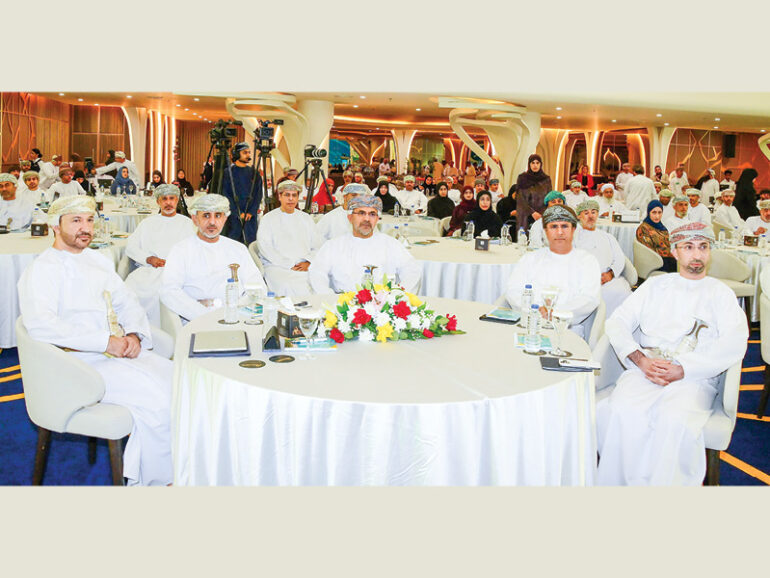
The announcement was made during a media briefing outlining MAFWR’s key achievements in 2025 and its strategic priorities for the current year.
Speaking at the briefing, H E Saud bin Hamoud Al Habsi, Minister of Agriculture, Fisheries and Water Resources, said Oman has diverse environmental and climatic characteristics that support agricultural and fisheries development. The sultanate has about 5.5mn acres of agricultural or arable land, representing 7.5% of its total land area.
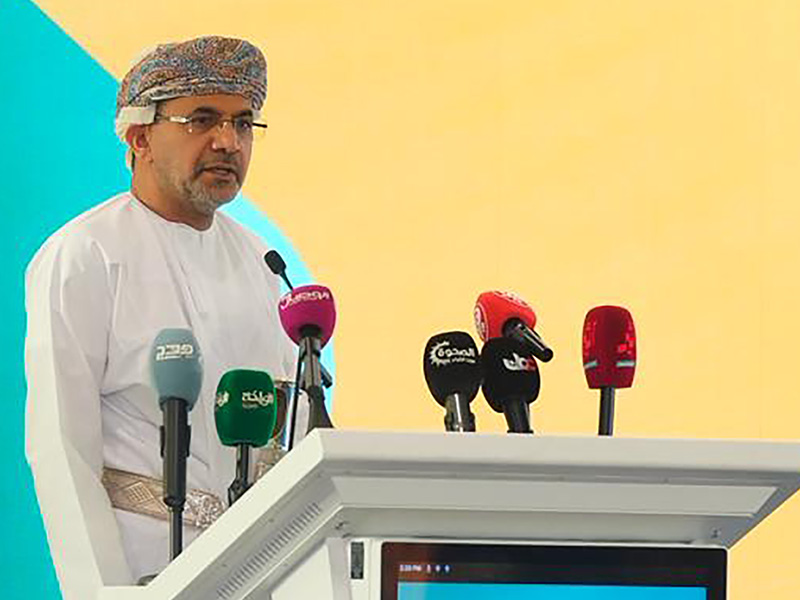
He noted that the total area of agricultural holdings stands at 355,000 acres, while the cultivated area was around 312,000 acres at the end of 2024.
The minister added that Oman has strong capacity for crop production, supported by 26 research centres and stations, agricultural nurseries, 21 agricultural quarantine facilities, and six specialised beekeeping units.
He also highlighted that the sultanate has 3.2mn acres of natural pastureland across its northern and southern regions, in addition to around 4mn head of livestock.
In the fisheries sector, Oman enjoys rich marine resources, with 24 fishing ports and numerous fish landing sites along its coastline.
The sultanate currently has 62 fish markets, 1,220 fish shops and 119 fish processing plants, reflecting the sector’s growing infrastructure.
The minister further informed that Oman has 89 bottled water plants with production capacity of 8,335.5 m3/day, alongside 92 desalination plants producing 455.36mn m3, and 67 wastewater treatment plants with a combined capacity of 119.5mn m3.
In the field of food safety, the sultanate has 35 food safety and quality laboratories, including 12 municipal laboratories across governorates and 23 private laboratories.
According to MAFWR, the total volume of agricultural (plant and animal) and fish production between 2020 and 2025 was about 5.61mn tonnes, recording a growth rate of 5.2%.
© 2021 Apex Press and Publishing. All Rights Reserved. Powered by Mesdac