Beyond the immediate death and destruction caused by kinetic military strikes, a far larger impact of wars often goes unseen.
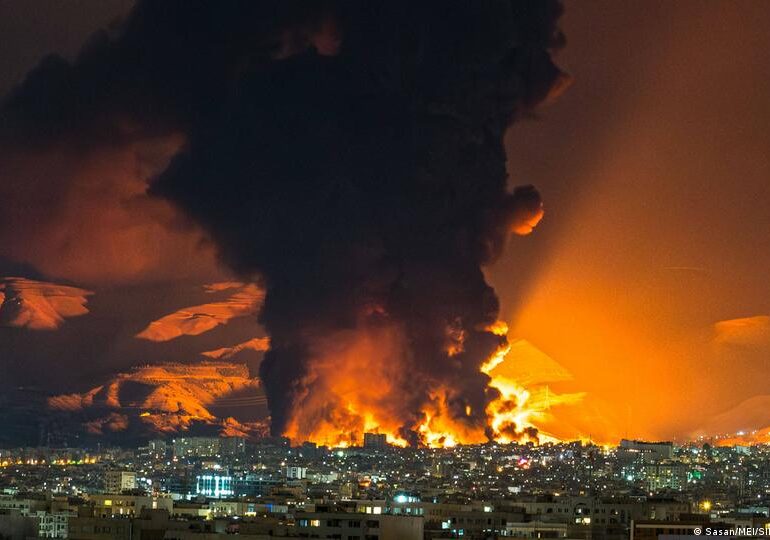
The most obvious evidence of the wide-scale environmental destruction unleashed by warring parties is perhaps the images of burning oil facilities – be that refineries or reserves in Iran, Israel, or elsewhere in the Middle East.
Doug Weir, director of the Conflict and Environment Observatory (CEOBS), a UK-based charity that documents the environmental impact of war, said: “Israeli strikes on oil facilities in Tehran alone have potentially exposed millions of people to a broad range of dangerous toxins, of which several will remain persistent in the environment, posing a continuous threat to ground and water resources.”
Weir told German news agency DPA that black clouds containing carbon monoxide, sulphur dioxide, nitrogen oxide and soot covered the city in the wake of the attacks.
Beyond the damaging effects to air quality, the toxic residue ultimately enters drainage systems, where it then threatens to contaminate the soil and groundwater for decades.
CEOBS data shows that such toxins can also travel hundreds of miles, carried by the wind, in a matter of days before falling to earth, posing a far broader threat than might first appear. The toxins not only impact drinking water but also soil quality.
Iran’s attacks on regional neighbours have, in turn, directly threatened the water desalination plants that those countries count on for between 42% (UAE) and 86% (Oman) of their water.
Among the other environmental threats are strikes on petrochemical sites next to gas terminals for processing natural gas.
Lastly, munitions themselves pose another massive threat to the climate, with the UN Environmental Programme saying the ‘widespread use of munitions can release heavy metals and poisonous chemicals into the environment’.
These metals and chemicals, found in casings, propellants and explosives, are highly dangerous, even in the smallest quantities. The US and Israel have dropped tens of thousands of such munitions in the first month of the war on Iran.
Last week, the US targeted Iranian munitions depots with air strikes, setting off a massive chain reaction of explosions that rose into enormous black clouds.
DW
© 2021 Apex Press and Publishing. All Rights Reserved. Powered by Mesdac