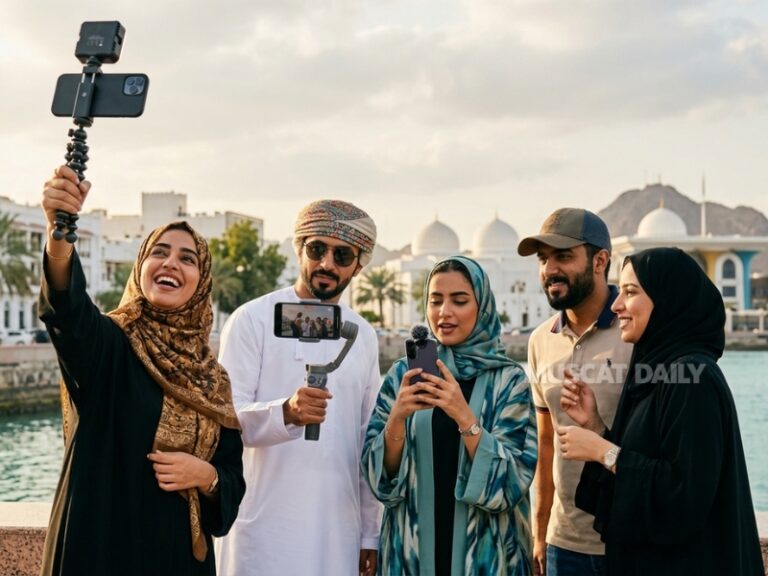

Muscat – In a world shaped by rapid cultural and technological shifts, Oman’s national identity continues to stand as a pillar of stability and balance. While societies across the globe grapple with the pressures of globalisation and digital transformation, Omani society has maintained its authentic character and deeply rooted values, drawing strength from a rich heritage built on religion, language and tradition.
Observers say this enduring identity has become a form of ‘soft power’ that strengthens social cohesion and reinforces Oman’s image as a model of moderation and balanced openness in an increasingly interconnected world.
Dr Rajab bin Ali Al Awaisi, expert in social and educational studies at the State Council, said Omani society has long lived in a dynamic and changing environment, interacting with different cultures while preserving its distinctive cultural balance.
“Oman has experienced different global influences throughout its history, yet the cultural balance and policy of openness adopted by the country have created a mindset among Omanis marked by wisdom, calm and thoughtful engagement,” he said.
According to Al Awaisi, the Omani character has been shaped by values of insight, stability, credibility and tolerance, enabling individuals to adapt to changing conditions without losing their cultural essence.
He added that these qualities have strengthened Oman’s presence in international arenas, where modern technology has been used to address cultural transformations while maintaining social harmony. “Rather than clashing with globalisation, Oman has sought to transform its cultural heritage into economic and tourism opportunities.”
The country’s national approach, he said, has also created a unique identity that allows young Omanis to harness culture in building the knowledge economy and expanding cultural tourism. This, in turn, has enhanced Oman’s appeal as a distinctive destination while strengthening public awareness of the need to preserve authentic Omani values and social ethics.
Mundhir bin Abdullah Al Saifi, researcher in religious affairs at the Office of the Undersecretary of the Ministry of Endowments and Religious Affairs, said Omani society has long been distinguished by its strong attachment to values that form an essential part of the nation’s identity.
“These values have played a major role in maintaining social cohesion and supporting the country’s development,” he said, noting that Royal directives have consistently emphasised pride in national identity alongside balanced openness to the world.
He added that values such as tolerance, belonging and collective responsibility have long shaped Omani society and helped strengthen peaceful coexistence.
At the same time, Al Saifi pointed out that the digital space has become a powerful influence on younger generations, sometimes reshaping attitudes in ways that differ from traditional upbringing.
He warned of what he described as the “fluidity of digital values”, where genuine acts such as charity or volunteer work risk being reduced to displays on social media rather than meaningful moral commitments.
“Social media plays a dual role,” he said. “While it has disrupted some traditional systems, it has also opened new opportunities for dialogue and empowered ambitious youth.”
Ahmed bin Obaid Al Khaldi, technology innovation specialist, said Omani youth today have the capacity to engage with global developments while maintaining their cultural identity.
“Identity is not a wall that isolates young people from the world. It is a set of strong roots that gives them confidence to interact with others in a balanced and responsible way,” he said.
Al Khaldi stressed that openness should not mean blind imitation, but conscious participation that allows Omanis to present their ethical and cultural values as a positive contribution to global society.
For her part, Hanan bint Mahmoud Ahmed, specialist in national identity and culture, said the defining characteristics of the Omani people include values of peace, tolerance and a long-standing commitment to resolving disputes through dialogue.
She noted that Omani history contains numerous examples reflecting the people’s strong attachment to their identity, which has helped position the sultanate as a respected hub for balanced diplomacy.
Hanan added that the rapid spread of social media and artificial intelligence has created new intellectual challenges, increasing the responsibility of families and institutions to strengthen awareness and ethical digital behaviour.
She stressed that promoting the concept of digital citizenship has become essential to protecting younger generations from ideas that conflict with Omani Arab and Islamic values.
Encouraging youth to take pride in their heritage and participate actively in society, she said incorporating elements of Omani culture into digital content represents a powerful form of soft power that reflects the country’s civilisation spanning thousands of years.
© 2021 Apex Press and Publishing. All Rights Reserved. Powered by Mesdac