 By OUR CORRESPONDENT
Muscat – When Oman and Britain formalised their relations in the late 18th century, the Indian Ocean was a theatre of maritime power, trade and competition. More than two centuries later, their ties span diplomacy, investment, defence and technology, shaped by changing regional and global realities.
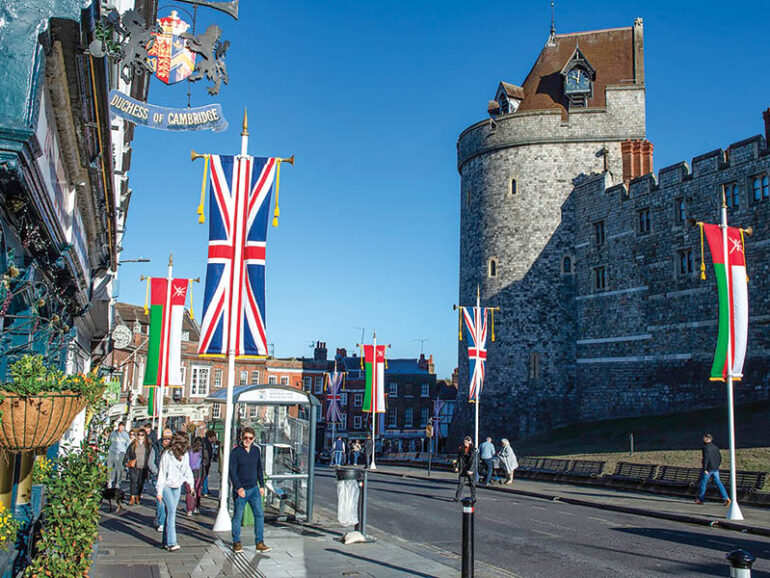
The state visit of His Majesty Sultan Haitham bin Tarik to the United Kingdom on Monday carries particular significance. It will be the first state visit by an Omani Sultan to Britain since 1982, marking another chapter in a relationship whose roots stretch back to 1798.
Dr Nasser bin Abdullah Al Saqri, assistant professor of modern and contemporary history at Sultan Qaboos University, describes the relations as distinct from Britain’s ties with other countries in the region. Its continuity, he argues, has created a diplomatic legacy built on accumulated trust, shared experience and an ability to adapt to changing circumstances.
The bond was reinforced by an agreement signed on January 18, 1800, by Sayyid Sultan bin Ahmed and British envoy Captain John Malcolm, which expressed an enduring ambition that friendship between the two countries should last ‘until the sun and moon cease to revolve’.
A maritime connection
The 19th century was a formative period for the relationship. Under Sayyid Said bin Sultan, who ruled from 1806 to 1856, Oman maintained a powerful maritime presence across the western Indian Ocean. Historian Dr Badriya bint Mohammed Al Nabhani identifies this period as the most mature phase of Omani diplomacy during the century.
Trade and communications linked Oman to wider international networks. British Indian Navy surveys mapped Oman’s coastline during the 1830s, while steamships began calling regularly at Muscat in the 1860s, connecting the port with Bombay and Basra. A telegraph station established in Musandam in 1864 formed part of a communications line linking India and Europe.
These developments helped connect Oman with the commercial networks spanning the Middle East, the Indian subcontinent and Europe.
From diplomacy to defence
Military cooperation developed more directly in the early 20th century. Dr Bahya bint Saeed Al Adhoubi, a researcher in Omani military history, identifies 1913 as the beginning of a new phase, when proposals emerged to reorganise Muscat’s forces. The establishment of the Muscat Corps in 1921 marked an important step towards a more regular military structure.
Joint exercises in the 1960s, including the OMEX series, strengthened coordination between Omani and British forces. Bahya stresses the fact that British expertise was adapted to Oman’s own security requirements and varied terrain, rather than simply transferred wholesale.
A joint defence agreement signed in 2019 formalised a modern framework for cooperation, while exercises such as Oman Dagger continue to sustain operational links.
A partnership for a changing region
The relations have endured through the Cold War, decolonisation, the rise of the oil economy and shifts in regional power. Al Saqri attributes its resilience to overlapping interests in security, trade and energy, alongside diplomatic flexibility and long-standing personal and institutional connections. He also points to Oman’s role as a reliable partner and channel of communication on sensitive regional issues.
Economic ties are now central to the partnership. The UK was Oman’s largest foreign investor in 2025, with direct investment reported at about US$42bn, an 11% increase on the previous year. A sovereign investment partnership established in 2022 between Oman Investment Authority and the British Investment Office targeted clean energy and technology.
For Oman and Britain, history is more than a record of past agreements and shared interests. It provides the foundation for a relationship that has repeatedly adapted to new circumstances.

© 2021 Apex Press and Publishing. All Rights Reserved. Powered by Mesdac