 By OUR CORRESPONDENT
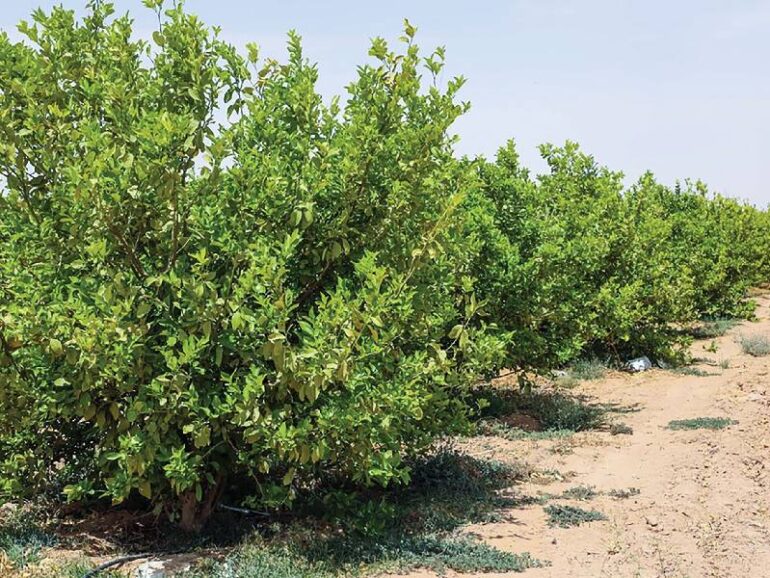
Muscat – Treated wastewater could become an important water source for agriculture in Oman’s increasingly saline and water-stressed farming areas, with an eight-year study finding that Omani lemon trees irrigated with regenerated water maintained growth and production comparable to those supplied with desalinated groundwater.
The study, conducted by the Ministry of Agriculture, Fisheries and Water Resources in cooperation with Nama Water Services Company, is part of efforts to explore whether tertiary treated wastewater can support sustainable agriculture and, in the longer term, help restore parts of the Batinah Plain’s green agricultural belt.
The research was carried out at the Al Rumais Non-Conventional Water Research Farm in Barka, comparing Omani lemon trees irrigated with reclaimed water with those receiving desalinated groundwater under similar management conditions.
Researchers monitored water, soil, plant and fruit quality over eight years.

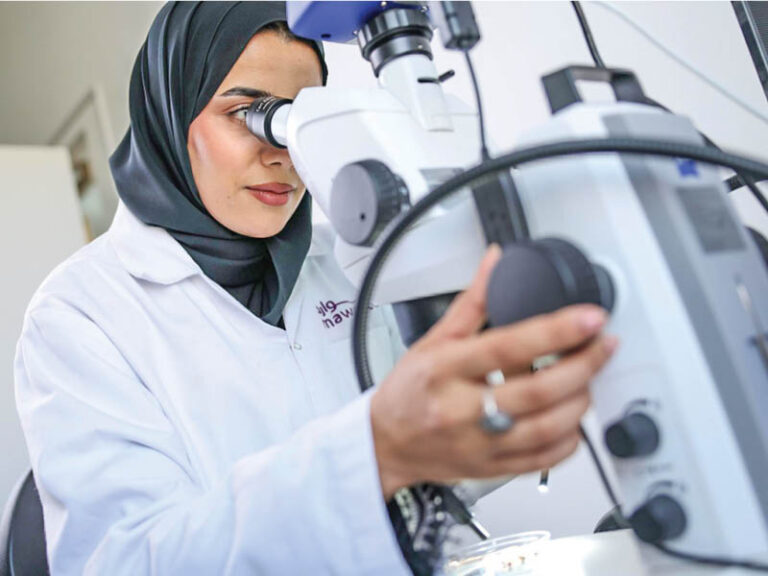
Alia Al Hinai (in photo above), a soil and water researcher at the ministry’s Soil and Water Research Centre, said Omani lemons were selected because of their economic and cultural importance and their relevance to the agricultural environment of the Batinah Plain.
The study found that regenerated water supplied not only irrigation but also measurable quantities of nutrients, although researchers did not determine how much fertiliser this could replace.
Soil monitoring, however, highlighted the need for careful management. Salinity increased during some periods but declined in the following season, while some sodium indicators were higher in areas irrigated with treated wastewater. The study found no evidence of actual deterioration in soil structure.
Fruit quality indicators were largely comparable between the two irrigation systems, while microbiological testing of harvested fruit samples met the standards applied in the study. The ministry stressed the importance of continued periodic monitoring.
The research is now moving closer to field application. In cooperation with Nama Water Services, the ministry is working to develop the Al Rumais farm as a research and guidance centre and plans to extend regenerated water supplies to farmers in Al Shakhakhit, Barka.
Alia said the experience showed that treated wastewater has “real potential” to become part of agriculture in arid and saline environments, but stressed that its wider use would depend on scientific research, sound irrigation and drainage management, continuous monitoring and cooperation with farmers.
The ministry said the approach could eventually contribute to restoring part of the Batinah Plain’s agricultural belt while making better use of a non-conventional water resource.
© 2021 Apex Press and Publishing. All Rights Reserved. Powered by Mesdac