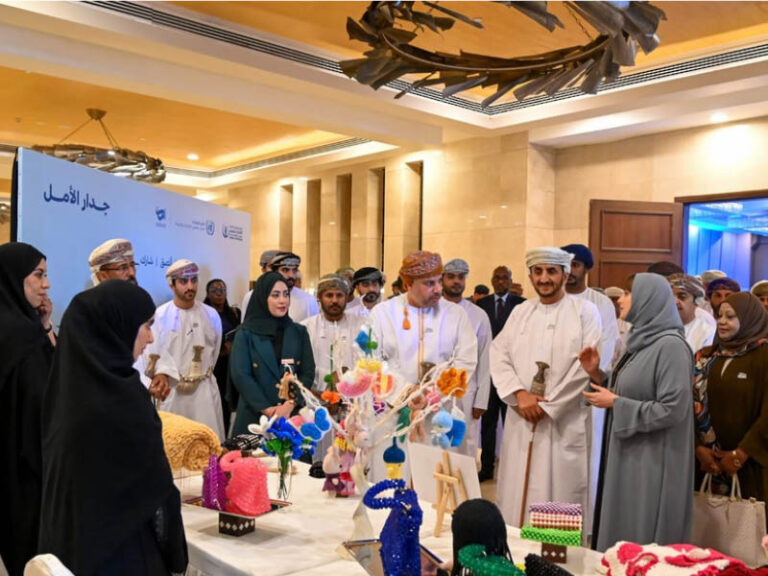
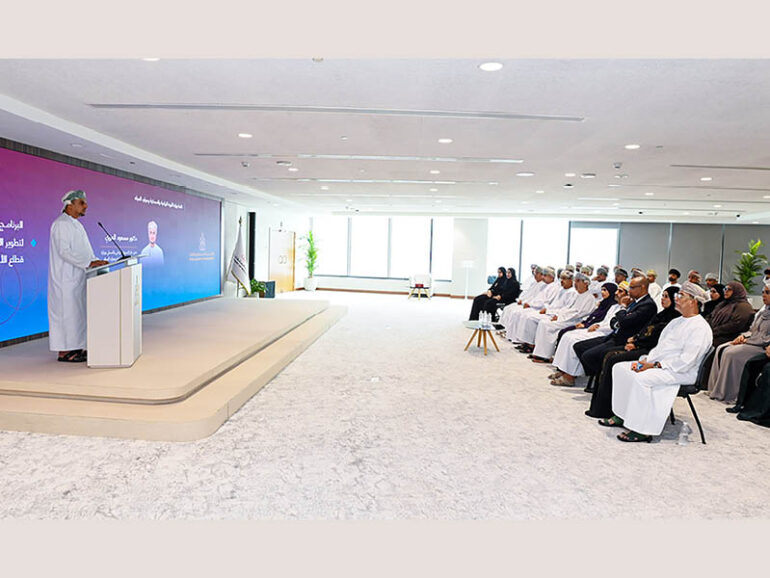
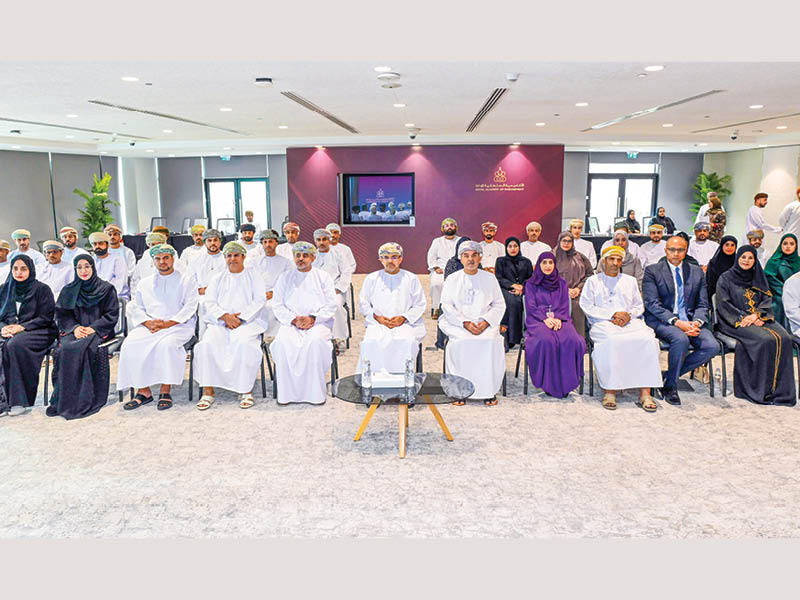
Muscat – The Royal Academy of Management (RAM), in partnership with the Ministry of Agriculture, Fisheries and Water Resources, has launched a national programme to develop Omani leadership capabilities in food security.
Launched on Sunday under the patronage of H E Dr Saud bin Hamoud Al Habsi, Minister of Agriculture, Fisheries and Water Resources, the three-month programme aims to prepare national leaders to address emerging challenges and strengthen the resilience, efficiency and sustainability of Oman’s food security system.
The programme brings together 35 leaders from government, government-owned companies, the private sector, academic and research institutions, banking and civil society. Participants have at least 12 years of professional experience, including a minimum of five years in leadership roles.
The programme takes a broader approach than traditional self-sufficiency, focusing on anticipating risks, diversifying supply sources and strengthening coordination among sectors and stakeholders.
Dr Fathiya bint Abdullah Al Rashdi, Vice-President for Programme Affairs at RAM, said the programme would help prepare leaders to respond to rapid changes in the sector.
“By developing capabilities in strategic thinking, risk anticipation, decision-making and building effective partnerships, we aim to strengthen the readiness of the food security system and turn challenges into sustainable opportunities for growth,” she said.
Dr Masoud bin Sulaiman Al Azri, Director General of Agricultural and Fisheries Marketing at the ministry, said the programme would strengthen national leadership and improve the sector’s resilience and sustainability.
Al Azri also stressed the need for greater integration between sectors and wider adoption of innovation, modern technologies and artificial intelligence.
Maha bint Mohammed Al Habsi, programme supervisor at RAM, said the programme combines theoretical learning with practical application.
The programme comprises three dimensions: strategic thinking, focused on resilience and reframing challenges; investment and development, balancing national priorities with commercial viability; and field-based integration, centred on implementation and cross-sector coordination.
It covers strategic reframing, investment, value and supply chains, innovation and technology, governance, international partnerships, strategic reserves and food health.
It aims to provide participants with a common strategic framework, identify investment opportunities and vulnerabilities in supply chains, and strengthen leadership of innovation and digital transformation in food security.
© 2021 Apex Press and Publishing. All Rights Reserved. Powered by Mesdac