 By ANIRBAN RAY
The debate between real art and AI art is spreading rapidly. From big studios, 9:16 reel makers to micro dramas and UGC creators, there is wonder, awe, anger, and suspicion among creatives
Every major technological evolution in filmmaking over the years has faced the same dilemma – will it kill art?
Colour film, cranes, widescreen formats, nonlinear editing, steadicams, green screens and later gimbals were all received with skepticism by sections of the filmmaking establishment. Yet, none killed cinema. Instead, they expanded the technical possibilities available to storytellers.
Now, artificial intelligence is facing the same litmus test. The difference, however, is that the anxiety surrounding AI is understandable. Today’s tools can potentially replace or compress the work of large teams involved in set design, lighting, audio, makeup, focus pulling, stunt coordination and visual effects. Cinematic-looking images can be generated in minutes, with fewer people and potentially far lower production costs.
The technology, however, does not automatically create a film. A director who does not understand why a particular lens creates a particular emotion, who has never heard of a J-cut or does not understand the 180-degree rule, can still produce what might be described as technically impressive but creatively vacuum work. The danger, therefore, may not be AI replacing art, but people using AI without understanding the art behind it.
At the same time, AI could fundamentally democratise filmmaking.
For decades, filmmaking was largely confined to studios, expensive equipment and specialised film schools. The DSLR lowered the cost of shooting. Adobe Premiere and other nonlinear editing systems transformed post-production. YouTube changed distribution.
AI may represent the next major leap – bringing sophisticated visual production tools to people who previously could not afford them. And
Oman is now becoming part of that transition.
From Muscat, an AI production studio
One of the platforms attempting to build this ecosystem locally is RMZ, described as Oman’s first all-in-one generative media platform and video infrastructure. Headquartered in Muscat, RMZ allows creators, brands and marketers to produce short-form and cinematic social videos using text prompts, images and product links. The platform’s journey began in 2024, when its team, led by Haitham Busafi, began refining its approach around generative models.
Unlike platforms that provide users with a long list of models, RMZ deliberately works with a select group. Seedance 2 and 2.5 and Minimax are among the models used on the platform, alongside tools for upscaling and reference-based generation.
Busafi said the selection was deliberate. He said, “Over the years we have tried and tested several models and have selected and kept the best ones in terms of facial consistency, physics and generation. This saves time for users who need not struggle so much with multiple models.” The selected models are also chosen with regional applications in mind, including Arabic appearances and clothing.
RMZ has positioned itself among the early generative-video platforms in the region and has recently secured 100,000 tokens or credits from ByteDance, the company behind Seedance, for a year. The platform can generate videos of up to 30 seconds at 1920×1080 resolution and operates more like a digital production studio, combining specialised workspace modules with multiple AI utilities.
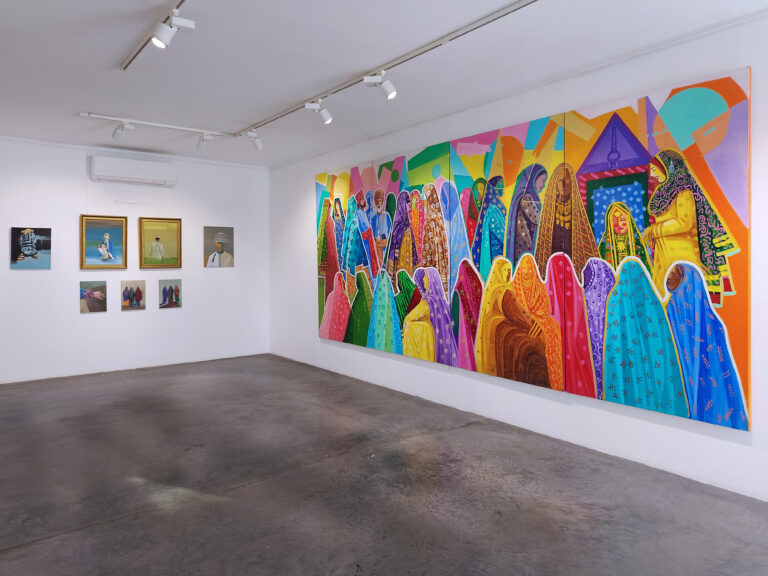
For Busafi, who is himself a visual artist whose work has been exhibited in Europe, the technology is not a replacement for originality. He believes AI can provide access to a collection of skills and orchestrate different models to produce an output, but the creative decision must still come from the director.
“It is like democratisation of the form of art which lets everyone tell a story,” he said. But that democratisation, he argues, comes with responsibility. Storytelling knowledge still has to be developed through practice, experience, study and taste.
That philosophy is also reflected in RMZ’s motto – ‘If you can speak, you can create.’
The five-member team that built the platform in Oman is now seeing growing interest from students, colleges and ministries. Busafi said that teachers in Oman are using generative tools to create three-dimensional interpretations of hearts and other body parts for biology students, while others are creating visual explanations of business concepts such as stocks and the Sensex.
From platform to festival

The conversation is now moving from tools to films. RMZ is also the founding generative-AI partner of the Muscat AI Film Festival (MAIFF), a new platform exploring the intersection of artificial intelligence, cinema and storytelling.
The festival officially launched in August, with submissions opening in September, followed by creative laboratories and specialised workshops in October. The top five films are scheduled for public screening at VOX Cinemas in November, with the closing ceremony and awards planned for January 19, 2027 at the Royal Opera House Muscat (ROHM).
Huzaifa Ubaid, one of the organisers of MAIFF and Head of Commercial of EATCo (Oman’s premier national experience and festival management platform) said the objective is not to replace traditional filmmaking.
“We need the traditional art of filmmaking; this is an additional tool in the art,” he said, adding that the idea for the festival emerged after he attended the 1 Billion Summit in January, where creatives, business leaders and entrepreneurs from around the world gathered.
“For Oman, the emergence of RMZ and MAIFF suggests that this experiment is no longer happening somewhere else. It is the beginning in Muscat,” he said.
The festival is open to creators internationally, with a 40 per cent subscription discount offered to contestants. Its theme is ‘Where humans, machines, and cultures connect through storytelling’, and participating films must be no longer than seven minutes.
Films can be completely AI-generated or hybrid productions combining conventional filming with AI-generated shots and effects.
The festival is also designed as a learning platform. Organisers aim to train more than 1,000 Omanis in AI-assisted filmmaking and involve 40 to 60 Omani SMEs in a festival village.
Representatives from Snapchat and New York Film Academy are also expected to be involved in the programme, according to the organisers. Adding an unmistakably Omani identity to the festival are its four mascots – Dana the turtle, Razan the oryx, Nashm the falcon and Rihal the camel.
Ultimately, the AI-versus-art debate may be asking the wrong question. The more important question may be what happens when increasingly powerful technology reaches the hands of people who understand storytelling — and what happens when it reaches those who do not.
The camera did not make everyone using it a filmmaker. Editing software did not make users editors. And gimbals did not make everyone using them cinematographers. In the same way, AI, too, cannot make everyone using it a director.
© 2021 Apex Press and Publishing. All Rights Reserved. Powered by Mesdac