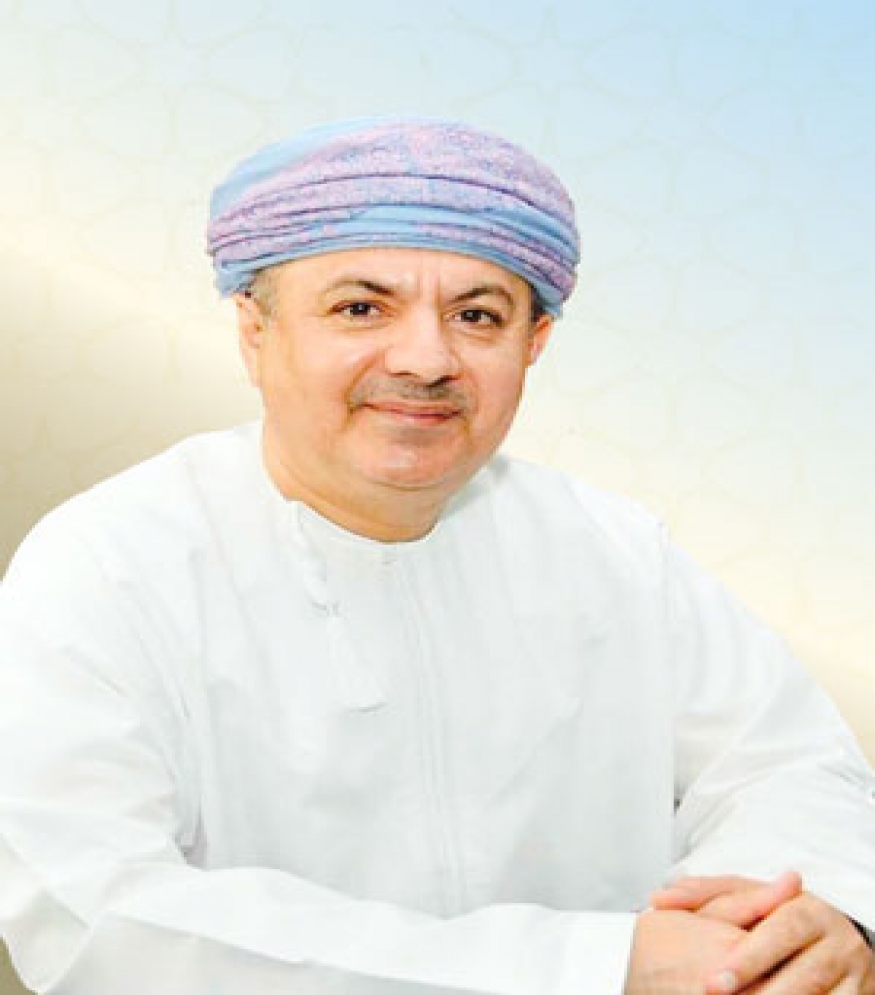
Khalil bin Abdullah Al Khonj
(Former Chairman of Oman Chamber of Commerce and Industry)
From the mid-1980s through 2026, Oman has experimented with numerous policies and programmes to address the employment of Omani nationals. Before that, however, there was little need to develop specialised employment mechanisms. The early years of the Renaissance were characterised by construction and rapid expansion, and the country needed every available worker – skilled or unskilled, Omani or expatriate.
As the nature of the economy changed and employment challenges emerged, the issue gradually assumed a more clearly institutional form. In 1991, late Qais bin Abdul Munim Al Zawawi,then Deputy Prime Minister for Economic and Financial Affairs, chaired the Supreme Committee for Vocational Training and Labour. Following his death in 1995, the chairmanship passed to Ahmed bin Abdulnabi Macki, then Minister of National Economy. With healthcare services becoming available across the country, the workforce expanded, creating a need for measures such as vocational training and legislation requiring localisation ratios in both the public and private sectors. Among the government initiatives at the time was a scheme under which the government covered 80% of the salaries of Omani employees working in the private sector.
In 1998, the Supreme Committee for Monitoring Omanisation was established under the chairmanship of Major General Abdul Alim bin Mustahail Rakhyoot, with representatives from the public and private sectors as well as the security and military establishments. The aim was to bring together institutions capable of making decisions and developing programmes that took into account labour-market requirements and the interests of different stakeholders. Efforts during this period focused on aligning the capabilities of the national workforce with employment requirements and developing training and qualification programmes, particularly in the face of competition from low-cost expatriate labour in a number of economic activities.
The country then entered the era of national conferences on employment. The first was held in 2001 under the auspices of late His Majesty Sultan Qaboos bin Said – reaffirming that the employment of citizens was not merely an administrative matter, but an issue closely linked to the country’s economic policy, government spending and the private sector.
Against this backdrop, the former Tender Board, chaired by Malik bin Sulaiman Al Maamari, with Juma bin Ali Al Juma as its then Secretary-General, played an important role. Government projects awarded to the private sector were not simply construction and service contracts; they were also an important mechanism for linking public expenditure with Omanisation, training and the employment of citizens.
As a major purchaser of goods, services and projects, the state could use the conditions attached to tenders and government contracts to make the employment and training of Omanis an integral part of economic activity itself. This phase was later reinforced by the appointment of Dr Juma bin Ali Al Juma as Minister of Manpower, reflecting the close relationship at the time between government projects and employment policy.
In 2003, the second national conference was held under the theme ‘Partnership in Training and Employment’, building on the outcomes of the first conference and developing training and employment programmes in the oil and gas, tourism, industry, trade and retail sectors.
The third conference followed in 2005 under the title ‘Towards a Strategy for the Development and Employment of the National Workforce’, with the objective of assessing implementation and reviewing previous policies. These conferences were distinguished by broad participation from government, the private sector and society, making employment a shared national issue rather than the responsibility of a single institution.
Cooperation between the Ministry of Manpower and the Oman Chamber of Commerce and Industry (OCCI) continued, until the global financial crisis that began in 2008 created new challenges for the labour market. By 2011, the government had expanded the employment of Omanis in both civilian and military institutions, alongside efforts to increase employment in the private sector, in response to the social and economic circumstances of the time.
In January 2013, the SME Development Symposium was held in Sayh Al Shamikhat in Bahla Wilayat, in response to the Royal directives. It opened another avenue for addressing employment by promoting self-employment and entrepreneurship and by improving the legislative, financing and procedural environment for small and medium-sized enterprises (SMEs).
Among the symposium’s most significant outcomes were the allocation of a percentage of government purchases and tenders to SMEs, requiring companies executing major projects to subcontract part of their work to such enterprises, and establishing an independent authority to support their development while strengthening financing and support mechanisms. Once again, government spending was positioned as a direct instrument for expanding economic activity and generating employment opportunities.
In the second half of that year, OCCI organised a series of sector-specific seminars and evening sessions based on studies and recommendations prepared by sector committees chaired by private-sector representatives. Their findings were presented to the relevant ministers. Sheikh Abdullah bin Nasser Al Bakri, then Minister of Manpower, took part directly in discussions on the committees’ recommendations concerning Omanisation and labour-market regulation. The aim was to move from a broad, one-size-fits-all approach to Omanisation towards policies more closely aligned with the nature of individual sectors, their requirements and their capacity to absorb the national workforce.
In 2016, the National Programme for Enhancing Economic Diversification (Tanfeedh) continued this approach of bringing government, the private sector and experts around the same table, with the aim of accelerating economic diversification and addressing challenges related to investment, the labour market and employment. This offered renewed hope for fundamental and sustainable solutions, with Malaysian assistance and an attempt to transfer Malaysia’s successful experience to the Omani market.
At the beginning of the renewed Renaissance, specifically on August 17, 2020, a Royal Decree was issued merging the Ministry of Civil Service and the Ministry of Manpower into a single institution, the Ministry of Labour. The objective was to unify the management of the labour market and employment under one institutional umbrella, while separating training from the new ministry so that it could focus on employment across the country’s various sectors.
Despite all these experiments, the challenge of employing the national workforce remains. The labour market continues to rely heavily on expatriate workers, whose number is approaching 1.83mn in 2026.
Looking back over this journey of more than four decades, it becomes clear that the most effective periods were those in which employment was not viewed as the responsibility of a single ministry, but as an integrated economic and social issue involving government institutions, the private sector and society as a whole.
The experience of government tenders – from the early efforts to link projects with Omanisation to the decisions that emerged from the Sayh Al Shamikhat symposium – also offers a lesson that remains relevant today: public expenditure can be a direct instrument for creating jobs and expanding the productive base when contracts and projects are linked to Omanisation, training, support for national enterprises, knowledge transfer and higher productivity.
Employment cannot be created through an administrative decision or an Omanisation percentage alone. It begins with an economy capable of generating jobs, a private sector capable of investing and expanding, and an education and training system that responds to the needs of the market.
Perhaps, therefore, the challenge today is not to devise yet another employment programme, but to return the issue of the national workforce to the heart of the country’s social and economic policymaking. This could involve considering the establishment of an Omani Social and Economic Council, bringing together senior figures and experts in economics, trade, industry, labour-market affairs and sociology, alongside effective representation from the private sector and business owners – both men and women – from different sectors and governorates.
The idea itself is not new, nor is the objective to create yet another institution to add to the long list of committees, bodies and initiatives established over the years. Rather, the aim would be to create a permanent institutional platform for dialogue and social and economic policymaking, bringing together the social partners, decision-makers and experts around a shared vision.
Indeed, this direction dates back to 2011, when the government sent delegations to Singapore and the Netherlands to identify the best experience in this field. All of this ultimately comes down to one fundamental question: How do we build an economy capable of generating sustainable employment opportunities for citizens?
After decades of committees, conferences, laboratories, clinics, training programmes, Omanisation, replacement policies and support initiatives, perhaps the most important step is to return to the root of the issue: economic growth, investment, productivity, genuine partnership with the private sector, and linking government expenditure to national employment objectives.
When the economy grows, businesses expand, and government and private-sector projects become genuine engines of job creation, employment opportunities become a natural outcome of growth – rather than a recurring crisis for which we search every few years for yet another solution.
[The views and opinions expressed in this column are solely those of the author and do not necessarily represent those of Muscat Daily or Apex Media]
© 2021 Apex Press and Publishing. All Rights Reserved. Powered by Mesdac