 By MUSCAT DAILY CORRESPONDENT
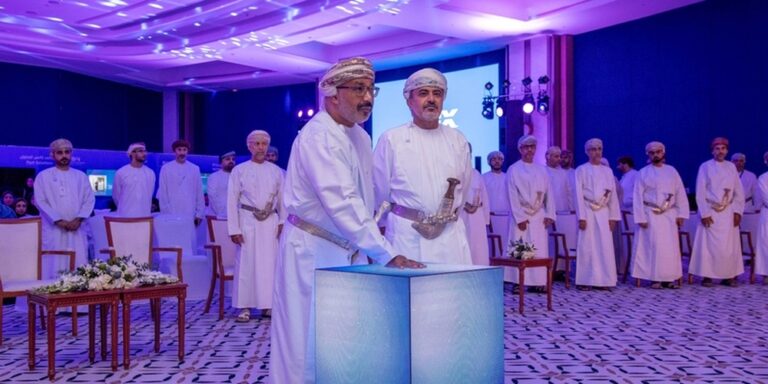
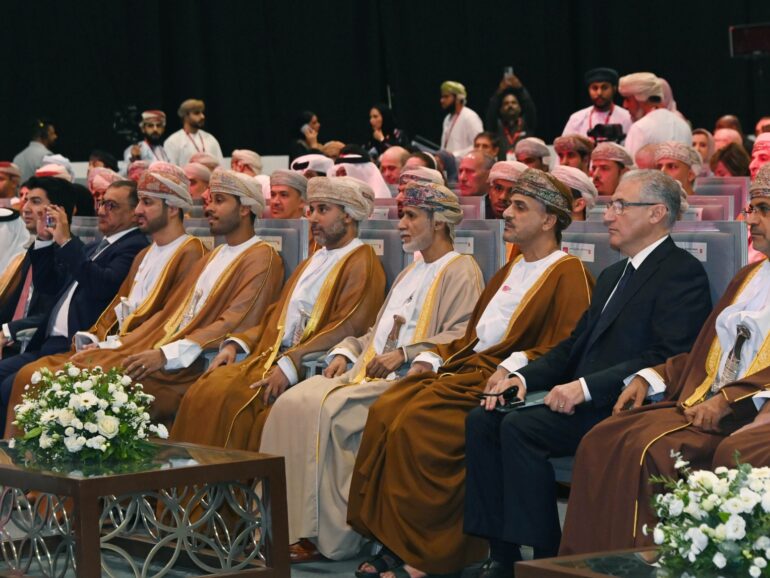
Muscat- The second edition of Oman Climate Week 2026 opened at the Oman Convention and Exhibition Centre (OCEC) on Monday, bringing together participants from more than 50 countries to discuss climate action, clean energy, resilience and sustainable development.
Held under the auspices of Sheikh Al Fadhal bin Mohammed Al Harthy, Secretary-General of the Council of Ministers, the event runs until September 16 and seeks to strengthen national, regional and international partnerships, promote innovation and practical solutions, and facilitate the exchange of knowledge and expertise.
The week features more than 15 main events, 20 training workshops, over 80 exhibitors and 400 speakers. It is also expected to attract more than 5,000 attendees, while 150 participants are taking part in the ‘Eco-thon’ challenge.
The programme brings together decision-makers, experts and specialists from government institutions, the private sector, international organisations, academia, research institutions and civil society to discuss climate, energy, the circular economy, climate finance, innovation, resilience and nature-based solutions.
Dr Abdullah Ali Al Amri, Chairman of the Environment Authority, said the climate challenge was no longer an environmental issue separate from development, but a key factor in decisions concerning energy, water, food, investment and economic competitiveness.
He said Oman viewed environmental sustainability as a central element of its development path and was working towards net-zero emissions by 2050 through an organised and realistic transition that takes into account national priorities, economic competitiveness and energy security.
Al Amri said Oman was also working to turn climate opportunities into practical projects through carbon initiatives, nature-based solutions, mangrove cultivation, investment in nature reserves and ecotourism, support for the circular economy and development of the waste management sector.
In a recorded video address, Jasim Mohammed Al Budaiwi, Secretary-General of the Gulf Cooperation Council (GCC), said climate change had moved beyond the environmental sphere to become an economic and development challenge requiring collective action and stronger regional and international cooperation.
He stressed the need to balance environmental protection with sustainable economic growth, efficient use of resources and stronger adaptive capacity.
Al Budaiwi said GCC countries looked forward to benefiting from the proceedings of Oman Climate Week to strengthen Gulf and regional cooperation, exchange expertise and support solutions that address the region’s development and environmental needs.
Mukhtar Babayev, President of COP29, stressed the importance of translating climate agreements and commitments into tangible results.
He said climate change was increasingly interacting with a wider range of risks, including natural disasters, water scarcity, land degradation, wildfires, public health threats, technological and industrial risks, conflicts and geopolitical instability.
Babayev called for a just, orderly and equitable transition that recognises different national circumstances and starting points, noting that energy security, affordability, industrial development and employment must be considered in the transition.
He also highlighted Oman’s potential role in international climate dialogue, citing its strategic location, economic importance in the energy sector, diplomatic experience and efforts to diversify its economy.
Chris Bowen, Australia’s Minister for Climate Change and Energy, said the world was at a decisive point for climate action.
He said exceeding the 1.5°C threshold did not mean abandoning the goal, but required a change in the path towards it, with faster emissions reductions, stronger adaptive capacity, greater access to climate finance and faster implementation of commitments.
Astrid Schomaker, Executive Secretary of the Convention on Biological Diversity, highlighted the close link between climate change and biodiversity loss, saying ecosystems were among the most important natural lines of defence against climate impacts.
She underlined the importance of nature-based solutions, particularly the restoration of mangroves and coastal ecosystems, which can strengthen community protection and adaptive capacity, store carbon and support local economies.
Sir Jim Skea, Chair of the Intergovernmental Panel on Climate Change (IPCC), reviewed findings from the IPCC’s Sixth Assessment Report via video link, noting that human activities had caused warming of the atmosphere, oceans and land.
He warned of growing challenges in the region, particularly rising extreme temperatures in the Middle East, while pointing to practical adaptation and emissions-reduction measures, including improved irrigation, drought- and salinity-resistant crops, expanded solar and wind energy, electric vehicles, and reductions in natural gas and methane leaks.
A key feature of the programme is a high-level ministerial session, ‘The Road to COP31’, bringing together officials, experts and international figures to discuss climate priorities and preparations for upcoming global milestones.
The opening ceremony also saw the announcement of a cooperation programme to establish the Environmental Innovation Centre involving the Environment Authority, Petroleum Development Oman (PDO), the SMEs Development Authority (Riyada), and the Research and Innovation Authority.
The centre will provide an ecosystem for environmental innovation and entrepreneurship, supporting ideas and projects in biodiversity, environmental quality, the environmental economy and climate change.
It will offer incubation and acceleration, capacity building, technical and consultancy support, and facilitate links between innovators and entrepreneurs and potential partners, funding and investment.
The ceremony also saw the launch of the ‘Green Branch Award’, a partnership between the Environment Authority and Muscat Stock Exchange aimed at encouraging companies to strengthen sustainability practices and environmental responsibility and support the transition towards a green economy.
Monday’s sessions covered climate change, adaptation and resilience, the circular economy, waste management, resource efficiency, environmental governance, digital transformation, artificial intelligence and the use of satellite data in climate decision-making.
The programme also includes discussions on the energy transition and green hydrogen, covering renewable and wave energy, energy storage, hydrogen production, energy-system efficiency, hydrogen production from treated water and the use of brine generated by desalination processes
© 2021 Apex Press and Publishing. All Rights Reserved. Powered by Mesdac