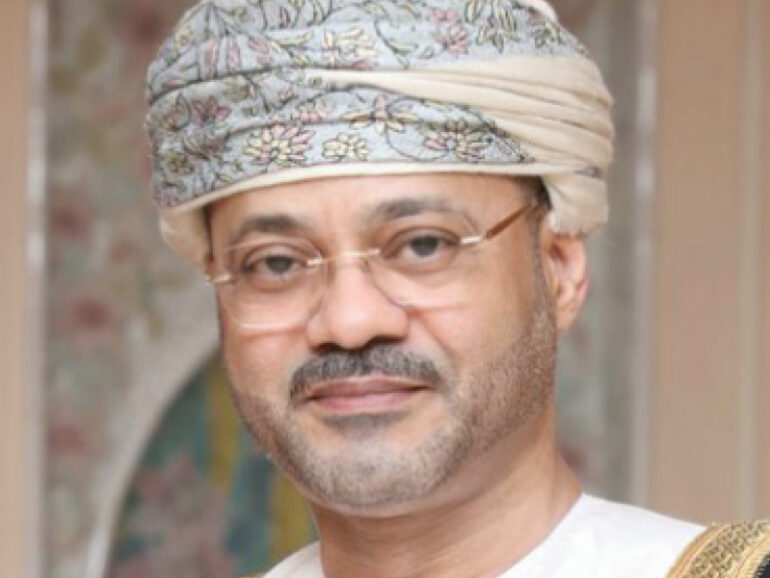
Muscat – Oman will continue to pursue diplomacy and dialogue despite the apparent absence of lasting solutions to major global conflicts, Foreign Minister H E Sayyid Badr Al Busaidi has said, stressing that “the very process of negotiation” is at stake.
In an article written for the UK-based Financial Times, H E Sayyid Badr said diplomacy in recent years has become an “unforgiving endeavour”, with provisional agreements producing only limited de-escalation while conflicts continue to threaten lives in Palestine, Iran, Yemen, Sudan, Lebanon, Israel and Ukraine.
He said the lack of lasting resolutions was not due to a lack of diplomatic activity, pointing to numerous initiatives, mediations, negotiations, summits and memoranda.
Rather, he attributed the situation to “troubling new dimensions of global politics”, including a decline in adherence to international law.
“Recent years have seen the consolidation of occupations, the increased use of assassination and abduction as tools of policy, and reckless attacks on civilians,” he wrote, alongside growing disregard for institutions including the United Nations, the International Court of Justice and the International Criminal Court.
“Now is not the time to give up on the principle that the law serves to constrain illegitimate uses of power,” H E Sayyid Badr said.
He stressed that diplomacy must continue even when negotiations appear to be failing.
“The task of the diplomat – perhaps especially the diplomat from a small nation – is to be the persistent interlocutor who remains at the table even when there seems to be nothing left to explore,” he wrote.
A key focus of Omani diplomacy in recent months, he said, has been efforts to reach an agreement to restore freedom of navigation through the Strait of Hormuz.
Describing the negotiations as complex and taking place under the threat of war, H E Sayyid Badr said no solution had yet been reached, but Oman is “not walking away”.
He outlined three objectives behind Oman’s continued engagement: protecting the country’s sovereignty and territorial waters, safeguarding the interests of the international community, and affirming the importance of international law.
“These are consistent with what Oman means by constructive neutrality,” he said.
According to H E Sayyid Badr, constructive neutrality goes beyond facilitating dialogue. It involves strengthening international law through practical action and developing a framework of mutual commitments.
He said such an approach could help smaller nations, which constitute the majority of countries globally, protect themselves against unpredictable actions by more powerful states.
© 2021 Apex Press and Publishing. All Rights Reserved. Powered by Mesdac