 By OUR CORRESPONDENT
Muscat – Gaps in safety equipment, breaches of the summer midday work ban and inadequate worker accommodation remain among concerns facing Oman’s construction sector despite extensive regulations governing occupational health and safety, an investigation by the General Federation of Oman Workers (GFOW) has found.
The report, published in GFOW’s Sawaed Naqabia magazine, said 403 compensated workplace injuries were recorded across Oman’s private sector in 2025, highlighting wider concerns over workplace protection. It identified construction as a particularly high-risk sector because of outdoor work, heavy machinery, excavation and other hazardous activities.
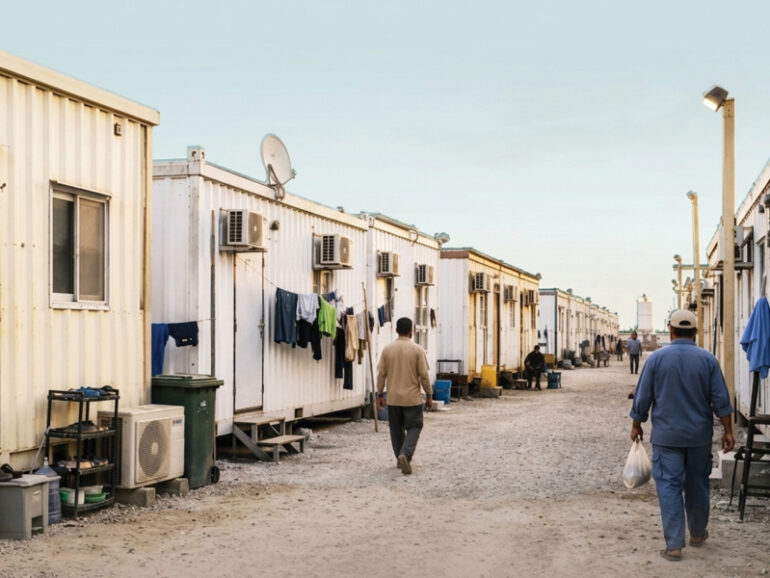
Complaints received by GFOW included unsuitable accommodation, failure to meet occupational safety requirements, violations of the midday work ban and inadequate access to drinking water, toilets and places for workers to rest, sleep and eat. The federation said cases were referred to the Ministry of Labour for legal action where violations were established.
Ibrahim bin Abdullah Al Gharibi, acting director of GFOW’s Trade Union and Labour Services Department, said stronger inspections and greater worker awareness were needed to close enforcement gaps. The federation has also called for better protection for workers who report violations.
The report found that risks were particularly evident among some smaller companies, where shortcomings included weak preventive programmes, failure to use personal protective equipment and the absence of trained supervisors capable of responding to heat-stress incidents.
Daoud bin Sulaiman Al Ghafri, head of occupational safety at the Ministry of Labour, said the ministry deals “strictly” with occupational health and safety complaints and carries out regular, targeted and complaint-based inspections of construction sites. Workers can also report workplace hazards through a hotline and electronic system.
Under Oman’s occupational safety regulations, employers must provide appropriate protective equipment, training and first-aid care, while construction workers must use helmets, safety footwear and other prescribed protection. Outdoor work at high-temperature sites is prohibited between 12.30pm and 3.30pm during June, July and August.
But enforcement is only part of the problem. Officials cited different workforce languages and cultures, lack of supervisors at some SMEs, inadequate monitoring by employers and failure by some workers to follow safety procedures among continuing challenges.
The investigation concluded that reducing preventable injuries would require stronger inspection, better training and a workplace culture in which safety is not sacrificed to project deadlines.
© 2021 Apex Press and Publishing. All Rights Reserved. Powered by Mesdac