 By OUR CORRESPONDENT
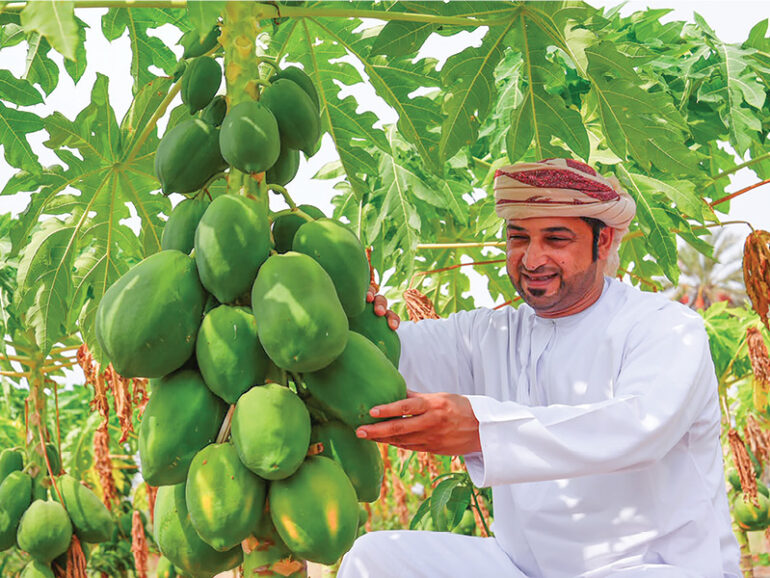
Shinas – A papaya farming project in Shinas, North Batinah, is demonstrating the potential of the tropical fruit as a commercially viable crop in Oman, with plans to expand production and introduce value-added products in the coming years.
The project, developed by Omani farmer Khalid bin Mohammed Al Qamshoui, has emerged as a successful example of agricultural diversification, showing that papaya can thrive under Oman’s climatic conditions when supported by modern farming techniques.
Al Qamshoui said he chose papaya after conducting a detailed study of the crop’s suitability for local conditions. Its ability to adapt to Oman’s climate, combined with manageable pest risks, continuous fruit production and growing market demand, made it an attractive investment.
Like many agricultural ventures, the project faced challenges in its early stages, including soil conditions, irrigation management, high temperatures, humidity and the availability of high-quality seeds. These obstacles were addressed through improved cultivation methods and technical innovations.
The farm grows the Chinese and Thai Red Lady varieties, known for their high yields, resistance to pests, relatively short tree height and strong consumer demand.
Papaya trees begin producing fruit about six months after seedlings are transplanted and remain productive for up to three years. Under favourable conditions, each tree yields between 30kg and 40kg of fruit.
To improve water efficiency, the farm uses a drip irrigation system, with trees irrigated every 36 hours for 15 minutes under a carefully designed schedule. Fertiliser is applied through an injection system to ensure plants receive the nutrients required during different stages of growth.
The project also follows an integrated pest management programme to control diseases such as leaf curl and leaf spot viruses, as well as insects including whiteflies, fruit flies and spider mites. Recommended pesticides are rotated to minimise pest resistance while maintaining fruit quality.
According to Al Qamshoui, papaya prices vary according to fruit quality and market supply and demand. He said production costs are about RO100 per tonne, making the crop economically attractive under efficient farm management.
He acknowledged the support provided by the Ministry of Agriculture, Fisheries and Water Resources through technical guidance and limited supplies of fertilisers, which have helped improve productivity.
Looking ahead, Al Qamshoui plans to expand the cultivated area and invest in processing industries, including papaya juices and dried fruit products, to increase value addition and strengthen the competitiveness of Omani produce.
He encouraged prospective investors to focus on scientific land preparation, efficient irrigation systems and modern fertilisation techniques to ensure long-term productivity.
Al Qamshoui said he is optimistic about the future of papaya cultivation in Oman, noting that the crop could contribute to greater food security, create new agricultural investment opportunities and reduce reliance on imported tropical fruits while supporting the country’s agricultural development goals.
© 2021 Apex Press and Publishing. All Rights Reserved. Powered by Mesdac