Tehran, Iran – Iran and Oman have come to an agreement on the “geographic characteristics” of a shipping route in the Strait of Hormuz, Iran’s Foreign Ministry spokesman Esmaeil Baghaei has stated, and that the two neighbours are in the final stage of preparing a joint announcement on the agreement, provided “certain third parties” do not interfere in the process.
Baghaei, however, added that an agreement between Iran and Oman does not automatically guarantee immediate passage, warning that US military action in the region could still undermine security.
In comments shared on the Iranian Foreign Ministry’s Telegram page, Baghaei said many factors contributing to insecurity in the strait are still in place. He cited the US’s declared naval blockade on Iran and other “aggressive and threatening actions against Iran and its interests”.
Iran’s state broadcaster IRIB reported that an informed source reiterated that the agreement between Iran and Oman on shipping arrangements in the Strait of Hormuz would not lead to its immediate reopening, tempering hopes of a swift breakthrough.
The source said that negotiations on navigation through the strategic waterway were being conducted exclusively between Tehran and Muscat and did not involve Washington.
“The reopening of the Strait of Hormuz depends on a change in US behaviour and the correction of its violations,” the source was quoted as saying.
The remarks contrasted with growing optimism in Washington. US President Donald Trump said discussions with Iran were progressing well and indicated that further details could emerge within 48 hours.
Plans of middle corridor
Earlier, Iran’s Press TV said talks had entered a ‘new phase’, with a bilateral understanding within reach on establishing a middle corridor through Hormuz. The proposed route would replace the existing northern and southern shipping lanes.
A senior Iranian source told Reuters that Tehran wanted control over inbound vessels and oversight of outbound traffic, including the right to intervene when it deemed necessary. Ships leaving the Gulf would use a route between Iran and Oman, with clearance issued through Muscat after Tehran was notified.
Iran had earlier rejected an Omani proposal for broader regional management, insisting that Tehran and Muscat alone should oversee their respective sections of the strait.
Citing two regional officials, AP reported a similar framework, with ships entering via an Iranian-controlled route and exiting via an Omani one. It also said service fees would be charged for security and environmental protection, and added that any deal would be linked to lifting the US blockade on Iran’s ports.
Shipping remains restricted
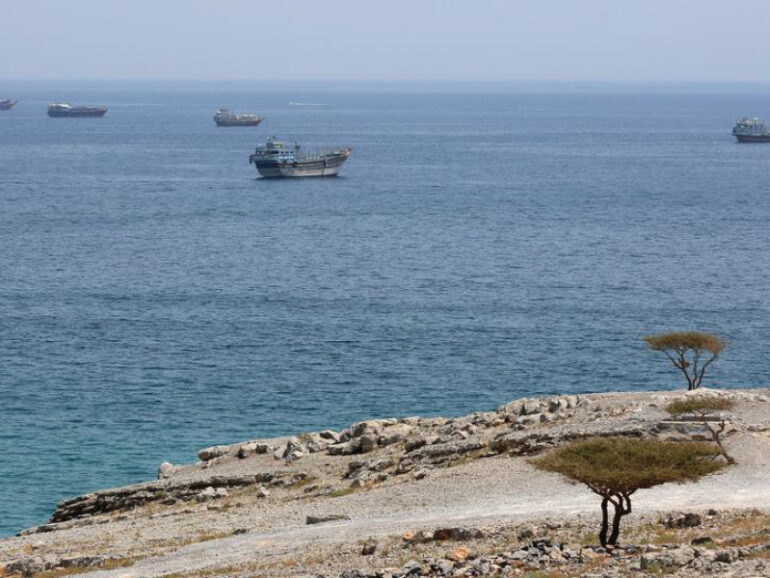
Traffic through Hormuz remained a fraction of pre-war levels on Tuesday, when only eight vessels – five tankers and three bulk carriers – crossed the waterway, according to data firm Kpler.
Between 130 and 140 ships typically used the strait each day before the US-Israel war on Iran began on February 28 and Tehran sharply restricted navigation.
Traffic through the Bab El Mandeb was also limited, with 20 vessels crossing on Tuesday, unchanged from the previous day, Kpler data showed.
© 2021 Apex Press and Publishing. All Rights Reserved. Powered by Mesdac