 By GULAM ALI KHAN
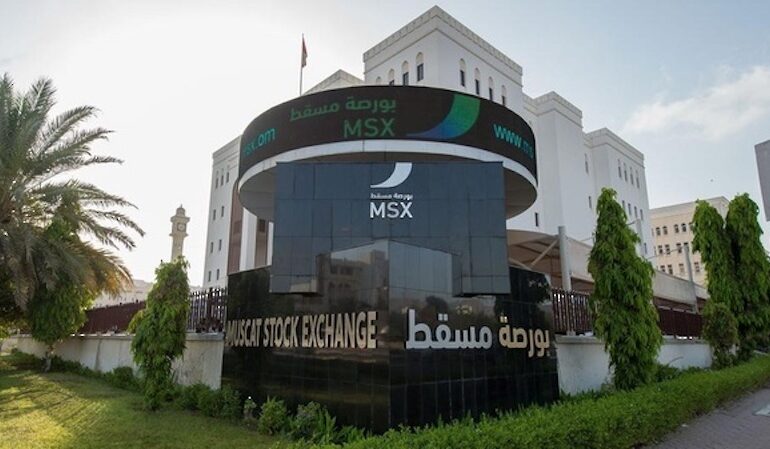
Muscat – The benchmark index of the Muscat Stock Exchange (MSX) recorded the steepest monthly decline among GCC markets in May as investors engaged in profit-taking following a prolonged rally that had seen the Omani bourse post gains for ten consecutive months.
The MSX 30 Index fell 7.3% during the month, marking its first decline since July 2025, to close at 7,757.2 points.
According to a research report by Kuwait-based Kamco Investment, the May decline was largely driven by investors locking in gains after the Omani market’s extended upward run.
‘The decline reflected profit booking by investors during the month, with a sharp sell-off during the third week followed by a partial recovery towards the end of the month,’ the report said.
Despite the correction, the MSX remained one of the region’s best-performing markets, with its year-to-date return standing at a robust 32.2% at the end of May. On Monday, the first trading day of June, the MSX 30 Index gained 0.49%, with shares worth RO42.4mn changing hands.
All three sector indices on the MSX ended in negative territory at the end of May. The Industrial Index recorded the largest decline, falling 4.3%. The drop was driven by double-digit share price declines in heavyweight stocks, including OQ Base Industries and OQ Gas Networks.
The Services Index declined 3.1% during the month, while the Financial Index shed 2.9%.
Among individual stocks, Sohar Power topped the gainers’ list with an 80.9% increase in its share price, although trading activity in the stock remained relatively limited. National Bank of Oman (NBO) and Phoenix Power followed, posting gains of 13.9% and 13.6%, respectively.
On the losing side, Al Hassan Engineering, which is currently under liquidation, recorded the sharpest decline, with its share price falling 60%. Oman Fisheries and OQ Base Industries followed, with losses of 20.7% and 17.7%, respectively.
Trading activity weakens
Trading activity on the Muscat Stock Exchange also moderated during May. The total volume of shares traded declined 32.6% month-on-month to 3.2bn shares, the lowest level in six months, compared with 4.8bn shares in April, according to Kamco Investment.
Similarly, the total value of shares traded fell 27.7% to RO1.1bn, the lowest level in four months, down from RO1.5bn in April.
Bank Muscat led the value-traded rankings with transactions worth RO224.8mn during the month. It was followed by OQ Base Industries and Sohar International Bank, with traded values of RO205mn and RO164.1mn, respectively.
Geopolitical headwinds weigh on GCC markets
Kamco Investment said geopolitical uncertainties continued to weigh on regional equity markets during May, limiting the ability of GCC exchanges to participate in the broader global rally driven by AI-related stocks.
Global equity markets extended their gains during the month despite ongoing tensions in the Middle East and the continuing conflict between Russia and Ukraine. The rally was largely fuelled by AI-related technology and infrastructure stocks, helping the MSCI World Index post gains for a second consecutive month.
However, regional markets faced additional pressures.
‘GCC and Middle East markets were affected by the deadline in talks between the US and Iran and the continued closure of the Strait of Hormuz. The critical waterway remained closed as the war dragged on for the third consecutive month, affecting crude oil volatility, although there were some positive statements towards the end of the month,’ the report noted.
As a result, the MSCI GCC Index declined 1.3% in May after posting a marginal gain in April. The decline reflected losses across most regional markets, partially offset by modest gains in Qatar and Bahrain.
Oman recorded the largest monthly decline in the GCC, with the MSX 30 Index falling 7.3%, followed by Saudi Arabia’s Tadawul All Share Index (TASI), which declined 1.0%, and Abu Dhabi’s ADX General Index, which fell 0.8%.
Investor sentiment in Saudi Arabia remained subdued amid ongoing geopolitical tensions, while Abu Dhabi’s market reversed part of April’s gains.
Dubai’s DFM General Index edged down 0.1% during May after rising 6.1% in April, as investors remained cautious despite the ceasefire continuing to hold.
Elsewhere, Kuwait’s market declined 0.5% during the month, while Qatar’s QE 20 Index rose 0.6%, marking its second consecutive monthly gain. Bahrain Bourse also advanced 0.4%, extending its gains for a second straight month.
© 2021 Apex Press and Publishing. All Rights Reserved. Powered by Mesdac