
 By MOHAMMED TAHA
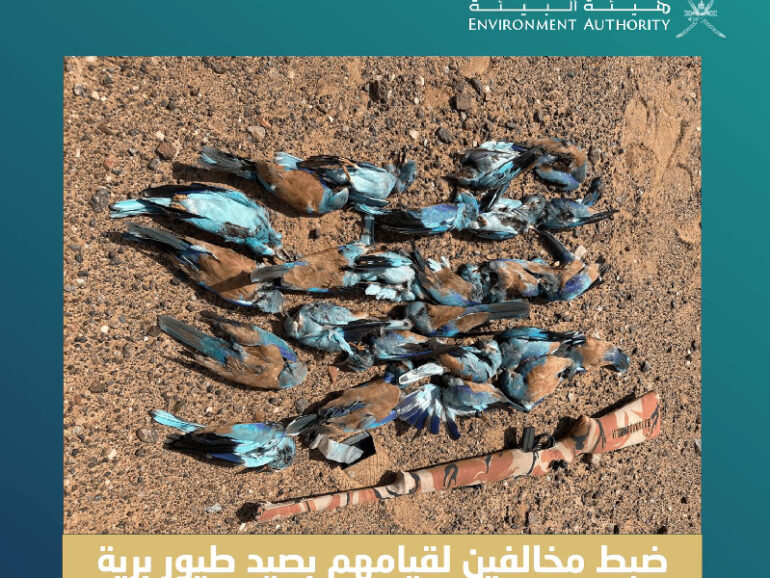
Muscat – The Environment Authority (EA) has recorded 19 poaching cases in Oman so far this year, as it intensifies efforts to combat illegal hunting and wildlife-related crimes through enhanced monitoring, enforcement and the use of advanced technology.
Speaking to Muscat Daily, Khawla bint Rashid Al Azri, Head of the Wildlife Monitoring Department at EA, said the figure reflects the authority’s growing ability to detect violations rather than an increase in offences.
She said the authority has expanded field operations, strengthened the readiness of inspection teams and increased monitoring campaigns in environmentally sensitive areas. The use of modern technologies has improved surveillance and enabled faster responses to incidents.
“The recorded cases should be viewed in the context of stronger monitoring and enforcement capabilities,” Khawla said, adding that the data helps identify areas most vulnerable to illegal activities and supports the planning of future monitoring programmes.
According to Khawla, Oman’s anti-poaching strategy is based on an integrated framework that combines legislation, field inspections, scientific monitoring and international cooperation to protect endangered species.
She said conservation initiatives for species such as the Arabian oryx and sea turtles, together with the establishment of protected reserves, have strengthened efforts to preserve the sultanate’s biodiversity.
The authority operates under a legal framework that criminalises poaching and the illegal wildlife trade. Violators face penalties that include fines, imprisonment and the confiscation of equipment used in offences.
“Effective deterrence depends not only on penalties but also on rapid intervention, efficient procedures, continuous monitoring and public awareness,” she said.

The country’s vast geography and varied terrain continue to present challenges for wildlife protection teams. Remote desert and mountainous areas are often difficult to monitor, while some offenders exploit darkness and use methods that are harder to detect.
To address these challenges, the authority applies a risk-based approach that prioritises surveillance in ecologically sensitive areas, habitats of threatened species and locations with a history of violations.
She revealed that EA is implementing a new project to assess the geographical coverage of natural sites and identify monitoring requirements more accurately, enabling the scientific deployment of field teams according to the environmental significance of each area.
Technology has become a central element of the authority’s anti-poaching efforts. Drones, camera traps and smart surveillance systems are being used to monitor remote locations and gather evidence that can support legal action against offenders.
The authority is also addressing illegal wildlife trade through digital platforms. Specialised teams monitor online advertisements and social media accounts suspected of promoting unlawful wildlife trade, working with relevant agencies to identify offenders and pursue legal action.
Khawla noted that limited awareness remains a contributing factor in some poaching cases, with certain individuals continuing to view hunting as a traditional activity without fully recognising its impact on wildlife populations.
Khawla added that traditional hunting practices can coexist with biodiversity conservation when regulated through licensing systems, designated hunting seasons and restrictions on hunting endangered species.
© 2021 Apex Press and Publishing. All Rights Reserved. Powered by Mesdac