
 By HUBERT VAZ
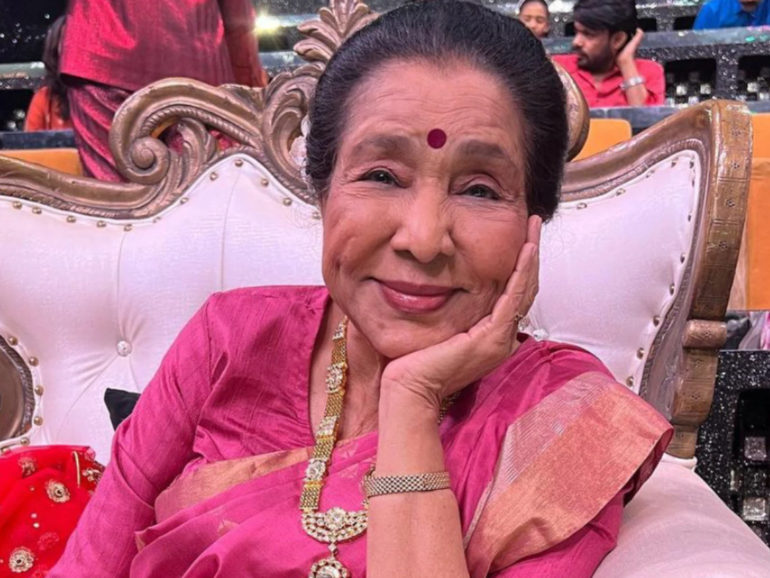
Sailing through an eight-decade journey through resilience, reinvention, and a music legacy without parallel, Asha Bhosale will always be known for her string of immortal hits, her indomitable spirit, and her dimpled smile which reflected her inner ‘child’
There was an unmistakable glimmer in her eyes and a new-found vigour seemed to rev up her sprightly disposition when I met Ashatai (as she was fondly known in Bollywood) eleven years ago in her suite at Hormuz Grand hotel in Muscat.
Asha Bhosle, a Padma Vibhushan awardee and the Guiness Book of world record holder for most recorded artists in music, had visited Muscat to perform an unprecedented concert on Valentine’s Day (February 14, 2015) at the City Amphitheatre in Qurum.
Titled ‘Asha Bhosle Live’ and featuring the Royal Oman Symphony Orchestra (ROSO) alongside the Bollywood playback legend, the concert marked the Diamond Jubilee (60 years) celebrations of diplomatic ties between Oman and India as well as the culmination of the Muscat Festival.
Armed with a brand new dictaphone, and a notepad that would probably be ignored, I sat down on a coach for the interview with the great legend in full view…But as soon as my accompanying photographer colleague got down on his knees for a winning shot, she signaled him to stop and scampered inside for a quick touch-up. After all, Ashatai was known for being affably presentable to all audiences.
There was no point inquiring about her illustrious career, as it was an open book, but she spoke at length about her excitement of performing in an Arab state like Oman for the first time, her love for Arabic music, Arabian culture, and stunning Arabian beauties, besides the excitement of performing live with ROSO that evening. Though the concert began with much flourish, the singer, however, had to abandon the concert halfway due to poor sound arrangements, much to the dismay of fans and organisers.
Tough beginnings
The story of Asha Bhosale does not begin with triumph, but with turbulence. Born into a family where music was both inheritance and expectation, she was introduced early to the rigours of classical training. Yet, the loss of her father at a young age altered the course of her life irrevocably. What followed was not a gentle entry into the world of music, but a necessity-driven plunge into it.
As a teenager, she stepped into the demanding world of playback singing—not as a celebrated prodigy, but as a hopeful voice among many, striving to be heard in an industry that already had its reigning icons, especially her own sister – the late Lata Mangeshkar – her biggest rival. There were rejections, comparisons, and the persistent feeling of being on the margins of recognition.
But even in those formative years, there was something unmistakable about her voice – an elasticity, a spark, an ability to emote beyond the written note. If the doors to prominence were not immediately open, she found ways to slip through the cracks and make herself indispensable, by experimenting with different genres that added more variety and punch to her repertoire.
The mid-20th century Hindi film industry was defined by strong musical personalities, and breaking through required more than talent – it demanded distinction. Asha Bhosale found hers not by imitation, but by divergence.
She began accepting songs that others hesitated to sing – playful, bold, sometimes risqué compositions that required a certain theatrical flair. In doing so, she quietly redefined the boundaries of playback singing. Her voice became associated with characters that were vibrant, rebellious, and unapologetically expressive.
Gradually, what began as a necessity became a signature. She was no longer competing within the existing framework; she was reshaping it.
Symphony of versatility
If there is one word that defines Asha Bhosale’s career, it is versatility. Few artists have traversed as many musical landscapes with such ease and authenticity.
She could render a delicate ghazal with aching tenderness and, in the next breath, deliver a high-energy cabaret number brimming with rhythm and attitude. Folk melodies, classical compositions, romantic duets, devotional songs – each found in her an interpreter who respected the form while adding her own distinctive touch.
Her collaborations with visionary composers like R D Burman opened new dimensions in film music. Together, they experimented with orchestration, rhythm, and vocal expression, blending Indian traditions with global influences. The result was a body of work that felt both rooted and modern – a rare balance that resonated across generations.
Across languages and borders
While her contribution to Hindi cinema remains monumental, Asha Bhosale’s artistry was never confined to a single language. She recorded songs in a remarkable array of Indian languages, adapting her diction and emotional tone to suit each one.
This linguistic versatility was not merely technical – it was deeply expressive. She understood that language carries its own rhythm, its own cultural nuance, and she honoured that in every performance. Whether singing in Marathi, Bengali, Tamil, or beyond, she brought authenticity that resonated with native listeners.
Her curiosity and openness also led her beyond Indian shores. At a time when cross-cultural collaborations were rare, she lent her voice to projects that blended Eastern and Western musical sensibilities. Singing alongside accomplished English-language artists, she demonstrated that music need not be bound by geography or tradition.
Trials behind the voice
Behind the luminous career was a life that was far from easy. Asha Bhosale faced personal hardships that could have derailed a less determined spirit. Early marriage, emotional upheaval, and the responsibilities of supporting a family weighed heavily on her shoulders.
Yet, even in moments of personal distress, her commitment to her craft never wavered. Music became both refuge and expression – a way to process pain and transform it into something enduring.
The industry itself was not always kind. Competition was fierce, opportunities uneven, and recognition sometimes delayed. But she met these challenges not with bitterness, but with resilience. Each setback became a stepping stone, each obstacle a reason to push further.
In an industry where careers can be fleeting, Asha Bhosale’s longevity is nothing short of extraordinary. Decade after decade, she remained relevant – not by clinging to past success, but by embracing change.
As musical trends evolved, so did she. From the golden era of film music to the rise of modern soundscapes, she adapted without losing her identity. Younger composers sought her out, recognising in her voice a timeless quality that could elevate contemporary compositions.
Even as new generations of singers emerged, she did not retreat into nostalgia. Instead, she stood alongside them, a bridge between eras, proving that artistry does not age – it evolves.
In her final years, Asha Bhosale remained, above all, a student of music. There was no sense of finality in her approach, no suggestion that she had said all she needed to say. She continued to explore, to perform, to engage with her art in ways that kept it alive and evolving.
Her passing marks not just the end of a life, but the closing of a remarkable chapter in musical history. And yet, it does not feel like an ending. Her voice endures – in recordings, in memories, in the countless artists she inspired over the past eight decades.
Timeless hits of Asha
Each of the following songs are milestones that reshaped Hindi film music:
Piya Tu Ab To Aaja (Caravan, 1971)
Dum Maro Dum (Hare Rama Hare Krishna, 1971)
In Aankhon Ki Masti (Umrao Jaan, 1981)
Yeh Mera Dil (Don, 1978)
Chura Liya Hai Tumne Jo Dil Ko (Yaadon Ki Baaraat, 1973)
O Haseena Zulfon Wali (Teesri Manzil, 1966)
Aao Na Gale Lagao Na (Mere Jeevan Saathi, 1972)
Dil Cheez Kya Hai (Umrao Jaan, 1981)
Jaane Jaan Dhoondta Phir Raha (Jawani Diwani, 1972)
Rangeela Re (Rangeela, 1995)
© 2021 Apex Press and Publishing. All Rights Reserved. Powered by Mesdac