
 By OUR CORRESPONDENT
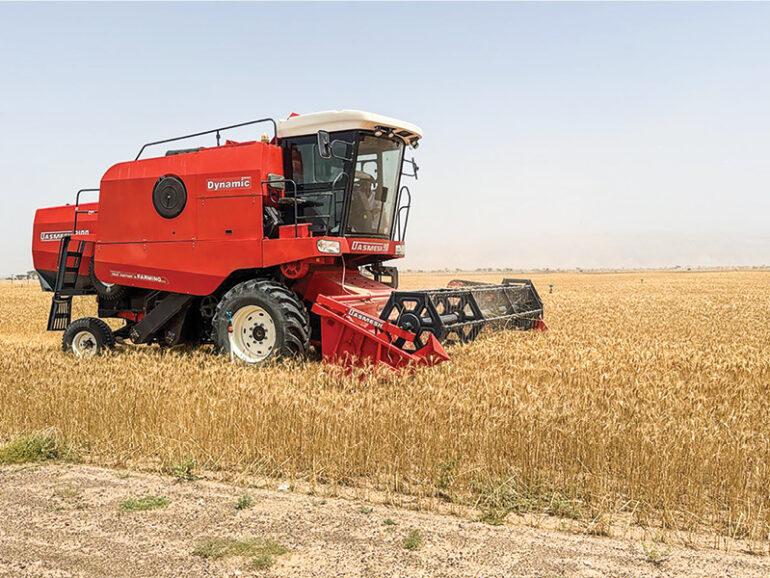
Muscat – Wheat harvesting has commenced in several parts of Oman, with farmers in the wilayat of Al Kamil Wa Al Wafi in South Sharqiyah and Dhank in Dhahirah beginning to gather this season’s crop amid continued efforts to strengthen national food security.
The Ministry of Agriculture, Fisheries and Water Resources said on Tuesday that the area planted with wheat in Al Kamil Wa Al Wafi reached 41 feddans this season, with production expected to exceed 50 tonnes. The ministry attributed the positive outlook to the use of improved seed varieties and the adoption of modern agricultural practices aimed at raising productivity and enhancing grain quality.
These measures include improved irrigation management, balanced fertilisation and integrated pest control, contributing to higher yields and more efficient use of resources.
In Dhank, harvesting operations began on Tuesday at agricultural projects in the Saih Al Salam area for the 2025–2026 season. Farmers, investors and agricultural engineers attended the launch. The cultivated area in these projects expanded to 245 feddans this season, up from 143 feddans last year, when output reached 190 tonnes.
Ali bin Salem Al Badi, Director of the Department of Agricultural Wealth and Water Resources in Dhank, said the crop comprises several improved varieties that have shown strong productivity and good grain quality. “The harvest began slightly later than usual, as the season typically starts in mid-March. The delay was due to recent weather conditions that affected Oman,” he said, noting that planting began last November.

Al Badi added that investors benefit from a range of support measures, including allocation of agricultural land under usufruct agreements, distribution of improved seeds, provision of modern harvesting and threshing equipment during the harvest period, and technical guidance throughout the cultivation cycle.
Marketing arrangements are in place through an agreement with Oman Flour Mills to purchase locally produced wheat directly from farmers at an agreed price. Harvesting is expected to continue until June.
Officials estimate Oman’s annual wheat consumption at around 350,000 tonnes. Imports, handled mainly by Oman Flour Mills and Salalah Mills, total nearly 900,000 tonnes, with the surplus used for grain re-exports and processed food products.
To strengthen strategic reserves and ensure supply stability, the government has expanded storage capacity in grain silos and introduced a dedicated wheat support programme following global supply disruptions triggered by the Russia–Ukraine conflict. Under the scheme, the government purchases locally produced wheat at RO500 per tonne while encouraging farmers to adopt higher-yield varieties.
According to the ministry, wheat cultivation areas in Oman now exceed 8,000 acres. Plans are under way to introduce new varieties capable of producing up to three tonnes per acre, which could significantly increase domestic output in the coming years.

© 2021 Apex Press and Publishing. All Rights Reserved. Powered by Mesdac