 By HUBERT VAZ
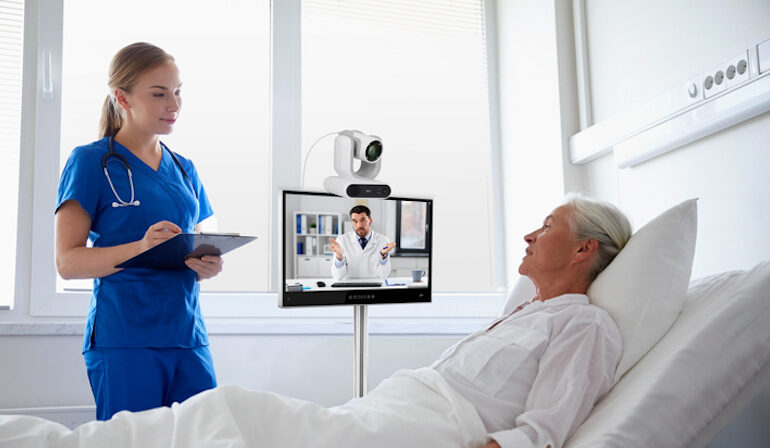
Telemedicine for Stroke – or TeleStroke – is an initiative being implemented across several hospitals in Oman to create an opportunity for advanced stroke treatment to patients, such as stroke thrombolysis.
Stroke is the latest condition to become the focus of technologic progress in Oman and a new initiative to make urgent treatment available to stroke patients across Oman is now picking up momentum.
TeleStroke Oman enables even hospitals without physical access to a neurologist to access emergent neurologic care for stroke patients. It is being supported by the Ministry of Health as part of a broader TeleMedicine for Health initiative and a comprehensive national initiative to implement virtual healthcare services.
H E Dr Ahmed al Mandhari, Undersecretary of the Ministry of Health for Planning and Health Organisation, asserts, “We are proud to affirm that the highest levels of national leadership are fully committed to advancing virtual healthcare services. Through strategic investment in cutting-edge technologies and digital platforms, we are not only expanding access but also ensuring that the quality of care remains at the forefront of our efforts. This initiative reflects our shared vision for a modern, resilient health system.”
Prof Abdullah al Asmi, Professor of Neurology at Sultan Qaboos University, described TeleStroke Oman as “a method of using limited resources in an efficient manner in delivering the most advanced method of emergency stroke care. This is well proven to save money for communities and countries as well as reduce patient suffering and disability in several countries, particularly for hospitals distant from major cities, with limited specialty care.”
A research grant support from the Ministry of Health has also enabled timely delivery of essential TeleStroke equipment to five hospitals across Oman – at Ibra, Ibri, Buraimi, Haima and Khasab.
Dr Arunodaya Gujjar, Professor of Neurology, SQU, mentioned that these hospitals will be linked by state-of-art telemedicine network with two central hospitals – the Sultan Qasboos University Hospital (under the University Medical City) and Khoula Hospital. This network is supported by an application developed indigenously in Oman, enabling advanced video conferencing as well as image and data sharing.
In an exclusive interview with Muscat Daily, Dr Gujjar shares key insights into this initiative. Excerpts:
Plan of action

Can you share any key statistics regarding stroke cases in Oman?
A Stroke Registry established at Sultan Qaboos University Hospital has a database of about 1400 patients treated here over the last 12 years. What is evident from this registry is that stroke in Oman is fairly common – it occurs about a decade earlier than in the western population (mean age of 63 years in Oman compared to 74 years in west). Stroke due to atherosclerosis is the commonest variety in Oman.
What single problem will TeleStroke services solve right now for stroke patients in Oman?
Telemedicine for Stroke – or TeleStroke- is being implemented across several peripheral hospitals in Oman without access to an expert Neurologist locally. This technology creates an opportunity for patients at such hospitals to receive emergent advanced treatment for Stroke such as Thrombolysis – which is capable of dissolving clots brain arteries.
How will TeleStroke change the timeline from symptom onset to treatment for patients outside Muscat?
Till recently, such patients with acute stroke from distant wilayats would have to travel to a ‘stroke ready hospital’ located in few cities across Oman- Muscat, Nizwa, Sohar or Salalah. This could require several hours of travel, during which a ‘golden window’ – of about 4.5 hours when treatment such as Thrombolysis is very effective – would be lost to the patient. TeleStroke Oman enables such treatment to be delivered at a center quite close to the patient and thus reduce the ‘stroke onset to treatment’ timeline.
What emergency treatments will you be able to recommend or initiate remotely (IV thrombolysis)?
TeleStroke Oman is primarily designed to provide emergent advice for administering intravenous Thrombolysis to stroke patients. A few patients with ‘large artery occlusion’ who may merit further treatment by Thrombectomy – i.e. catheter-based removal of a clot within a brain artery- could also be recognized at the same time and referred to a central hospital.
Who will actually connect to you — emergency physicians, paramedics, or both?
The protocol for TeleStroke calls connects emergency medicine physicians encountering a patient with acute stroke in a peripheral hospital with a neurologist at a hospital in Muscat.
When do you expect the system to be live, and how many hospitals/clinics are likely to be on board?
TeleStroke Oman is expected to be live in a a few weeks. Presently five peripheral hospitals – at Khasab, Buraimi, Ibri, Ibra and Haima are linked by this network with Sultan Qaboos University Hospital and Khoula Hospital.
Clinical follow-ups
What clinical protocols will you use for remote stroke assessment?
Assessment of patients with stroke under TeleStroke Oman network primarily is based on clinical assessment enabled through high quality video feed. This would be supported by the use of certain scales to quantify deficits such as NIH Stroke Score, as well as evaluation of the CT scans and CT angiograms.
How are decisions made regarding urgent stroke treatment within the ‘golden hour’?
Any patient with a sudden neurologic symptom consistent with stroke within about 4.5 hours since onset, with a CT scan which excludes brain hemorrhage and without contraindications for use of a clot-dissolving agent would be considered eligible. However, expert neurologic evaluation for confirming the stroke, excluding ‘stroke mimics’ and determining the best course of treatment is a decision made by a team neurologist-led-team.
How will you evaluate outcomes?
Outcomes are evaluated by clinical follow up at discharge and after 3 months.
Logistics and training
What platform/equipment are you using and what minimum connectivity is required?
TeleStroke Oman is supported by a platform developed indigenously in Oman. Its unique features are that it is a simple but robust programme, permitting transfer of high-resolution images and excellent sound sensitivity; enabling live sharing of images between teams; permitting documentation consults for future reference and most importantly, having scalablity for adding many additional centres.
How will you manage technical/connectivity failures?
Access to a stable and safe internet source is essential for TeleSTroke Oman, which is easily available now at all peripheral and central hospitals (compared to even a decade ago). Failure of the network is planned to be supported by alternative internet-based services temporarily to cover emergent situations only.
What training will local emergency medicine teams receive?
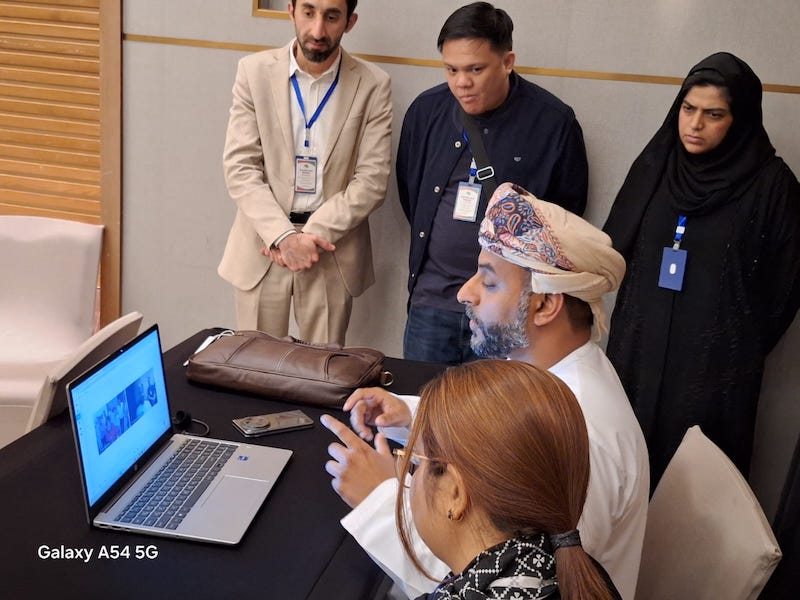
Teams of medical and paramedical staffs from all the peripheral institutions involved underwent training in TeleStroke management as well as call management. The training was imparted in online sessions over 2 months, rounded off by hands-on Workshop organised in May.
Will ambulance services be integrated into the workflow?
Integration of ambulance services, public education drives, periodic updating of teams involved (CME events), development of a central administrative hub to provide effective coordination and policy development, are all planned in the future of TeleStroke Oman.
Can you share any key statistics regarding stroke cases in Oman?
A Stroke Registry established at Sultan Qaboos University Hospital has a database of about 1400 patients treated here over the last 12 years. What is evident from this registry is that stroke in Oman is fairly common – it occurs about a decade earlier than in the western population (mean age of 63 years in Oman compared to 74 years in west). Stroke due to atherosclerosis is the commonest variety in Oman.
© 2021 Apex Press and Publishing. All Rights Reserved. Powered by Mesdac