 By MUSCAT DAILY CORRESPONDENT
As you step into Muttrah Souq, the centuries-old marketplace nestled along Muscat’s picturesque corniche, you’re immediately struck by the curious blend of the ancient and the contemporary. What had once began as a flea market has now evolved into a ‘must-do traditional trot’ for tourists and a ‘habitual festive visit’ for locals in the capital
The stained-glass domes, the heavily laden antiques/handicrafts shops at the entrance, and the heady aromas of frankincense and traditional perfumes emanating from the alleys ahead seem to promise a trance-like transportation into the past… But as you head deep into the cobble-stoned lanes of Old Muttrah Souq, you begin to wonder whether you’re caught at the crossroads of a 20th century bazaar.
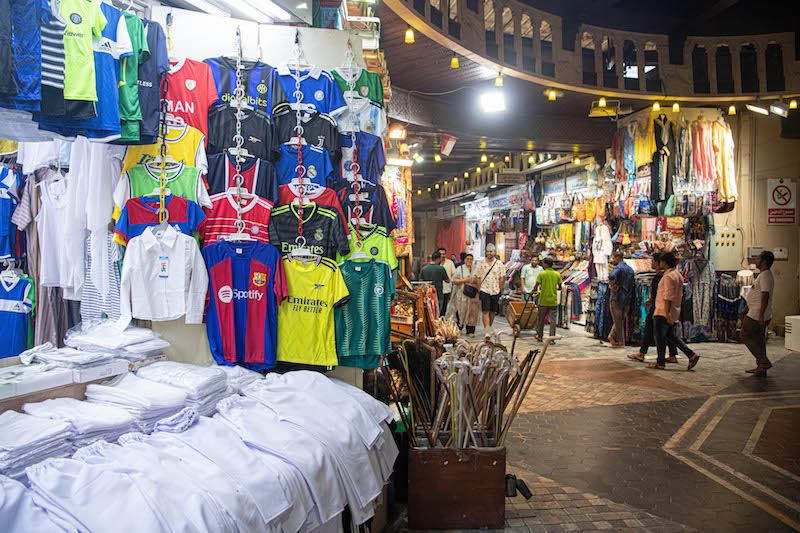
The shops selling traditional handicrafts, antique furniture, silverware, etc have suddenly disappeared and you see readymade garments, soft-toys and school bags, plastic toys, Chinese electronic goods and appliances, aluminum utensils, and a whole lot of modern merchandise, which should have no place in a traditional souq, hogging the limelight.
The narrow, winding alleyways, steeped in time, now pulse with an eclectic energy that speaks of both, Oman’s rich cultural heritage and its rapid modernisation.
Traditional wooden beams adorned with intricate patterns stretch overhead, their warm glow mingling with the harsh fluorescent lights of modern storefronts. On one side, an outlet stands, all sleek metal and glass, brightly lit, products neatly stacked, offering a stark contrast to its neighbour, overflowing with colourful textiles and loaded with handcrafted souvenirs.
“It’s like walking through different centuries with each step,” muses Ahmed, a 67-year-old frankincense seller whose family has operated in the souq for generations. “My grandfather would hardly recognise some parts of the market now, but the soul of Muttrah – it’s still here, whispering through the alleys.”
Indeed, this soul is evident in the old shops that line the walkways. Ornate lamps, colourful ceramics, and glittering jewellery catch the eye, while the scent of oud and exotic spice fills the air. Yet, interspersed among these time-honoured establishments are signs of modernity. Digital displays advertise the latest, while shopkeepers tap away on smartphones.
This juxtaposition raises an important question – How can Muttrah Souq evolve to meet the demands of the 21st century while preserving the authentic charm that draws visitors from around the world?
Fatima Shaikh, a young entrepreneur who recently opened a boutique selling modern interpretations of traditional crafts, believes the answer lies in thoughtful integration. “We don’t have to choose between old and new,” she argues. “The key is to blend them in a way that respects heritage while embracing progress. For example, I use social media to reach customers, but my products are deeply rooted in tradition.”
The souq’s infrastructure itself reflects this balancing act. Tight, congested alleyways exist alongside well-maintained, tiled corridors. Many storefronts sport LED lighting and graphic posters. Yet the architecture– the arched entrances, frescoed ceilings – all pay homage to traditional Arab design.
“The air conditioning and better lighting have been a blessing,” admits Mohammed Khan, an expat worker who runs a small café deep within the souq. “It makes the experience more comfortable for everyone, especially now, with the heatwaves.”
This modernisation extends to products on offer as well. While many shops still specialise in local goods – frankincense, dates, and handwoven textiles – others have adapted to changing tastes. The Swiss Arabian outlet is a prime example, offering high-end perfumes that blend Middle Eastern scents with Western sensibilities.
“We have to cater to both, locals and tourists,” explains Khan. “Some want the real Omani delicacies, while others are looking for familiar tastes.”
Technology, too, is playing an important role in the souq’s evolution. Many vendors accept credit cards and mobile payments, while others have begun to explore e-commerce options, allowing them to reach customers beyond the shoreline.
However, not everyone is enthusiastic about these changes. “Sometimes, I worry we’re losing touch with our roots,” confides Ahmed. “The young ones are always on their phones, and some new shops look like they belong in a mall. We must be careful not to erase our history in the name of progress.”
This sentiment shows the delicate balance the souq must strike as it moves forward. The challenge lies not in choosing between tradition and modernity, but in finding innovative ways to harmonise the two.
“Muttrah Souq has always been about discovery,” reflects Fatima. “In the past, it was where people came to find exotic goods from distant lands. Today, it can be where tradition and innovation meet, where the past and future coexist in harmony.”
As the sun sets over the corniche and lanterns flicker to life, alongside fluorescent bulbs, casting a warm glow over ancient woodwork and gleaming steel, one thing becomes clear – Muttrah Souq’s greatest strength lies not in clinging rigidly to the past or racing headlong into the future, but in its ability to embrace both.
“It is this unique blend of old-world charm and modern convenience that will ensure its place as the vibrant heart of Omani culture for generations to come,” asserts a taxi-driver at the imposing gate facing the seafront. “We have seen this change happen gradually…we have lived this change. The past must hold hands with the present and move together in the future,” he quips.
(Contributed by Martin Joseph)

© 2021 Apex Press and Publishing. All Rights Reserved. Powered by Mesdac