 By HUBERT VAZ
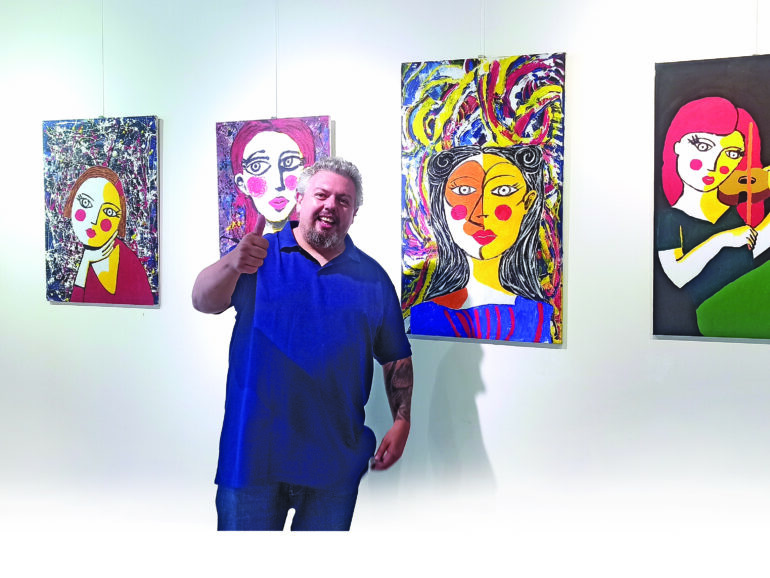
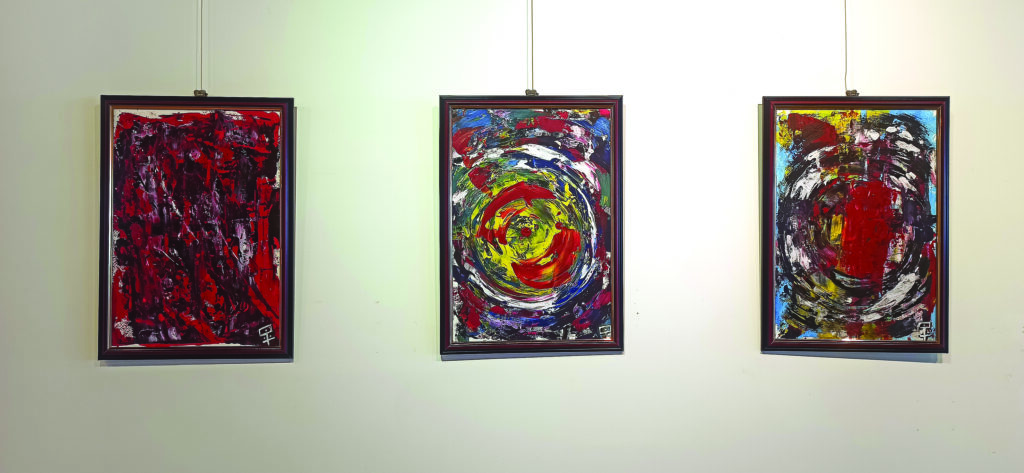
A vibrant exhibition of paintings by Argentinian artist, Hector Hugo Quintanilla is currently on display at Art & Soul Gallery. The collection of paintings convey three styles – expressionism, neo expressionism and abstract expressionism
When you walk into the Art & Soul Gallery, at Water Front mall, in Shatti Qurm, this week, be prepared to be mesmerised by a unique collection of paintings conforming to three inter-related styles that together form a colourful cauldron of sorts which gets you into its sway instantly.
Convergences – a solo exhibition by Hector Hugo Quintanilla, a visiting Argentinian artist – was inaugurated on October 6 and will be on till October 15. The exhibition comprises 32 paintings created by the artist to showcase his engagement with three distinct styles of expressionism, neo expressionism and abstract expressionism.
Quintanilla, more than an artist, has been a journalist for the better part of his career. He is currently head of content, National University of Misiones (UNaM) and has been actively involved in teaching journalism as well effectively writing on varied subjects for a string of publications.
The artist, who never took up formal training in art, however, admits that he had been mentored by a popular artist who taught him the ropes and help him discover and develop his very own skill. And somewhere down the road as a journalist, the artistic side of himself went on ahead and emerge as a more promising side of his zeal for creative expression.
Quintanilla has, so far, held exhibitions at many prestigious galleries including Lucas Braulio Areco Museum, The Mate’s Palace, Knowledge Park, Luxus Galery (San Pablo, Brasil), Hansford and Sons Gallery (United Kingdom), Braque Gallery (Buenos Aires), Bar de Fondo Gallery (Buenos Aires), Juan Yaparí Mseum, Shopping Posadas, Sarmiento Gallery, Chaco Biennial of South American Art. He has also authored two books – The Storm and Other Tales and The Diary of a Poet.
Inspirations and instincts
Beginning his artistic career with realism, sketching and painting realistic images of people, animals, objects, landscapes, Quintanilla admits that he was, indeed, inspired by the work of the likes of legendary Spanish painter Pablo Picasso, American abstract expressionists like Jackson Pollock, and a few others, each of which had their own distinct style.
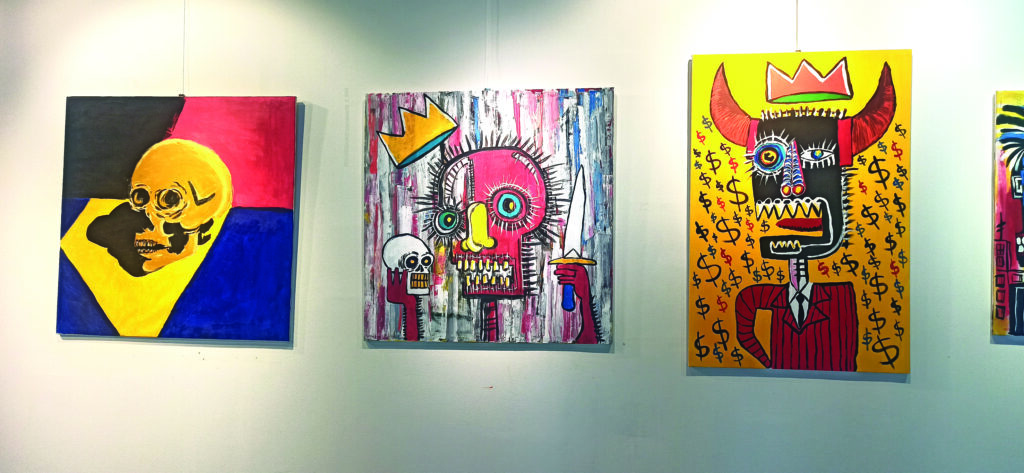
The current exhibition comprises display of paintings categorised on three different walls as expressionism, neo expressionism and abstract expressionism. While it might not be easy for the lay person to be able to identify the three styles clearly, it might be interesting to note that paintings categorised as expressionism are more easy to understand and reflect the artist’s own subjectivity.
Neo expressionism comprises paintings that might appear as semi-abstract and usually convey a deeper, hidden message. These came to the fore in the 1970s when artists sought a more robust expression of their own creativity in diverse forms and vibrant hues. On the other hand, abstract expressionism involves a lot of gestural brush strokes and became popular in the 1950s, when American artists sought a new form of expression in the post World War II period – Pollock was one of them.
Impressionism and expressionism
Asked to explain the key distinction between impressionism and expressionism as two styles of modern art, both of which were prevalent since the 1950s, Quintanilla explained that impressionism involved recreating what already exists, as it is – like reproducing a photograph or a realistic setting on canvas. However, expressionism goes a step beyond that and adds the artist’s own understanding and creative slant such that the painting has a deeper meaning or is a pointer to another aspect not clearly presented in the artwork.
“Expressionism helps me to get out of a realistic situation or event, as is reflected in daily news, and express a more meaningful thought that is connected with that particular event,” he explained, however, admitting that expressions of the same same subject and their interpretations could vary among different artists.
As for the exhibits on display at the exhibition, Quintanilla disclosed that most of them were created around the same time but the inspiration behind each was different. He would work on one painting in the morning and take up another in the afternoon as each would dictate its own presentation depends on how he felt at that time, he asserted, adding that he tends to paint abstract when he is more stressed – and that’s why the colours come forth more vibrant in these.
About his visit to Oman, Quintanilla disclosed that he was invited by two friends – Paula and Mohammed – without any specific intention in mind. And, he readily accepted the intention as he has not been to any country in the middle east and was interested to discover something new.
His first visited to Oman has truly wowed him to a great extent, and he was happy to note that there is much inspiration for an artist all around the sultanate. Quintanilla also plans to come back to Oman again with the sole intention of creating a new series based on local inspiration, as the sights he has beheld, so far, have already laid the foundation for it.
© 2021 Apex Press and Publishing. All Rights Reserved. Powered by Mesdac