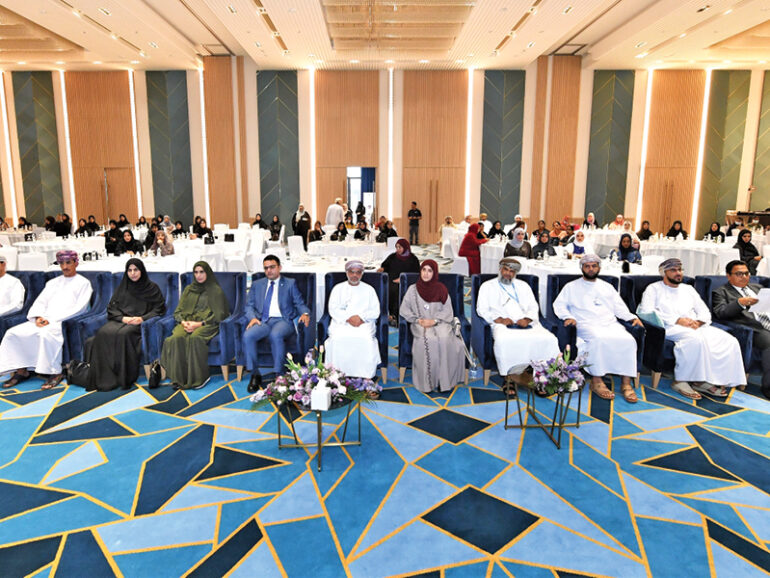
Muscat – The Ministry of Health (MoH), represented by the Nutrition Department of the Directorate General for Primary Health Care, in collaboration with World Health Organization (WHO), organised a conference on breastfeeding for child and mother’s health on Thursday at Avani Muscat Hotel.
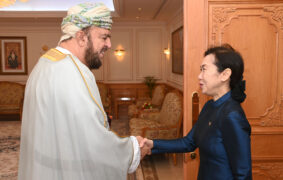
The opening ceremony was attended by Dr Saeed al Lamki, Director General of Primary Health Care, Dr Alaa Hashish, public health specialist in the WHO office in Oman, senior ministry officials, and several mother and child healthcare providers, including doctors, nurses, and nutritionists.
In a welcome note, Dr Salima al Mamary, director of nutrition, said that the rate of exclusive breastfeeding of children in Oman is only 23 per cent, therefore priority has been given to identifying reasons for this low rate, relying on various methods, including research studies, focus groups, and field visits in the governorates.
“As rates of exclusive breastfeeding are low, a national campaign for exclusive breastfeeding is needed. A campaign was thus launched to correct misconceptions related to breastfeeding as well as recognising perceptions in all religions and cultures on the importance of breastfeeding for the child, which is confirmed by studies as being the ideal and safe food to help prevent many common childhood diseases,” Dr Salima said.
She elaborated that the ministry, in collaboration with Al Jisr Foundation, carried out a one-year National Campaign for Exclusive Breastfeeding under the slogan ‘Best for Child and Us’ that concluded on Thursday.
On the events and efforts exerted during the campaign, Dr Salima outlined that a measurement of the knowledge, attitudes and behaviours was done before and after the campaign to gauge any improvements, noting that all concerned parties demonstrated innovative participations to create the necessary impact.
Dr Hashish stated that increasing the breastfeeding rate by at least 50 per cent by the year 2025 is one of the global goals that WHO seeks to achieve for children under six months of age.
WHO is actively supporting exclusive breastfeeding programmes within integrated work programmes at local and global levels, the most important of which are the Country Cooperation Strategy 2021-2025 and the Country Support Plan 2022-2023, in line with the Thirteenth General Programme of Work (GPW 13) 2019-2023 and the Eastern Mediterranean Region Vision 2023.
Dr Hashish added that MoH has also established specialised centres and clinics that provide awareness and counseling services to mothers, in addition to prohibiting the distribution and acceptance of free samples of breast milk substitutes in health institutions. The ministry, represented by the Department of Nutrition, he confirmed, is currently working on formulating policies supporting programmes that promote breastfeeding.
© 2021 Apex Press and Publishing. All Rights Reserved. Powered by Mesdac