 By HUBERT VAZ
Bendigo, the fourth largest city in Victoria (Australia) with a rich heritage dating back to the mid-19th century when gold was discovered in the town, provides a quaint experience for tourists who prefer stepping off the beaten track
Far away from the glitz and glamour of Australia’s most pompous cities (Sydney, Melbourne, Adelaide, Brisbane, Perth, Darwin, Gold Coast), Bendigo – located around 150km north-west of Melbourne – may not have all the lures that bring international tourists on their knees…but it does provide a quaint experience that is both, educative as well as entertaining, if you love stepping out of the box.
During a recent visit, with day temperatures in single digits (it being peak winter), we took delight in Bendigo’s prosperous heritage that dates back to the 1850s when miners struck gold here in a big way. Bendigo has since been the second highest producing goldfield in Australia, also the seventh largest in the world. This has lent the city a unique opulence while the stunning Victorian architecture in the city gives it an old world charm, less found elsewhere in the continent.
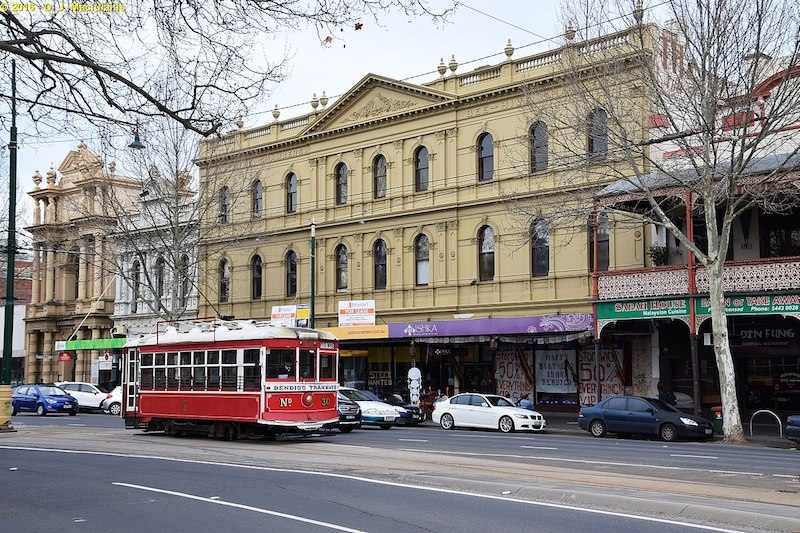
Bendigo, it is said, was named after a 19th century world-famous English boxer named Abednego William Thompson whose nickname was Bendigo. Such was his fame that a local shepherd, because he was a good boxer, was also called Bendigo in his honour. The erstwhile town of Sandhurst was, however, officially named Bendigo in 1891.
There are many interesting sights and places to visit in Bendigo, besides dining in the numerous restaurants that serve varied world cuisines. One can also take a tram ride that takes one around town as well as to an old gold mine for an interesting experience. Some key places to visit include:
Great Stupa
The Great Stupa of Universal Compassion, a 50m high stunning edifice is the largest stupa in the Western World. The Great Stupa is the same design and size as the Gyantse Stupa (Kumbum) in Tibet – one of the treasures of the Buddhist world. It houses a magnificent statue of the Jade Buddha for Universal Peace – the largest Buddha carved from gemstone quality jade in the world. The size and beauty of the statue make it a wonder of the world. The Buddha was carved from a rare boulder of translucent jade (Polar Pride) which was discovered in Canada in the year 2000, and weighs around 4 tonnes.
Sacred Heart Cathedral
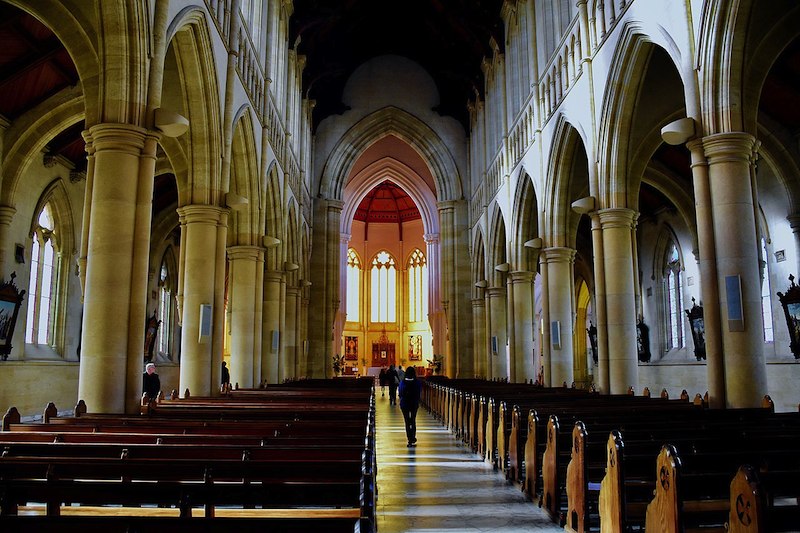
The Sacred Heart Cathedral is one of Australia’s largest churches and the second tallest after St Patrick’s Cathedral in Melbourne. It is an exceptionally large church for a provincial city cathedral in Australia and its construction was made possible chiefly through the estate of Henry Backhaus – 1811-1882, a German from Paderborn and the first Catholic priest on the Bendigo goldfields. Sacred Heart Cathedral is now the principal Church of the Diocese of Sandhurst and the home Church of the Cathedral Parish serving the people of central and north west parts of the city of Bendigo.
Lake Weeroona
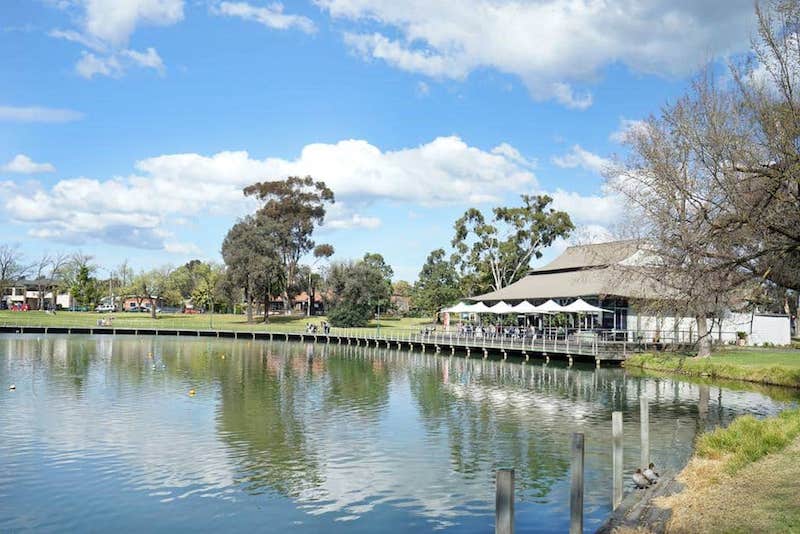
This unique lake is considered a jewel in Bendigo’s crown. This beautiful ornamental lake and reserve, set on 18 hectares, was transformed from a dusty mining area in the 1870s. One can take a walk around the picturesque lake and take amazing photographs at sunset when the landscape transforms into an interesting silhouette against a golden backdrop.
Golden Dragon Museum
Chinese heritage is an integral part of Bendigo. From the early days of gold mining to the present day, the Bendigo Chinese community has influenced the history of Bendigo. The Golden Dragon Museum – a living history of the Chinese people of Bendigo – allows visitors to experience first hand Chinese arts and crafts with visiting artisans and tradespeople.
Rosalind Park

Rosalind Park was the site of the Government Camp of the 1850s and so became the focus of public life and administration. Prior to 1851 the area we now call Rosalind Park was a grassy woodland with large River Red Gums (Eucalyptus camaldulensis) lining the creek that was a chain of deep permanent fresh water pools. Located on the corner of View Street and Pall Mall in the centre of Bendigo, the park is open all day long whie special events like an evening Glow Show are often held here in the winter,
Bendigo Botanic Gardens
The Bendigo Botanic Gardens is one of regional Victoria’s earliest botanic gardens. Established in 1857 the Bendigo Botanic Gardens are almost as old as Bendigo itself. The Gardens are Bendigo’s first public gardens and were included on the Victorian Heritage Register in 2001 due to their historical, architectural, scientific, botanical, aesthetic and social significance.
Bendigo Art Gallery
One of the oldest and largest regional galleries in Australia, Bendigo Art Gallery has developed a reputation for an outstanding national and international exhibition programme, presenting exhibitions such as Grace Kelly: Style Icon form V&A and Grimaldi Forum and The Body Beautiful in Ancient Greece from the British Museum. Bendigo Art Gallery’s collection is extensive and varied, including Australian painting, sculpture, ceramics, decorative arts, photography, works on paper from the 19th century to the present day. Recently, it housed a special display of some 300 items belonging to singing sensation Elvis Presley – from a box of crayons with Elvis’s first name scrawled on the carton in red to his trophies of early Hollywood fame
Bendigo Pottery
The most famous of all the potteries, Bendigo Pottery, with its large, distinctive beehive kilns, is located at 146 Midland Highway, 6 km north of Bendigo, at Epsom. The Bendigo Pottery was created by George Duncan Guthrie, a Scot who was an apprentice potter by the age of 12 who founded his first pottery on Bendigo Creek at Epsom in 1858. The site offers a total tourist experience with free clay play for kids and wheel throwing lessons, a potter’s workshop, lessons in creating a clay pot on a wheel.
© 2021 Apex Press and Publishing. All Rights Reserved. Powered by Mesdac