 By TRIDWIP K DAS
Jamal Muhammad Ali al Balushi’s expertise in Omani jewellery is sought after by tourists, collectors and museums
Muscat – How can you tell Saidi khanjars from others made for commoners? They have seven rings. All others have four.
How can you tell a bedouin’s khanjar from others? From leather used in its sheath.
And how can you distinguish a khanjar made in North or South Sharqiyah from those originating in other governorates? From the mix of silver and gold inlay in the sheath. “The people of Sharqiyah were generally wealthy. They could afford gold,” says Jamal Muhammad Ali al Balushi.
“Not just on khanjars, the mix of gold and silver is also a distinguishing feature of the traditional jewellery from the Sharqiyah region.”
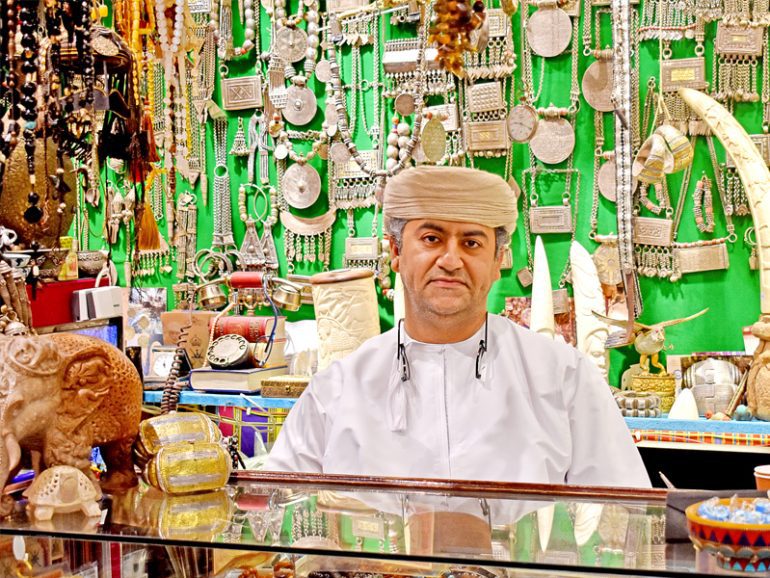
Balushi will drop these and more nuggets of information about traditional Omani jewellery and handicrafts by the dozen if you engage him in a conversation. Provided you can catch him when he’s not busy at his shop named after him in Muttrah Souq. It has a steady stream of customers, who seek him out. A local celebrity – no less – it’s easy to find him in the souq. Just ask for Jamal’s shop.
A busy man
He comes highly recommended to customers for the authenticity of his wares. Not just tourists, but for museums and collectors, too, who consult his expertise on traditional Omani jewellery. And when he’s not regaling customers with his insightful tidbits, he’s dealing with clients – including bedouins – who visit him to sell family heirloom like jewellery and khanjars or handicrafts.
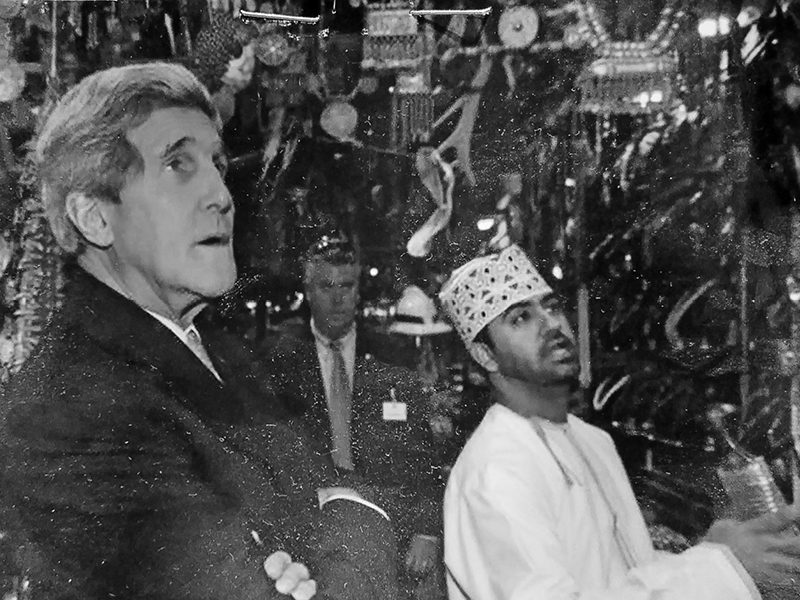
Not quite heirloom but just as much, jewellery which Balushi sold many years ago have been sold back to him. He cited the case of an expatriate Petroleum Development Oman employee who had bought a collection of Omani jewellery from him. The expat’s children got in touch with Balushi two decades after their father left Oman with an offer to sell the collection back to him.
Among those who source items for display from Balushi are the National Museum of Oman, Oman Across Ages Museum in Mannah, the Museum of Islamic Art in Doha and some others spread across Europe.
So, whether it’s the lean summer months or busy winter tourist season, Balushi claims he keeps busy. If not at the counter, he’ll be found tinkering away, inspecting or repairing items at a silversmith’s workstation set up in a corner of his 26-year-old shop.
How it all started
Balushi’s father Muhammad and his five brothers all have their own Omani jewellery and handicrafts shops in the souq. It all started with Muhammad’s which he opened 49 years ago to sell Omani silver displayed on a rug spread out on the floor. Now 78, he’s at his shop every day, setting an example for his sons to be there in person and actively involved in their businesses.
Balushi is making efforts to instil interest in his children to run his business. His eldest son occasionally accompanies him to the shop on school holidays. “He’s only 15. I would like my children to take care of the business, but only time will tell.”
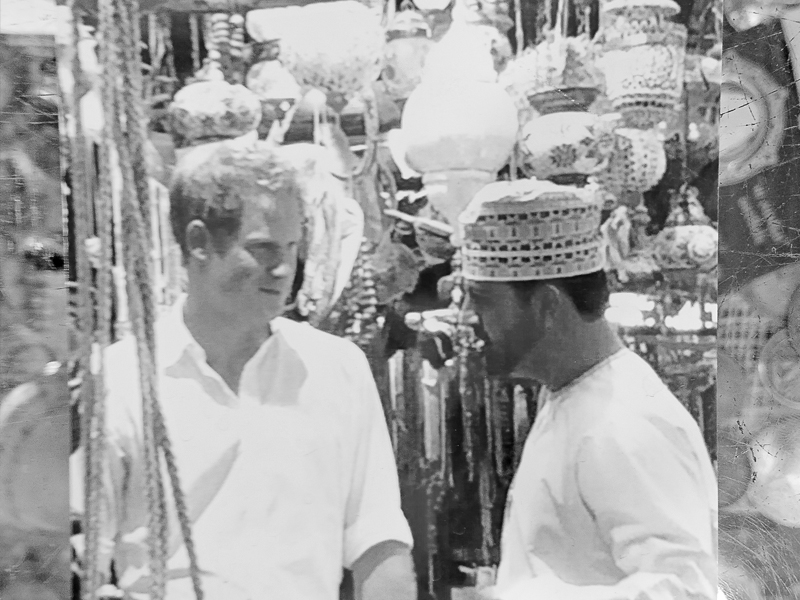
He, however, sees the business from a wider perspective. “I am helping preserve Omani heritage and handicrafts by dealing in only authentic items. I can tell a fake from a distance. I hope this heritage and the traditions are treasured by future generations.”
RO2,000 copper coffee pot
Besides Omani jewellery and handicrafts – khanjars with rhino-horn handle; 100-150 year old khanjars that can fetch upwards of RO15,000; copper coffee pots which collectors would consider a steal for RO2,000 – Balushi’s shop is a treasure trove of curios, including antique ivory and coral, a curious device for face massage and still ticking West End watches that look from another era.
He himself wears two Rolex watches, one on each wrist, and two huge rocks – a blue sapphire and an emerald – on his fingers. “I can enjoy these treasures in Oman – it’s safe here. Why not make the best of it?” he asks, signing off.
© 2021 Apex Press and Publishing. All Rights Reserved. Powered by Mesdac