Hatim al Taie recounts his recent fulfilling trip to South Korea which left him awestruck by the courtesy, discipline, and devotion towards work of the Korean populace
Many people say that there are several benefits to travel, often citing travel as the best way to broaden the mind. But when travelling to the Republic of Korea (commonly known as South Korea), these benefits get magnified.
South Korea is one of the richest cultures in East Asia and its people are some of the most exemplary when it comes to dedication and productivity. As a society, they have a collective ambition to develop and enhance technology.
No matter where you look, Korea’s massive cities display some of the best qualities in a modern space, incredibly well-organised and well-disciplined.
A long history
Korea’s age as a country cannot be counted on our fingers. It was a witness to the World War II, the victory of the allied forces in 1945, the fall and end of the rule of the Japanese Empire on the island, the outbreak of a bloody civil war and even the division of the two Koreas (North and South.) South Korea survived all of this turmoil and then faced many challenging years, in which it managed to successfully build a peaceful, modern society.
Perhaps it is important to mention that the Republic of Korea, until the fifties, lived on foreign aid and international support. In just a matter of a few decades, it successfully transformed itself into a highly developed nation and is now extending help to various countries all over the world.
With the invitation of the Korea Foundation and as a part of its programmes to publicise their country and its successes, I joined dignitaries and parliamentarians from several countries to visit South Korea to gain an insight into their institutions and achievements.
The trip began in the capital Seoul, a city of approximately 10 million people divided into large groups of 25 districts. Seoul is a progressive country that balances green mountains with modern facilities and an outstanding, well-organized public transport system for buses and trains.
Resident in the Lotte Hotel, located in the city centre amidst skyscrapers and business centres and surrounded by luxurious and high class shops, my room on the 34th floor allowed me to enjoy panoramic views of the city from above, with the mountains as a backdrop, and gave me the impression that I was watching a painting by a creative artist. What’s more, my visit coincided with the cherry blossom season, a riot of colour heralding spring.
The Korea Foundation
Koreans are very efficient when it comes to time management. Our work started quickly wherein we had an introductory meeting with Dr Gwan Lee, the head of the Korea Foundation. The meeting provided a brief overview of what the foundation does, tapping into ‘soft powers’ to add a positive presence on the global scene.
Dr Gwan Lee elaborated on the importance of building bridges of cooperation and partnership between the Republic of Korea and the Arab world and pointed out the various elements that Korea and the Arab world have, which help to strengthen cooperation and move it forward towards broader horizons.
What I observed is that Koreans are very proud of their language and so there are only a few English speakers in Korea. The Korea Foundation assigned a translator to us, (I named her Hyam) and she helped us a lot in conducting extensive and enriching discussions with the Korean people.
I met with the National Association member, Jung Choun-Sook, who is responsible for several important subjects, including the issue of equality between men and women, and most importantly, she is the chairperson of the Omani-Korean Relations Development Committee.
Student missions
I suggested to Sook the importance of increasing scholarships for Omani students to study at the advanced Korean universities in the fields of technology and other sciences. This could involve establishing training programmes for students from Omani universities to train, qualify and improve their skills in major Korean companies, perhaps during summer vacations.
On the third day, a meeting was arranged with the speaker of the National Association, Jang Seong. This was followed by a meeting with Chung Jong-Kun, undersecretary, Korean Foreign Ministry, undersecretary, who spoke about the various political challenges facing the world, including wars, tensions and conflicts that represent a threat to international peace and security.
Seong clearly referred to the wisdom of Oman’s politics and its clear approach to establishing peace around the world. He also spoke about the remarkable development in Omani-Korean relations, especially as they approach the completion of almost 50 years of bilateral relations since 1974. We aslo spoke about the promising investment, economic and cultural opportunities that both Oman and Korea have, which would strengthen bonds between both nations.
I was introduced to the International Cooperation Organization ‘Koika,’ which is part of the Korean Foreign Ministry, and it represents the development arm which works to establish projects in many countries of the world to fight poverty, disease and ignorance, building strategic partnerships with many countries in various fields of development and organising humanitarian aid.
Multiple visits
The trip included a visit to the smart city Anyang, which is located outside of the capital Seoul. It is called a smart city because, within the last 15 years, it has been able to manifest the ideals and theories of what makes a smart city, where everything is interconnected and well-coordinated, including the police.
I learnt that this smart city is equipped with about 6,500 surveillance cameras throughout the city that worked overtime monitoring traffic and controlling violators or monitoring and limiting suspicious actions, all of which are aimed to keep the city safe, secure, and stable.
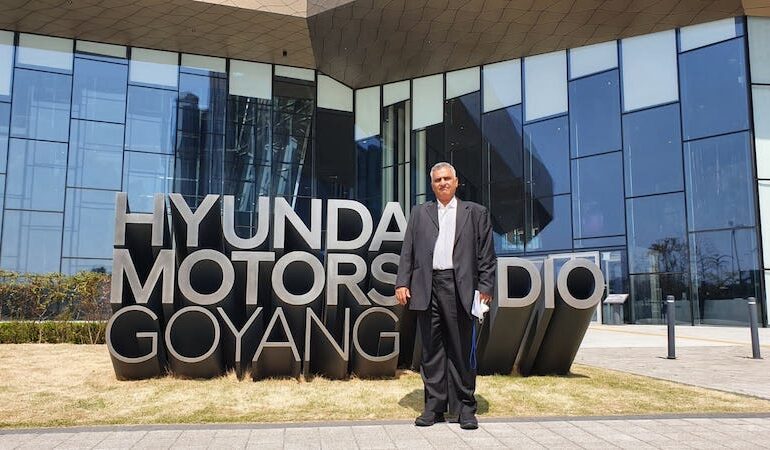
There is no doubt that a visit to Korea would not be complete without visiting its industrial fortresses, and on top of these forts comes the giant Hyundai factory, which despite intense competition from European and American technology, has been able to excel globally in the field of the automobile industry. What astonished me was that this large company developed its manufacturing systems not solely dependent on manual labour but rather a reliance on robotics.
Music and drama
The impact of Korean culture on drama and music can be found everywhere. Some of their best television series are not only viewed all over the world they matured to include different subtitles including Arabic.
Even in Arabian Gulf countries, Korean series are easily found on different satellite channels. Ironically, many Turkish series are adapted from many Korean dramas, and for this reason, we find Korean shows finding TV lovers everywhere.
Perhaps the most well-known example of Korean ‘soft power’ dominating the consciousness of the world was the introduction of the song ‘Gangnam Style’ which boasts more than 4 billion views on YouTube so far.
One of the most beautiful things I noticed about the Korean people is that they sanctify work. They apply the rule of ‘work is worship’ and work long hours without tiring because they turn work into a means of both, self-realization and ‘dream of life’ realisation.
Koreans love discipline, respect and appreciation. When they meet, they bow down to greet or thank someone, saying Kamsa hamnida, which means ‘Thank you’.
When I reflect on the Omani diplomatic presence in South Korea, I see our embassy in Seoul as an inspiration for activity and continuous work. The Oman Embassy in Korea is located in one of the finest Korean districts in a high-rise building. It embraces the original form of Omani architecture and any visitor will immediately notice that the design is based on ancient Omani heritage.
It was there that I met H E Zakaria bin Hamad al Saadi, Ambassador of Oman, who not only represents the spirit of youth but also has a pleasant and humble disposition akin to Omanis. An erudite speaker who captivates his listeners, he has been working hard to evolve Omani-Korean relations onmore stronger terms.
Here I’d like to point out to the serious discussions between the Republic of Korea and the Gulf Cooperation Council countries to conclude a free trade agreement, which is a step that would support the improvement of Gulf-Korean relations. I also enjoyed a night’s walk in the safe streets of Seoul in springtime with the ambassador..
One of the most beautiful things that I learned during my visit to Korea is that the most famous and most delicious grape found here is called ‘Bright Muscat Grape’ – large, round, seedless, extremely sweet, with a dash of sourness – a fruit which represents a strategic crop for the Koreans.
It is said that the Portuguese visitors of yore took the seeds of Omani grapes from Jebel Akhdar to grow in Europe, and it was a great success there due to the favourable weather. Thirty years ago, it was genetically engineered by the Japanese before it arrived in Korea. I wish this fruit returns to Jebel Akhdar some day.
Kamsa hamnida! (Now, you know what it means.)
© 2021 Apex Press and Publishing. All Rights Reserved. Powered by Mesdac