 By OUR CORRESPONDENT
Geneva – Oman has stressed the need to ensure safe, regular and unhindered navigation through the Strait of Hormuz, warning that disruptions to the strategic waterway could have far-reaching consequences for global trade, energy and food supplies.
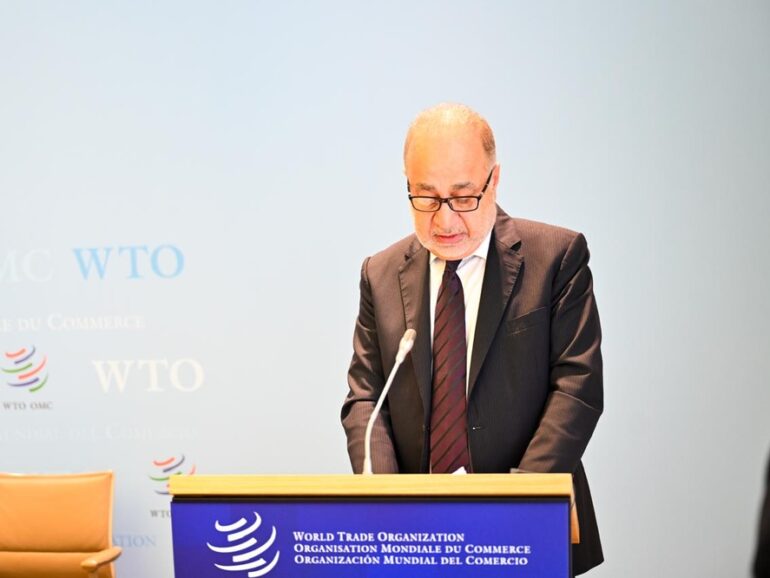
The Sultanate made the remarks during a special session of the World Trade Organization (WTO) Public Forum 2026, themed “The Strait of Hormuz in Crisis: Protecting the Most Vulnerable Economies.”
Oman’s statement was delivered by Idris Abdulrahman Al Khanjari, Permanent Representative of Oman to the United Nations and International Organisations in Geneva.
Al Khanjari said recent developments in the Strait had highlighted the close interconnection between trade, energy and food security and broader economic stability, with disruption in one area potentially creating consequences well beyond the region.
“The Strait of Hormuz is not only a strategic maritime passage; it is a vital artery of global trade and energy,” he said.
Its stability has direct implications for international commerce and sustainable development, particularly for developing and vulnerable economies with limited capacity to absorb higher transport, energy and insurance costs or prolonged supply-chain disruptions, he added.
Oman therefore stressed the importance of maintaining the safe, regular and unhindered flow of navigation and trade through the Strait in accordance with international law, including the law of the sea.
Al Khanjari said Oman continued to approach regional challenges through dialogue, constructive neutrality, respect for state sovereignty and quiet diplomacy.
“We believe that maintaining channels of communication helps build trust, reduce misunderstandings and create the conditions for peaceful solutions,” he said.
He added that Oman was continuing consultations with Iran and GCC states to reach practical understandings that could facilitate safe and regular navigation through the Strait.
These efforts were being pursued responsibly, taking into account the security, legal and navigational complexities involved, as well as the need for any arrangements to be practical, sustainable and acceptable to the parties concerned, he said.
Al Khanjari warned that the impact of disruption in the Strait extended beyond security and politics, potentially increasing shipping, insurance, energy and food costs, disrupting supply chains and putting additional pressure on economies already facing vulnerabilities.
Developing countries that depend heavily on imports and have less capacity to absorb external shocks could be particularly affected, with disruption to a major trade route potentially undermining development prospects and efforts to achieve the Sustainable Development Goals.
He also highlighted the human dimension of maritime security, noting that Oman’s recent assistance to the crew of a commercial vessel off Musandam underscored the importance of protecting seafarers whose safety depends on a secure and stable maritime environment.
The session was organised by the United Nations Conference on Trade and Development (UNCTAD) amid international concern over the economic and trade repercussions of disruptions in the Strait of Hormuz, one of the world’s key maritime corridors for trade and energy.
© 2021 Apex Press and Publishing. All Rights Reserved. Powered by Mesdac