 By GULAM ALI KHAN
Muscat – Oman’s fiscal position is set to strengthen significantly this year, with the Central Bank of Oman (CBO) forecasting a return to a budget surplus in 2026 and a continued decline in government debt over the coming years.
The CBO expects the sultanate’s fiscal balance to swing from a deficit equivalent to 1.1% of GDP in 2025 to a surplus of 2.5% of GDP in 2026, based on an assumed average oil price of $81 per barrel. The surplus is projected to narrow to 0.6% of GDP in 2027 as oil prices gradually moderate.
At the same time, government debt is forecast to decline from 34.6% of GDP in 2025 to 32% this year and further to 27.8% by 2030, according to the CBO’s macroeconomic projections in its recently released Annual Report 2025.
The continued reduction in public debt, supported by fiscal surpluses and ongoing liability management operations, is expected to strengthen Oman’s fiscal resilience and support its sovereign credit profile, the central bank said.
“The continued decline in public debt strengthens fiscal resilience, supports the sovereign credit profile, and enhances the economy’s capacity to respond to future shocks, while remaining contingent on disciplined expenditure management and prudent debt policy,” the CBO said.
The central bank expects Oman’s fiscal and external positions to remain stronger than previously anticipated, providing additional resilience amid elevated regional and global uncertainties.
The sultanate’s current account is projected to move from a deficit of 1.2% of GDP in 2025 to a surplus of about 4% in 2026, before narrowing to 1% in 2027 and remaining in surplus over the medium term.
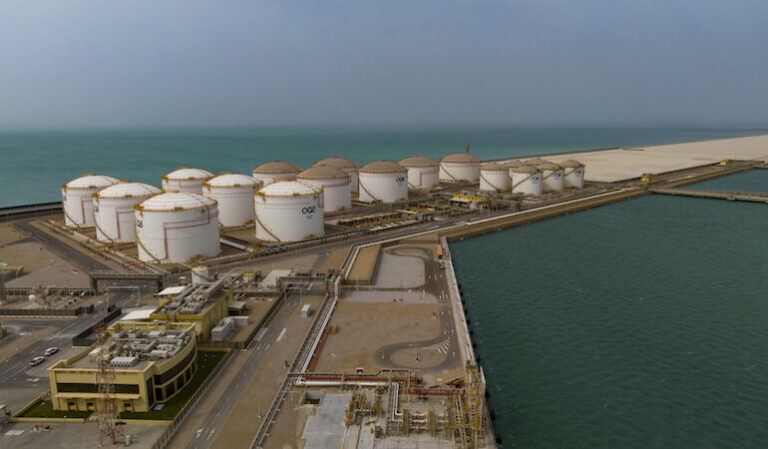
The stronger external position this year is expected to be driven by higher oil prices and increased hydrocarbon production. Higher export receipts and comfortable foreign reserve buffers are also expected to support the external position, according to CBO.
“Thereafter, the surplus is expected to moderate as oil prices gradually decline toward low-$70s per barrel over the medium term, while imports remain supported by investment-related demand,” the central bank added.
The CBO’s baseline forecast assumes oil prices will average $81 per barrel in 2026 before moderating to around $70-73 per barrel during 2027-2030.
Oil production is projected to rise gradually from 1.05mn barrels per day in 2026 to 1.20mn barrels per day by 2030, while gas production is also expected to continue increasing over the period.
Despite the improving fiscal outlook, the CBO stressed the importance of maintaining reform momentum to preserve Oman’s long-term growth prospects.
It said continued efforts to strengthen fiscal sustainability, build external buffers and accelerate structural transformation would remain essential, particularly amid heightened regional uncertainty.
Strengthening trade partnerships, improving logistics competitiveness and deepening financial integration will also be important for navigating external risks and unlocking sustainable growth, the central bank said.
The CBO noted that these priorities are aligned with the objectives of the 11th Five-Year Development Plan (2026-2030) and Oman Vision 2040.
“While some reforms may involve short-term adjustment costs and policy trade-offs, maintaining the reform trajectory will be critical to strengthening the economy’s resilience and enhancing its capacity to withstand future shocks”, CBO said.
© 2021 Apex Press and Publishing. All Rights Reserved. Powered by Mesdac