
 By GULAM ALI KHAN
Muscat – The recent rise in Oman’s inflation is expected to be temporary, with price pressures projected to ease from next year and remain moderate over the medium term, the Central Bank of Oman (CBO) said.
The CBO expects the sultanate’s consumer price inflation to average 2.6% in 2026 before easing to 1.6% in 2027 and remaining below 2% through 2030.
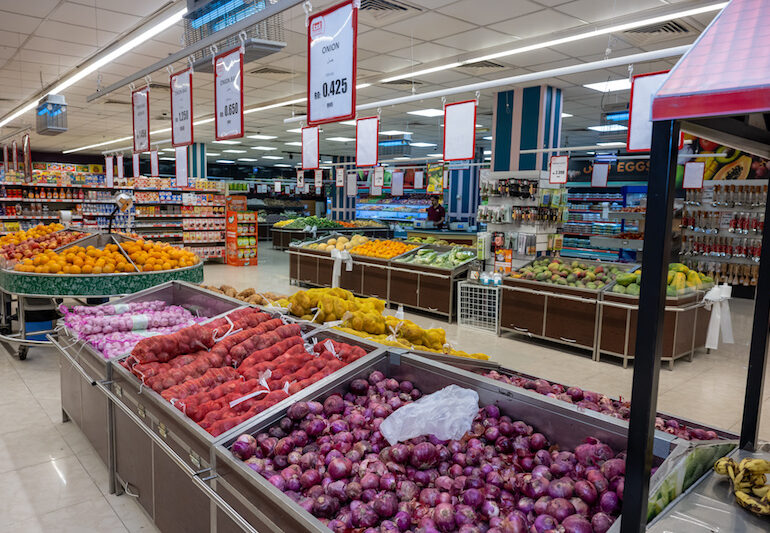
The outlook comes as Oman’s inflation has picked up in recent months, reaching 3.2% in July, driven mainly by higher food prices and increased transport costs. Food and non-alcoholic beverages were the biggest source of inflationary pressure in July, with prices rising 7.3% year-on-year. Within the food category, vegetable prices increased 19.9%, fruit prices 15.8%, meat prices 8.7% and fish prices 5.7%.
However, the central bank said the temporary uptick in inflation is largely driven by external cost pressures and does not point to a sustained build-up of domestic inflationary pressures.
According to the CBO’s Annual Report released on Tuesday, the temporary increase in inflation reflects higher energy, freight and insurance costs, as well as imported price pressures arising from the US-Israel-Iran conflict.
“Inflation is expected to remain relatively moderate over the medium term, with a temporary uptick in 2026,” the CBO said.
The central bank expects inflationary pressures to remain manageable and largely driven by external factors, with limited evidence of significant second-round effects, where an initial increase in prices leads to broader and more persistent price pressures across the economy.
The CBO said Oman’s fixed exchange rate regime, administered pricing mechanisms and moderate domestic demand pressures would help contain inflation over the medium term.
The Omani rial’s peg to the US dollar provides a credible nominal anchor and helps limit the pass-through of global price pressures into the domestic economy, according to the central bank.
“Inflation is expected to remain low and well contained, reflecting the credibility of the exchange rate peg and moderate imported price pressures. This outlook points to continued price stability over the medium term, supported by prudent macroeconomic policies,” the CBO said.
The central bank, however, warned that inflation could exceed its current projections if external costs for energy, freight, insurance or imported food remain elevated for longer than anticipated.
The CBO’s latest outlook represents a moderation from the inflationary pressures expected this year. Average inflation was 1.0% in 2025, up from 0.6% in 2024, with the CBO attributing the modest increase to mild inflationary pressures amid stable domestic demand and administered pricing mechanisms.
Globally, inflationary pressures have significantly increased this year amid the conflict in the Middle East, mainly due to higher energy and transport costs. The IMF expects global inflation to rise to 4.7% in 2026. The conflict has pushed up energy prices and disrupted shipping and supply chains, increasing freight and other costs and adding to the risk of further price increases.
© 2021 Apex Press and Publishing. All Rights Reserved. Powered by Mesdac