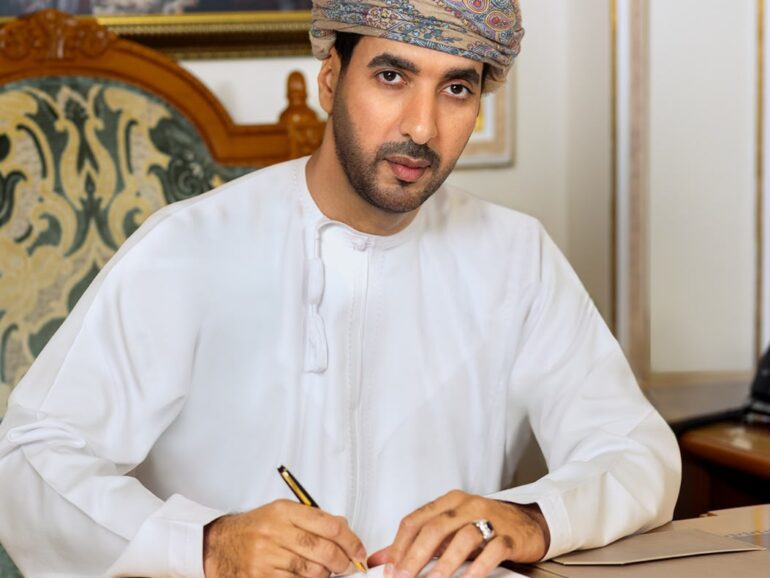
Muscat- Oman Vision 2040 provides a clear roadmap for building a diversified and sustainable economy, with the private sector expected to play an increasingly important role in driving growth, innovation and long-term economic value, according to Dr. Ghazi bin Nasser Al Alawi.
Speaking on Oman’s economic outlook and the evolving role of the private sector, Al Alawi said the next phase of development would depend on strengthening the business environment, accelerating innovation and digital transformation, investing in human capital and expanding effective public-private partnerships. He said, “Oman Vision 2040 sets a clear roadmap for building a diversified and sustainable economy, with the private sector playing a key role in driving growth and long-term value.”
He said these four priorities would collectively help Omani businesses become more competitive, resilient and globally connected.
Oman has already demonstrated strong momentum in implementing the Vision, with 74 per cent of its performance indicators showing tangible progress towards their targets, reflecting the country’s continued commitment to institutional reform and sustainable economic development.
“Ultimately, a resilient private sector is one that can innovate, adapt to changing market conditions and create lasting economic value,” Al Alawi said. He added that sustaining the momentum of ongoing reforms would further strengthen investor confidence and reinforce Oman’s position as a competitive regional investment destination.
Drawing on his experience in the financial and investment sectors, Al Alawi said investment decisions today go well beyond financial incentives. International and local investors are increasingly assessing markets through a long-term strategic lens, looking at regulatory stability, transparent governance, efficient institutions, modern infrastructure, access to skilled talent and a business environment capable of supporting sustainable growth. He said, “From my experience, predictability is a vital factor. Investors need confidence that policies are consistent, regulations are clear and institutions are responsive.”
Such certainty, he said, helps reduce investment risks and encourages long-term capital commitments.
Oman has made significant progress in strengthening these fundamentals through economic reforms, improved fiscal discipline and initiatives aimed at enhancing the ease of doing business.
The Sultanate’s strategic geographical location, combined with the economic diversification objectives of Oman Vision 2040, has further strengthened its appeal to both regional and international investors. He said, “Ultimately, investor confidence is built on consistency, institutional efficiency, and a nation’s ability to turn its strategic vision into measurable economic outcomes.”
Al Alawi also highlighted the important role of the Oman Chamber of Commerce and Industry (OCCI) as the voice of the private sector and a strategic bridge between businesses and policymakers.
Beyond representing business interests, he said, the Chamber can contribute to the development of the business environment by providing practical policy recommendations, identifying opportunities and challenges across different sectors, supporting entrepreneurs and small and medium enterprises (SMEs), and fostering constructive dialogue that leads to more responsive economic policies.
At the same time, government initiatives such as the Investment and Commerce Court, the Invest Oman Lounge and rapid-response mechanisms for investors demonstrate how institutional collaboration can strengthen the business environment and reinforce investor confidence. He said, “As Oman continues to advance its Vision 2040 goals, the Chamber’s role will become even more important in strengthening public-private partnerships, ensuring constructive dialogue, and enabling the private sector to actively contribute to the sultanate’s sustainable economic growth.”
With Oman continuing to implement its long-term economic vision, the private sector, government institutions and business organisations are expected to play increasingly interconnected roles in translating reforms and investment opportunities into sustainable economic outcomes.
© 2021 Apex Press and Publishing. All Rights Reserved. Powered by Mesdac