 By OUR CORRESPONDENT
Muscat – An oil spill from a tanker grounded off Dhofar’s Al Hallaniyat Islands has spread across an estimated 600sq km, environmental group Greenpeace said, as Omani authorities stepped up monitoring of the incident and its potential impact on the protected marine ecosystem.
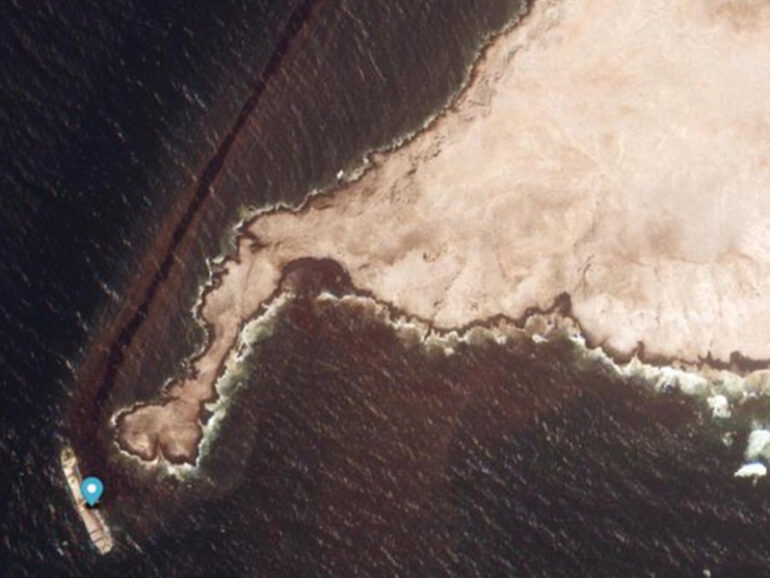
Greenpeace Germany, citing analysis of satellite imagery, said the slick from the Caroline Bezengi had expanded fourfold in two days. It estimated the affected area at 45sq km up to July 26, around 150sq km on August 2 and roughly 600sq km by August 4.
“This is a drastic increase, indicating a deterioration of the vessel’s condition,” Nina Noelle, an international environmental disaster expert at Greenpeace Germany, said.
The Ministry of Transport, Communications and Information Technology and the Environment Authority said specialist teams were dealing with the grounded vessel in coordination with other government agencies.
In a joint statement, they said developments were being monitored through satellite imagery, field surveys and technical modelling, while emergency response procedures were being implemented to minimise potential effects on the marine environment and navigational safety.
The authorities did not provide an estimate of the size of the spill, saying technical assessments were continuing in accordance with international standards.
The Caroline Bezengi is stranded near Al Qibliyah, an uninhabited island in the Al Hallaniyat archipelago in Dhofar. Greenpeace said the tanker had been leaking since it ran aground in June and was reportedly carrying about 800,000 barrels of oil at the time.
The environmental group warned that stretches of Al Qibliyah’s shoreline appeared to have been affected, with slicks also visible farther offshore.
Hanen Keskes, campaigner at Greenpeace MENA, warned that contamination could threaten coral reefs, seagrass beds and coastal habitats supporting sea turtles, seabirds and marine mammals, including the endangered Arabian Sea humpback whale.
“Even relatively small oil spills can have long-lasting consequences for marine ecosystems,” Keskes said, warning that chemical residues could persist in marine sediments for years.
Greenpeace, which describes the Caroline Bezengi as part of Russia’s so-called shadow fleet, called for urgent action to contain the spill, secure the remaining cargo and assess ecological damage.
It also urged Oman to seek international expertise and equipment if additional capacity is required.
The Omani authorities said further developments would be announced through official channels.
© 2021 Apex Press and Publishing. All Rights Reserved. Powered by Mesdac