 By TRIDWIP K DAS
Muscat – Canada’s Minister of Foreign Affairs Anita Anand visited Muscat last month to build on Oman-Canada relations and discuss the rapidly evolving situation in the region. John Babcock, Spokesperson of the Media Relations Office at Global Affairs Canada spoke with Muscat Daily about the visit, Oman-Canada ties and regional developments.
Given Oman’s unique role as a trusted regional mediator, how does Canada envision working with the sultanate to reduce tensions and support long-term stability in the Middle East? What practical forms of cooperation are being considered between Ottawa and Muscat on conflict de-escalation?
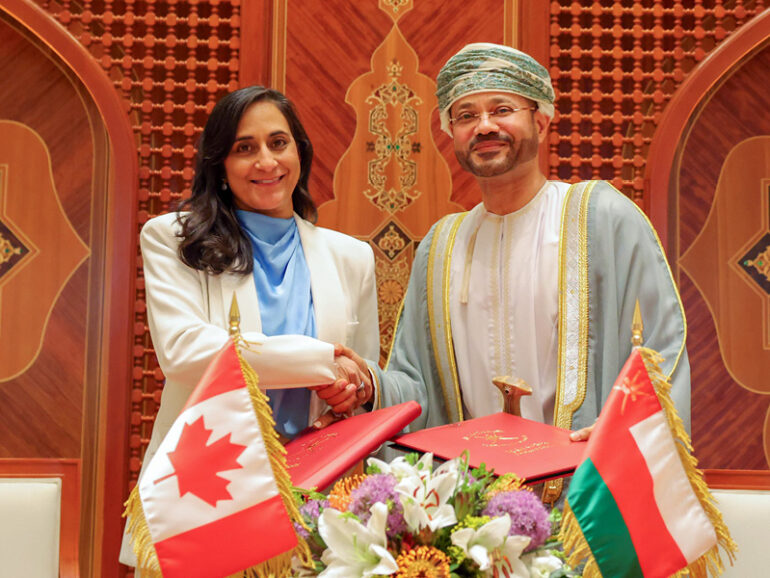
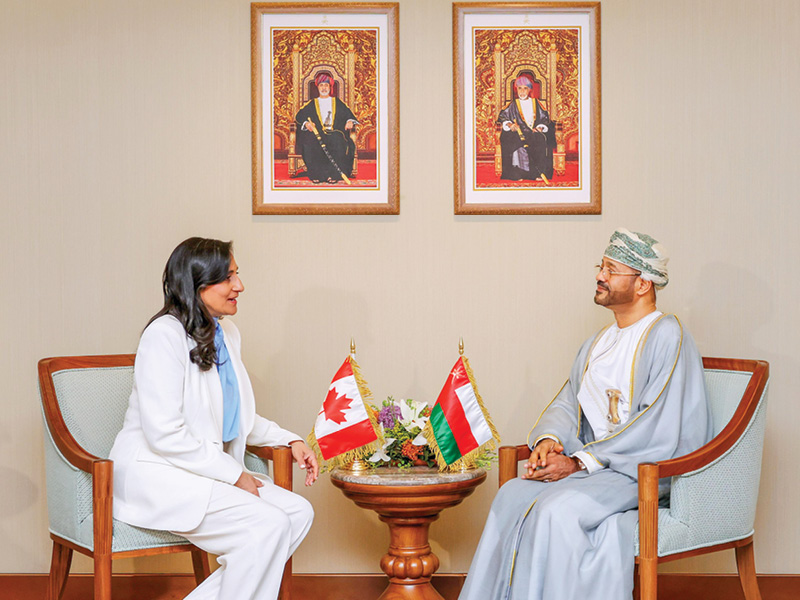
Last month, Minister Anand travelled to Oman and met with H E Sayyid Badr bin Hamad Al Busaidi, Foreign Minister of the Sultanate of Oman. The ministers exchanged views on the conflict in the region and emphasised the importance of protecting civilian lives, supporting de-escalation efforts, as well as international navigation rights in the Strait of Hormuz. Minister Anand acknowledged Oman’s longstanding contributions to regional diplomacy and reaffirmed Canada’s support to Gulf Cooperation countries, recognising the impact the conflict in Iran has had on them. The ministers reaffirmed their shared commitment to international law, including respect for state sovereignty and territorial integrity.
What sectors does Canada see as the biggest opportunities for Oman-Canada economic cooperation?
Building on the positive trajectory of bilateral relations over the last 50 years and shared commitment to elevate the partnerships, the two ministers signed a Memorandum of Understanding on Political Consultations to formally establish a regular bilateral dialogue that will advance bilateral engagement, including in trade, clean tech, critical minerals, education primarily in the health sector, tourism and people-to-people ties. The two ministers also discussed opportunities for trade cooperation between the two countries as well as the broader Gulf region.
Canada became the first G7 nation to recognise Palestine in September 2025. What concrete steps beyond recognition is Canada prepared to take against Israel?
On June 9, Canada imposed its fifth round of sanctions under the Special Economic Measures (Extremist Settler Violence) Regulations. With this measure, Canada has designated 19 individuals and 12 entities linked to Israeli extremist settler violence against Palestinian civilians and/or their property.
The recognition was an effort to “preserve the possibility of a two-state solution”. However, with each passing day, is it is becoming a distant dream to have a two-state solution to the conflict?
Canada has long been committed to a two-state solution – an independent, viable, and sovereign Palestinian state living side by side with the State of Israel in peace and security. For decades, it was hoped that this outcome would be achieved as part of a peace process built around a negotiated settlement between the Israeli government and the Palestinian Authority. This approach is no longer tenable. The current Israeli leadership has openly touted its efforts to prevent the establishment of a Palestinian state, including through the expansion of settlements in the West Bank and its actions in Gaza.
Canada’s position remains that Israeli settlement expansion, including the E1 plan, and extremist settler violence in the West Bank are unacceptable. Canada has consistently stated that it would continue to examine all appropriate measures to promote accountability for violence and extremist rhetoric.
At this time, more than ever, mediation, dialogue, and preventative diplomacy remain essential for the region to achieve and sustain lasting peace. On June 12, Minister Anand participated in a high-level conference in Paris, France, bringing together Israeli and Palestinian civil society leaders alongside international partners. On June 11, Minister Anand launched the International Peace Fund for Israel and Palestine with the UK and Australia to support civil society organisations in their grassroots work to build peace between Israelis and Palestinians. Canada put forward a $1.8mn commitment.
On June 12, Minister Anand also announced an additional $100mn in funding to deliver urgent humanitarian assistance to civilians in Gaza and the West Bank. The funding will be delivered through the UN, Red Cross and NGO partners, bringing our overall humanitarian assistance to over half a billion dollars.
Canada continues to urge the government of Israel, in private diplomatic engagements and public advocacy, to allow the immediate increase and unimpeded entry of UN-coordinated humanitarian assistance, via land crossings, into and throughout Gaza.
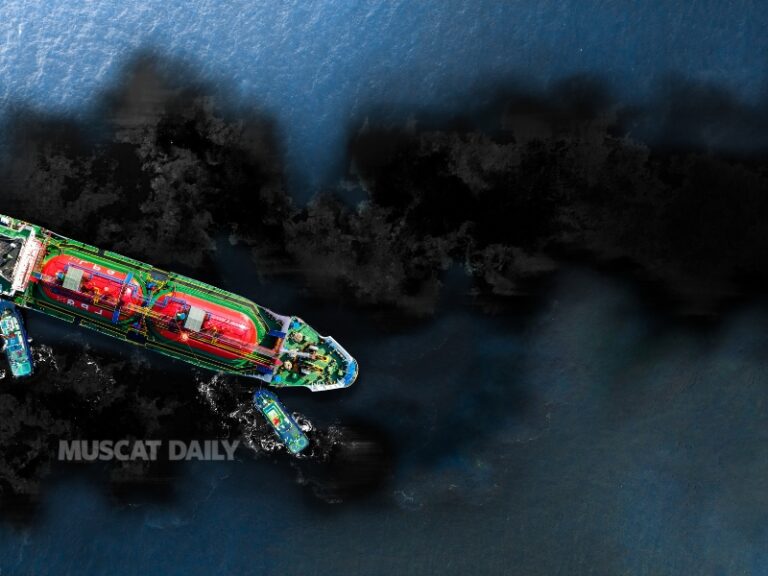
What role does Canada see for Oman in ensuring stability in the Strait of Hormuz?
Canada recognises Oman as a constructive and trusted regional partner with a longstanding role in promoting dialogue and de-escalation. Oman’s continued engagement is important for supporting regional stability and critical to the reopening of the Strait of Hormuz in line with international navigation rights.
Is Canada exploring cooperation with Oman on energy security or supply chain resilience?
Canada is open to cooperation on energy security and supply chain resilience. Canada is an energy powerhouse, with leading expertise across oil and gas, clean energy, and emerging technologies such as hydrogen. We are already seeing concrete collaboration on the ground. Canadian companies are contributing to the energy landscape, helping strengthen energy systems and operational efficiency.
How can Canadian firms participate in Oman Vision 2040 projects?
Canadian firms can participate in Oman Vision 2040 projects through partnerships that leverage Canada’s strengths in skills development, education, clean technology, and infrastructure to support workforce growth and economic diversification. Canada’s strengths align closely with Oman’s ambitions to become a global hub for logistics, green energy, and innovation. Canada can complement Oman’s role as a regional hub with worldclass ports.
What role does Oman play in Canada’s broader Gulf security strategy?
Oman plays a constructive and stabilising role in the Gulf region. Its strategic location and its modern port infrastructure make it an important contributor to secure and reliable global trade routes. For Canada, strong and open trade corridors are essential to economic and global security. Canada values Oman’s approach to regional dialogue and stability, which contributes to a more predictable and secure environment for trade and investment.
How does Canada intend to remain competitive as a destination for Gulf students?
Canada remains a top destination for international students by offering world-class education in a safe, inclusive, and welcoming environment. Canada has had hundreds of Omani students graduate from its universities in recent years. Students continue to choose Canada for high-quality programmes in fields such as medicine, engineering, and business. We will continue to strengthen academic partnerships and ensure students gain the skills needed for success in a global economy.
© 2021 Apex Press and Publishing. All Rights Reserved. Powered by Mesdac